

 Events
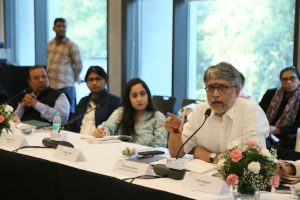
 NCAER, in collaboration with the International Labour Organization (ILO), convened a high-level roundtable titled “Building Inclusive Economies: Gender, Financial Inclusion and the Platform Workforce” on 8 December 2025 at its premises in New Delhi.
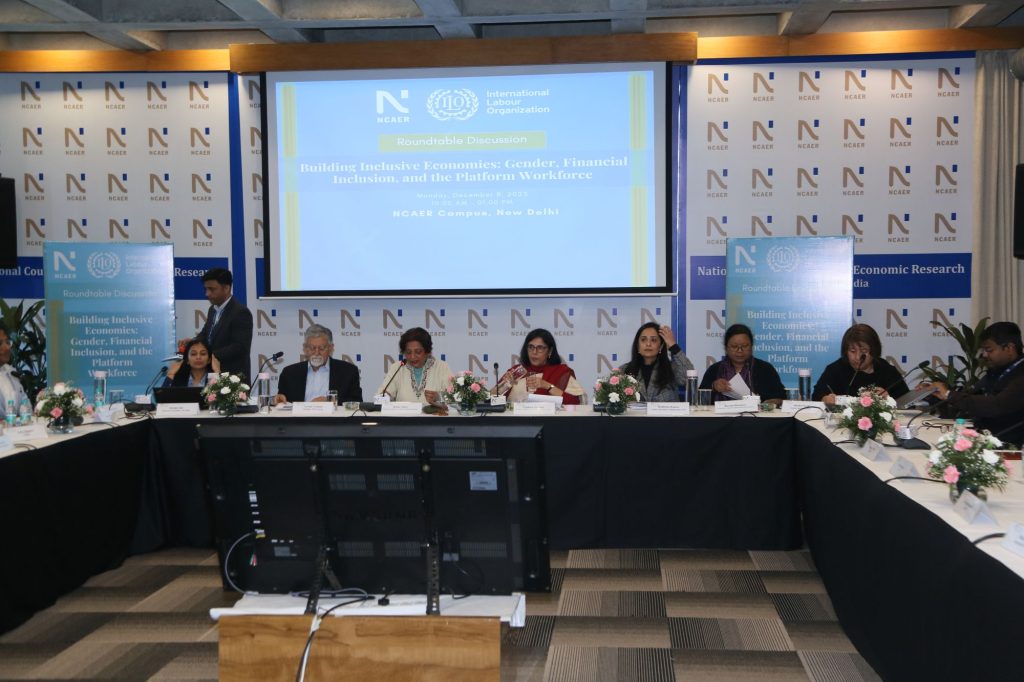
The discussion brought together senior government officials, researchers, practitioners, and representatives from the platform economy to examine gender disparities in platform work and assess how digital and financial inclusion can broaden economic opportunities for women.
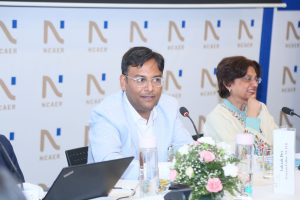
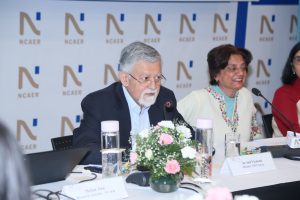 Dr Arvind Virmani, Member, NITI Aayog, delivered the keynote address, highlighting the centrality of skills development and increased female labour force participation to India’s long-term growth prospects. Ms Michiko Miyamoto, ILO Country Director for India, set the stage by reflecting on India’s fast-evolving platform-based business models and their potential to generate new forms of work and labour market outcomes.
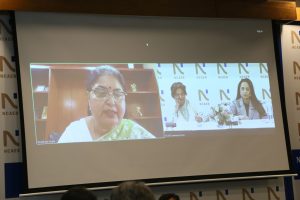
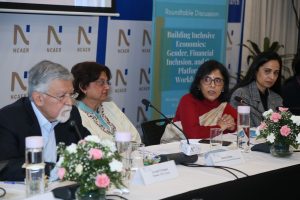 In her intervention, Ms Vandana Gurnani, Secretary, Ministry of Labour and Employment, reiterated the Government of India’s commitment to raising women’s participation in the workforce. She noted that the recently notified Labour Codes seek to ensure universal minimum wages, remove gender-based discrimination, and reinforce workplace safety and social protection, including for platform workers. Ms Sonali Sengupta, Executive Director, Reserve Bank of India, spoke about the country’s ongoing progress in financial inclusion and drew attention to emerging fintech innovations, particularly the Unified Lending Interface which may help strengthen women’s access to credit and financial services.
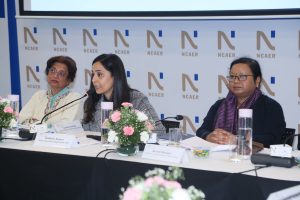 Opening the thematic discussions, Dr Ratna Sahay, Professor and Director of the Centre on Gender and the Macroeconomy at NCAER, underscored the need to address gender-specific constraints that limit women’s access to financial services. She observed that improvements in women’s financial inclusion are closely associated with stronger economic growth and reduced inequality.
 On gender dynamics within the platform workforce, Prof Bornali Bhandari pointed out that although platform work offers flexibility in terms of hours and work location, women continue to encounter multiple barriers to entry, including limited access to smartphones, bank accounts, two-wheelers, and the resources required for onboarding. Dr Radhicka Kapoor (ILO) highlighted the “triple burden” faced by women in entering, remaining in, and progressing within the platform economy and stressed the importance of closing gender gaps in access to financial services. Adding to this, Ms Mariko Ouchi, Specialist in Social Protection at ILO, outlined the challenges associated with extending social protection to emerging forms of work and reiterated that social protection constitutes a core element of international labour standards.
Key Themes from the Discussions
 Participants examined a range of actionable measures to strengthen women’s participation in the platform economy. Discussions noted that persistent gaps in digital connectivity, digital skills, and access to digital financial services continue to reinforce gender disparities. Evidence shared during the roundtable showed that women remain underrepresented on location-based platforms, are concentrated in lower-paid segments, and continue to face pay gaps.
 The group also explored how digital financial tools, such as e-wallets, platform-linked credit, microinsurance, and portable social protection accounts could help women manage income volatility, reduce dependence on informal credit, and invest in skills. Participants emphasised the need for coordinated policy efforts aimed at improving digital access, easing entry barriers, strengthening financial literacy, and designing gender-responsive social protection frameworks for platform workers.
The roundtable concluded with a shared recognition of the significant potential of gender-inclusive digital and financial ecosystems to expand opportunities for women in the platform economy. Participants underscored the importance of continued, multi-stakeholder engagement to ensure that India’s rapidly growing platform sector evolves into a more equitable, secure, and empowering avenue of work for women.
