15 July, 2021
Published in: Indian Public Policy Review


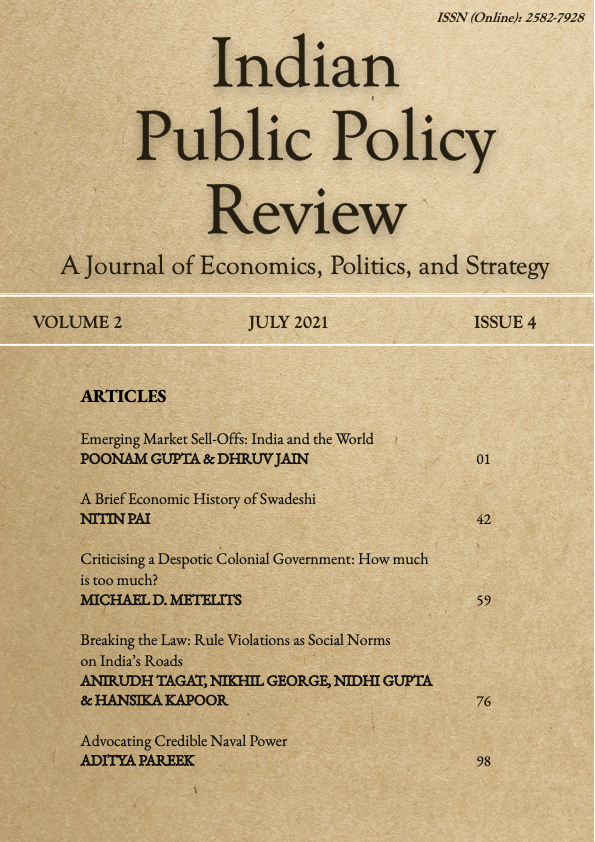
Published in: Indian Public Policy Review
Capital flows to emerging markets are generally volatile, resulting in periodic “sudden stop” episodes – when capital inflows dry up abruptly, with significant negative effects on the economy and on financial variables. This paper reviews India’s experience with capital flows. The relative volatility of different kinds of capital flows in India is similar to that in other emerging markets. Our analyses suggest putting in place a medium-term policy framework that includes sound fiscal balance, a sustainable current account deficit, an environment conducive to investment, an appropriate level of reserves, avoidance of excessive appreciation or volatility of the exchange rate (through the use of reserves and macroprudential policy) and prepares the banks and firms to handle greater exchange rate volatility. In addition, it would be good for India to change the capital flow mix toward FDI flows and find ways to diversify the investor base toward investors with a longer-term view. It would also be useful to eventually graduate from the emerging market asset class. Finally, adopting a clear communication strategy to interact smoothly and transparently with market participants – involving regularly reasserting the commitment to sound policies, and reminders of the resilient underlying fundamentals – are likely to be helpful in risk-off times.