Study on Estimating the Economic Impact of the Rajiv Gandhi International Airport, Hyderabad

Transport systems are vital for connecting people, goods, and services, forming the backbone of global socio-economic progress. Among various modes, aviation has revolutionized connectivity by offering unmatched speed, safety, and reliability. The Ministry of Civil Aviation (MoCA) has identified India as one of the fastest-growing aviation markets worldwide, with its passenger traffic showing a significant growth. The domestic passenger traffic rose from 61 million in FY14 to 154 million in FY24; and international traffic from 43 million in FY14 to 67 million in FY24. The total passenger traffic peaked at 220 million in FY24, marking a robust recovery and surpassing pre-pandemic levels. Total cargo traffic also increased from 1.77 million metric tonnes in FY14 to 2.37 million metric tonnes in FY24.

Why gender-sensitive skilling is a must to drive India’s agricultural future 

Women form close to 42% of farm workers. Skilling schemes specifically designed for women is imperative to not only raise their productivity but also to empower them.

India’s agriculture stands at a critical crossroads. On the one hand, rapid technological transformation — from drones and digital platforms to precision farming — is reshaping how crops are grown, managed, and marketed. On the other, the backbone of this vast ecosystem — the millions of women who toil in the fields — remains under-recognised, underpaid, and under-skilled.

A recent NCAER Skill Gap Study on High Growth Sectors (2025), which analysed the workforce in the sub-sector “Growing of Cereals (including Rice), Leguminous Crops and Oilseeds”, reveals a striking reality: women constitute 41.4 per cent of the workforce, yet the majority are concentrated in low-skilled, low-paying, and informal roles. While men dominate mechanised and market-oriented operations, women are often confined to manual, repetitive, and unpaid family labour.

Women are mainly engaged in a few key occupational roles within this sector. Most jobs (about 70 per cent) are in market gardening and crop growing, where women make up roughly one-third (33.7 per cent) of the workforce. Another 20 per cent of workers are employed as agricultural, forestry and fishery labourers, and in this group women form a majority, accounting for about 52 per cent. A smaller share of workers (around 9 per cent) are subsistence crop farmers, within which women constitute about 40 per cent.

Overall, women’s participation is especially high in labour-intensive roles, highlighting their strong presence in physically demanding and lower-paid activities.

This imbalance is not just an issue of fairness — it is a matter of national productivity and resilience. If India’s agriculture is to modernise and compete in the 21st century, women must not only be included but empowered as skilled contributors and decision-makers in every stage of the agricultural value chain.

The invisible workforce

Females account for 41.4 per cent of the workforce engaged in the growing of cereals (including rice), leguminous crops and oil seeds. A large concentration of these workers is found in nine States, with notable variation in female participation — female workers constitute as high as 52.4 per cent in the highest-ranking State, while West Bengal records the lowest female share at 25.4 per cent. In terms of education, the sector is characterised by low educational attainment among women, with about 50 per cent of female workers being not literate.

Nearly half of all women in this sub-sector are not literate, and their access to training remains extremely limited. Close to 99 per cent of female agricultural workers report having no technical education, while only about 0.5 per cent have received any formal vocational training.

Even non-formal vocational training reaches only around one in five women, far below the one in three rate observed among men, who are significantly more likely to possess medium-level skills or experience with modern machinery.

This pronounced skills gap is further compounded by women’s heavy concentration in unpaid roles, with about 63 per cent of female agricultural workers engaged as unpaid family labourers, compared to just 21 per cent of men. These patterns underscore the deep structural invisibility of women’s work-critical to household and farm economies, yet largely excluded from wage records, productivity measurements, and policy frameworks.

Technology without inclusion

As agriculture becomes more technology-intensive, from satellite-driven crop planning to drone-based precision spraying, women risk being left behind. Most of the skilling programmes remain heavily male-centric, with training modules in farm machinery, irrigation systems, and AI-based applications rarely tailored for women.

The government’s Drone Didi initiative, which aims to train women to operate agricultural drones, is a step in the right direction. However, this needs to expand from pilot projects to a national gender-sensitive skilling movement. Technology in agriculture should not merely replace manual work; it should democratise access to opportunities. Women farmers and workers must be trained to handle drones, manage soil health data, lead FPOs, and engage in digital marketplaces. Empowering them with financial, digital, and entrepreneurial literacy can bridge both the productivity gap and the gender gap.

Clusters and gendered skill needs

NCAER’s mapping of agricultural clusters — States and regions where production, infrastructure, institutional networks, and workforce capacities are concentrated — provides a useful framework for designing location-specific, gender-responsive skilling programmes. The analysis shows that Uttar Pradesh, Maharashtra, Rajasthan, Madhya Pradesh, and Gujarat rank among the strongest agricultural clusters overall, supported by robust institutional systems, better-than-average infrastructure, and relatively well-developed human resources.

These ecosystems are already positioned to support specialised agricultural services, making them ideal candidates to evolve into gender-inclusive training hubs.

Building on this foundation, such States can open pathways for women farmers to enter new and emerging agri-professional roles — for example, as drone operators and agri-tech advisors, who combine traditional field knowledge with data-driven decision-making; farm machinery service technicians, trained to operate and repair modern equipment, expanding opportunities for both self-employment and wage work; and agronomic consultants or community advisors, who deliver field-level support, crop management insights, and market intelligence to farmer groups.

These emerging occupations, underscore the significant potential for women to transition from traditional, low-paying farm labour into skilled, higher-value roles — but only if targeted skilling, mentoring, and institutional support reach them where agricultural capacity is already strong.

From skill gaps to skill justice

To realise this potential, however, skill development policies must move beyond generic capacity-building and directly address the structural barriers that keep women out of training and higher-value roles. As the NCAER study notes, women’s access to training institutes is often limited because centres are located far from villages or operate at times that clash with domestic responsibilities.

Cultural norms further restrict women’s mobility and discourage their participation in trades such as welding, irrigation, or mechanised operations, which are commonly perceived as male domains. Even where training is available, many vocational curricula are designed with male participants in mind, overlooking the socio-emotional, confidence building, and entrepreneurial skills that are crucial for enabling women to step into skilled agricultural jobs.

Addressing these constraints is essential if the stronger agricultural clusters are to become genuinely inclusive hubs for women’s skilling and economic mobility.

A call to action

Bridging these gaps will require a focused, three-pronged strategy. First, skilling programmes under the Pradhan Mantri Kaushal Vikas Yojana and State Skill Missions must reorient their curricula to include socioemotional skills, entrepreneurship, and digital literacy-capabilities that equip women to take on leadership roles in modern agriculture.

Second, training infrastructure needs to be decentralised by using district level agricultural clusters and Krishi Vigyan Kendras as community-based centres that offer flexible, short-term, and locally relevant courses for women. Third, gender-linked incentives — such as weighted funding for institutions that train and place more women in agri-tech roles-can help shift institutional priorities toward inclusion.

If India’s next Green Revolution is to be truly inclusive, gender equality must be embedded at every stage — from curriculum design and certification to placement and entrepreneurship support. The aim is not simply to bring more women into agriculture; they are already there.

It is to shift them from the margins to the centre of productivity, policy, and innovation because the future of Indian agriculture depends as much on equity and inclusion as on technology and infrastructure. Empowering women with the skills they need is not just a social goal — it is an economic imperative for India’s growth and food security.

This article draws upon findings from the National Council of Applied Economic Research (NCAER) report on “National Skill Gaps for High Growth Sectors,” 2025.

Joshi and Sahu are Fellows at NCAER; Bhandari is Professor at NCAER. Views are personal.

India’s Employment Prospects: Pathways to Jobs

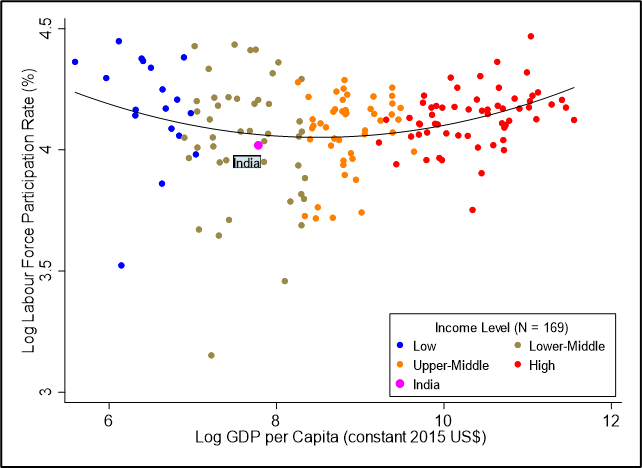
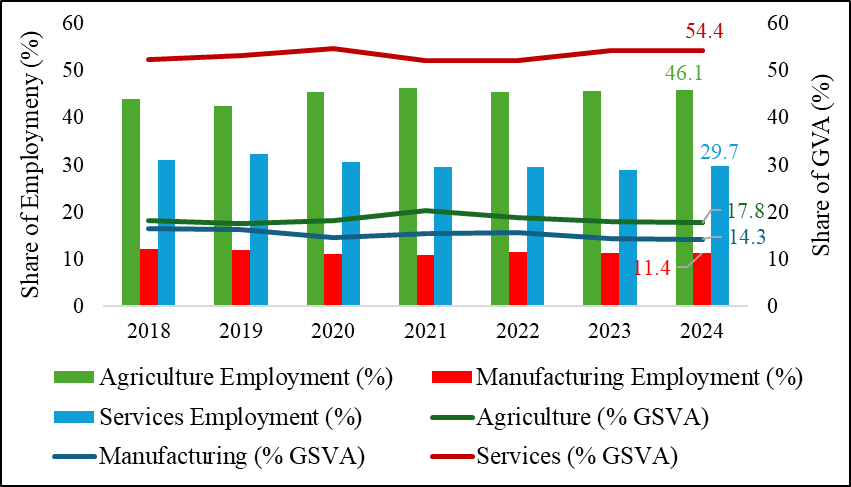
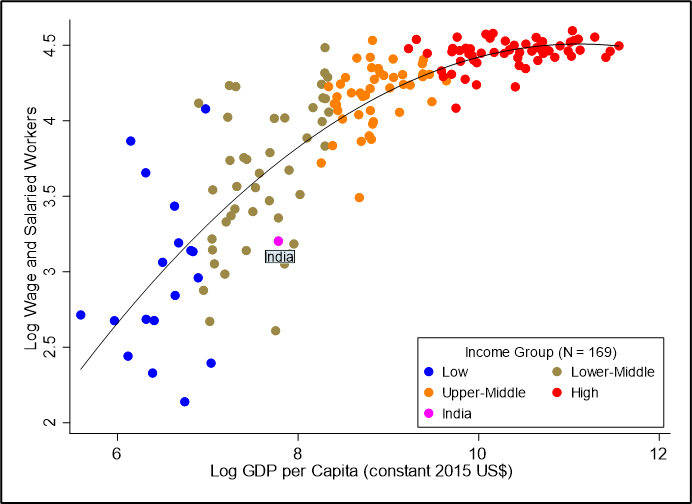
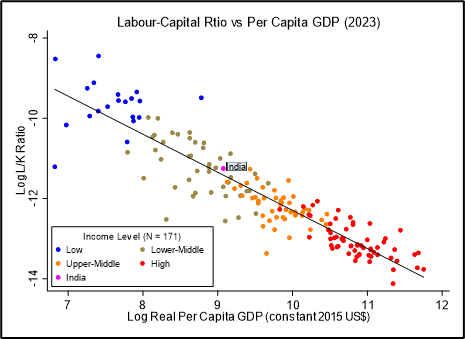
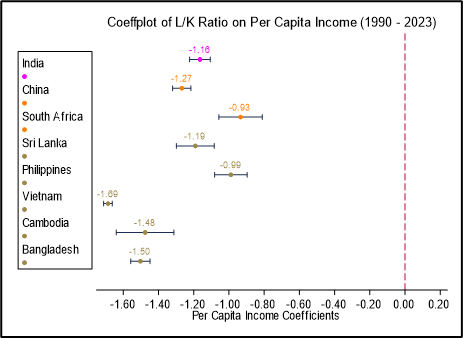
India’s economic trajectory has seen an impressive run over the last few decades, but concerns are rising over the country’s ability to productively engage a large and growing working age population. Recent increases in employment are primarily due to the rise in self-employment, while transition to a skilled labour force has been slow, highlighting the need for creating not just jobs but ‘good’ jobs. Furthermore, the rising capital intensity of production technology necessitates the development of a skilled and productive workforce to increase the share of labour in aggregate value added in the economy. In the race for a US$ 7 trillion economy, India needs to urgently overcome bottlenecks to increasing both the quality and quantity of workforce participation and sectoral labour productivity.

Critical differences 

The 30 ‘critical minerals’ pose different risk levels.

India’s critical minerals strategy stands at a crossroads. In June 2023, the Government of India released a list of 30 critical minerals through a systematic three-stage assessment process evaluating economic importance, strategic value, and import dependencies. Yet two years later, policy implementation treats all 30 minerals with identical urgency, despite the methodology itself suggesting that different minerals face fundamentally different levels of vulnerability. This disconnect between strategic assessment and policy execution represents a critical flaw.

Within India’s list of 30 critical minerals, ‘rare earth elements’ appear as one category, even though geologically they comprise 17 elements — the 15 lanthanides plus scandium and yttrium.

The remaining 29 minerals — antimony, beryllium, cobalt, copper, graphite, lithium, nickel, and others — are individual minerals with separate supply chains. Rare earths stand apart because they require identical processing technologies, face similar Chinese monopolies, and serve overlapping applications in permanent magnets and wind turbines. A supply shock affecting rare earths creates simultaneous crises across multiple industries, while disruptions in vanadium supply would impact narrower applications. The criticality of rare earths is qualitatively different from other minerals on India’s list.

True criticality arises not from government labelling but from the degree to which supply chains can be controlled by a single actor. China exemplifies this principle. According to research by GlobalData and Reuters analysis, China controls approximately 70 per cent of global rare earth mining and close to 90 per cent of processing capacity. For graphite, China produces 75–80 per cent of global natural graphite. In cobalt refining, Chinese companies account for approximately two-thirds of global capacity, according to Chatham House.

Yet the rare earth situation is extraordinary. According to Discovery Alert analysis, China controls 92 per cent of rare earth refining capacity and 98 per cent of rare earth magnet manufacturing. This vertical integration creates near-total dependency. When the European Union projects a sixfold increase in rare earth demand by 2030, expansion requires Chinese approval at nearly every supply chain stage.

Although India holds 7.23 million tonnes of rare earth oxide reserves according to the Ministry of Mines, refining capacity remains absent. India imports 100 percent of usable rare earth materials despite possessing the fifth-largest global reserves.

Within the broader 30-mineral list exists a narrower, more urgent subset: critical materials for clean energy transition.

What distinguishes these critical materials from other minerals on India’s list is dual vulnerability: they face Chinese processing monopolies and skyrocketing demand even as India cannot produce domestically. Phosphorous, another listed mineral, faces no such monopoly. Potash serves fertilizer markets with alternative suppliers. Rare earths and energy-critical materials occupy a different risk category.

Geopolitical precedent

In 2010, China halted rare earth exports to Japan following a territorial dispute—analyzed by the Centre for Economic Policy Research as demonstration of weaponized supply control. More recently, according to Reuters and CSIS analysis, China introduced export licensing for multiple rare earth elements in 2025, enabling case-by-case approvals discriminating between nations.

India’s policy challenge is stark: not all 30 minerals require identical urgency. The government has begun making distinctions — according to Press Information Bureau, the Finance Ministry approved ₹7,300 crores specifically for rare earth permanent magnet production. This targeted approach represents correct prioritization.

India should reclassify its critical minerals into tiers based on actual supply vulnerability. Tier One should encompass critical materials for energy transition—rare earths, lithium, cobalt, graphite, nickel, and copper—where processing monopolies and exponential demand create genuine strategic risk. Tier Two should include minerals with diversified global suppliers. Until India prioritises some minerals above others, its critical minerals policy will treat gallium (limited geopolitical risk) identically to rare earths (Chinese monopoly, weaponized export history).

Bose and Sanjib Pohit are Consultant and Professor, respectively, at NCAER. Views are personal.

India’s small enterprises hold key to job growth

Rather than viewing employment generation solely through the lens of large industry or government programmes, policy must confront the reality that employment generation is tied to improving the productivity of its smallest enterprises

The recently announced new labour codes are likely to transform the employment landscape of India. The discourse on employment, however, primarily centres on the need to “create more jobs”, yet a closer look at the workforce reveals a more fundamental challenge — most working Indians are not in jobs at all, they are self-employed in millions of unincorporated household enterprises that operate with low levels of capital, productivity, and technology adoption. These enterprises form the backbone of India’s labour market — absorbing more than 12 crore workers in 7.3 crore enterprises across the country in 2023-24. Yet their potential for growth and job creation remains severely constrained. Strengthening them is not just desirable, but essential for creating gainful employment for India’s working-age population.

The Annual Survey of Unincorporated Enterprises (ASUSE) provides a granular breakdown of the dynamics of these non-agricultural businesses. Own Account Enterprises (OAEs) — those that do not hire any workers — make up an overwhelming 87 per cent of all non-agricultural enterprises. Not surprisingly, a small minority, the Hired Worker Enterprises (HWEs), operate at a scale where they employ workers, generate nearly 7.5 times the Gross Value Added (GVA) produced by OAEs. These numbers underline an uncomfortable truth: India’s self-employment dominance is not a symbol of entrepreneurial dynamism but of economic necessity. Just like small farmers, most of the small enterprises function at a subsistence level, earning only enough to keep the business and family afloat.

What makes this more concerning is the composition of the sector. The bulk of these enterprises operate in the services sector, which now accounts for nearly 74 per cent of all unincorporated establishments. More than half — 52 per cent — are located in rural areas. The education levels of proprietors are low, with less than 15 per cent holding a graduate degree and only around 9 per cent having technical or vocational training. When enterprises lack both – the capital and the capability, their growth prospects tend to be limited.

This is where the policy conversation must shift. Rather than viewing employment generation solely through the lens of large industry or government programmes, India must confront the reality that its employment future is tied to the productivity of its smallest enterprises. The question is not only how many new firms are created but how many can grow from being an OAE that employs none to a high productivity, job creating HWE.

Why does productivity matter for job creation?

The ASUSE data show a clear relationship between enterprise productivity and employment expansion. Our analysis using data from all three rounds of the ASUSE surveys (2021 to 2023) reveals that a 10 per cent increase in GVA is associated with a 4.5 per cent increase in the number of hired workers. In simple terms, when small businesses grow, they start hiring labour. Such a linkage underpins the broader economic transition – from an economy of self-employed individuals to one of job-creating enterprises, where entrepreneurship evolves from subsistence to transformation.

Although services dominate the unincorporated sector – accounting for over 70 per cent of enterprises and workers — manufacturing remains more labour-intensive, employing about four workers per unit compared to three in services. The recent divergence in sectoral trends reinforces this — services are increasingly driven by capital deepening, while manufacturing has added jobs even during periods of output decline. Together, these patterns suggest that labour-intensive manufacturing offers a more reliable pathway for sustained job creation.

What holds these enterprises back?

Non-recovery of dues has been a perennial issue faced by the MSME sector. The RBI’s Expert Committee Report on MSMEs in 2019 pointed at it as one of the key factors affecting the growth of the sector. In the ASUSE survey, one out of four HWE and OAE identified this as one of the key problems ailing enterprise growth. While the Government of India made an amendment to the Finance Act in 2024 to disallow tax deductions for delayed payments made to MSME suppliers, the effect of this amendment needs to be closely monitored in the coming years.

Further, the entrepreneur’s choice to remain unregistered – without a GST number or any other business registration — is seen not as a liability, but a survival strategy. It creates a self-imposed bottleneck that chokes off the very growth and stability these businesses seek. While the government has championed the “Ease of Doing Business”, a significant portion of our economy remains trapped in a low-growth cycle because the perceived costs of formalisation outweigh the immediate benefits.

The challenges faced by the sector are further compounded by two major structural constraints that hinder enterprise development: (1) access to credit; (2) technology adoption and usage. ASUSE data show that only about 10–12 per cent of unincorporated enterprises have outstanding loans, indicating limited access to formal credit that not only restricts capital investment but also prevents enterprises from reaching efficient scales of operation.

Our analysis estimates that access to formal credit can be transformative. For a medium-sized enterprise, access to institutional credit lifts predicted GVA from Rs. 3 lakh to Rs. 5 lakh — a 72 per cent increase. For large enterprises, the GVA jumps more than threefold, from Rs 11 lakhs to Rs 36 lakhs. This suggests that medium and large informal enterprises have substantial latent potential that credit can unlock. Small enterprises see more modest gains, indicating that credit must be paired with softer support- such as training, market access, and managerial skills — to improve productivity.

The second barrier-technology adoption — is equally consequential. Only about 5-6 per cent of enterprises use computers, and fewer than 26 per cent use the internet. Yet firms that adopt even basic ICT tools see higher GVA across all sizes. The gains are especially pronounced for larger firms, which have more capacity to leverage digital tools for efficiency and market expansion. Bringing micro enterprises into the digital fold — through online marketplaces, or digital payments — can therefore be a major lever for transformation.

A pathway for employment-led growth

The evidence from ASUSE leads to three clear, actionable lessons:

First, and overall, India must focus on lifting productivity among OAEs by improving credit and technology access along with vocational training. With nearly nine out of 10 enterprises hiring no worker, enabling even a fraction to upgrade into HWEs could dramatically expand employment opportunities.

Second, and specifically, while the MUDRA scheme’s classification of loans into Shishu, Kishor, and Tarun is a useful framework for segmentation of loans, the real challenge lies in ensuring that credit truly matches the enterprise’s evolutionary stage — shifting from mere microcredit for subsistence to providing working capital for stabilisation and, most crucially, growth capital for genuine expansion. High Non-Performing Assets (NPAs) and restrictive documentation hurdles are symptoms of this underlying mismatch, demonstrating that a mere supply of funds does not automatically translate into improved productivity or job creation. Credit strategy must be differentiated and responsive, not just categorised.

Third, digital adoption remains low, and existing programmes like Digital MSME, UPI incentives, UDYAM, ONDC and DISHA need adaptation to deliver real gains. Beyond payments, enterprises require digital skills, handholding support through local facilitation, and clear market linkages —such as onboarding to e-commerce and digital procurement platforms — so that technology translates into higher productivity and business growth.

What emerges is a simple but powerful insight — India’s employment prospects lie not in a handful of large factories but in millions of small enterprises that already form the bedrock of its economy. Helping them grow-by easing credit constraints, expanding digital access, and capacity building — can transform the prospects for quality employment for millions. India’s entrepreneurship story is not waiting to be created; it already exists in every small shop, home-run unit, and local service establishment. What it needs is multi-pronged support to scale up.

Afridi is professor of Economics, ISI, Delhi, and visiting professor, NCAER. Thakur is associate fellow, NCAER. Views are personal.

    Get updates from NCAER