Outlook 2024: The year financial systems break or make it

Facing unprecedented socio-economic challenges, the financial system must act decisively to preserve its vital economic role.

2024 will be a make-or-break year for the financial sector. It will rise to the challenge of a changing world or fall into irrelevance and chronic stress. The fate of finance and the global economy hangs in the balance.

The world faces a perfect storm of threats: inflation, policy shifts, war and socio-economic shocks. The financial sector is vital in navigating these dangers by allocating resources wisely, managing risk effectively and creating wealth for future generations.

But the old ways will not work anymore. The financial sector cannot afford to remain reactive or dependent. It must decide what transformations are essential to stay relevant to the needs of the hour. It must rethink its role and purpose in a market economy. Retroactively picking up the pieces after every period of stress or economic crisis and expecting central banks to save the day is no longer tenable.

Today’s financial sector is complex and plagued by structural flaws and unfinished reforms. The interactions between the financial sector and the broader economy are more direct and robust. To this end, financial sectors in both advanced and developing countries need support to stay resilient. All the while, the International Monetary Fund warns of higher interest rates and spillovers from other sectors that could amplify the sources of financial stability and bring out the risks endogenous to the financial sector.

The balance sheets of governments, corporations and households are weak. Assets are overvalued or underutilised, while liabilities outstrip income. The global credit cycle is unstable, as borrowers struggle to repay and financing dries up. These imbalances threaten financial stability, credit and funding patterns and economic growth.

In developing markets, stability of the financial system has been elusive and inconsistent. As a result, balance sheets reflect the long-lasting consequences of distorted capital allocation and inefficiency. The availability and allocation of finance and credit essential for long-term economic growth, climate resilience and sustainable development goals are also inadequate.

The financial sector’s choices during 2024 will decide the future of finance and the global economy. How prepared will the financial system be and what will it choose?

Transitions

The financial sector will navigate the complex interplay of transitions likely to unfold during 2024 and the lingering macro-financial risks from the Covid-19 pandemic. Market movements could be higher, and risk aversion even tighter. 2024 might be a year when financial agents prefer to watch rather than assume risk. Most financial resources may remain within the system or move across select asset classes, such as real estate, instead of being aggressively used on the needed scale for productive purposes. The transitions during 2024 will have their own respective drivers, dynamics and relationship with financial stability.

The final phase of post-pandemic financial normalisation still needs to be completed. It requires unwinding the remaining policy support, addressing the debt burden and developing more straightforward approaches to credit cycles and asset pricing.

Technological turbulence is another transition. It will involve accelerated developments in artificial intelligence, cloud computing, blockchain and biometrics, which will continue transforming the financial system, blurring the industry boundaries and changing the regulation and governance requirements.

Financial sectors are more interconnected across borders than ever before. However, this may change in a more fragmented and regionalised global finance and trade environment. The finalisation of the pending UK-EU agreement on financial services after Brexit will have regional and broader impacts on how much access, alignment, competition and cooperation there are between different markets and their central banks and regulators.

Limitations

The environment of these transitions limits the financial system’s ability and will to act in 2024. Political factors and industry interests restrict the space for preemptive and macro-prudential policies and the coordination among authorities and stakeholders. The international standard-setting and evaluation work has stalled, as the global financial governance and architecture are polarised and incomplete and the existing rules and standards could be enforced unevenly and inconsistently.

Central banks and regulators face growing challenges from their legislatures demanding more accountability. In addition to this, public mistrust in finance is evident and the view that regulators can be influenced by the industries they regulate at the public’s expense is widely held across advanced and developing countries.

Opportunities

Despite these limitations, the financial sector can be part of the solution in 2024. Climate change and sustainability will demand new production and consumption patterns. The financial industry will finance and facilitate this transition, manage climate-related risks and align with the 2030 Agenda for Sustainable Development.

Technological innovation and disruption will create new values and advantages, bring new players and change financial behaviour and norms. The financial sector will face technological risks of data privacy, cybersecurity and ethics. It must adapt to improve the financial system’s efficiency, inclusiveness and security.

Inclusion and diversity will require meeting all stakeholders’ various needs and preferences while ensuring the quality and affordability of financial services and access for the underserved and underrepresented segments.

External factors

Other external forces besides climate change will shape these transitions. Social and political change across countries will affect the financial system. These shifts include changes in power, alliances and institutions related to money and finance. Migration and urban shifts will move people across and within countries and change the urban and rural dynamics.

These will change the financial preferences of the population and alter the demand for and supply of financial services. The financial system must then respond and distribute the costs, benefits, rights and responsibilities among different groups and regions without harming social stability and cohesion.

These transitions and external forces show the macroeconomic role of the financial sector and the close macro-financial interactions. The financial industry will play a more significant role in capital, liquidity and risk management related to climate change, technological innovation and reducing frictions, costs and barriers to financial transactions and services.

Competition and cooperation among the financial actors and institutions – old and new, incumbents and disruptors, public and private – will affect the financial sector’s market structure and outcomes. The demand for new forms of financial intermediation will create new values and advantages and new issues and dilemmas, such as data privacy, cybersecurity and ethics. Alignment and integration with global goals and international standards will require coordination and cooperation among the authorities and stakeholders at the regional and international levels.

These must meet the needs of the changing national and local situations and circumstances. Implementing frameworks such as the IMF’s integrated policy framework and the Bank for International Settlements’ comprehensive and coordinated policy response will address the structural challenges and opportunities of the financial system.

2024 stands to be a pivotal year for the global financial system in advanced and developing economies. The transitions and external forces will have profound and lasting implications for the financial sector, the economy and society. 2024 will be decisive for the financial industry and its stakeholders to prove their worth and align with the common good.

Udaibir Das is a Visiting Professor at the National Council of Applied Economic Research, a Senior Non-Resident Adviser at the Bank of England, a Senior Adviser of the International Forum for Sovereign Wealth Funds, and a Distinguished Fellow at the Observer Research Foundation America.

Have we created a fertile ground for women to flourish?

Despite targeted Skill India government initiatives strive to boost female participation, societal pressures and caregiving responsibilities stand out as formidable barriers. The PLFS 2022-23 furnishes valuable insights into female workforce participation, underscoring how family dynamics shape caregiving responsibilities and impact women’s career trajectories. Given the magnitude of the need, there is an urgent call to expand the coverage and accessibility of caregiving centres.

Within Skill India government programs, women receive special attention, given their historically low participation in the workforce. Despite this emphasis, current figures reveal a persistently low rate of female work participation, even among those with acquired skills. According to the latest PLFS data (2022-23), only 14.7 percent of female youth possess vocational training, with a meagre 4.2 percent from formal sources and 10.5 percent from informal ones.

Clearly, these statistics are not convincing, emphasizing the need for the country to intensify efforts in meeting the growing demand for skills and staying competitive globally.

Moreover, the issue intensifies when even vocationally trained females choose not to join the workforce, leading to a significant underutilization of the nation’s resources. According to the PLFS 2022-23 data, only approximately 37 percent of female youths (excluding those currently in education) who received formal training are part of the labour force.

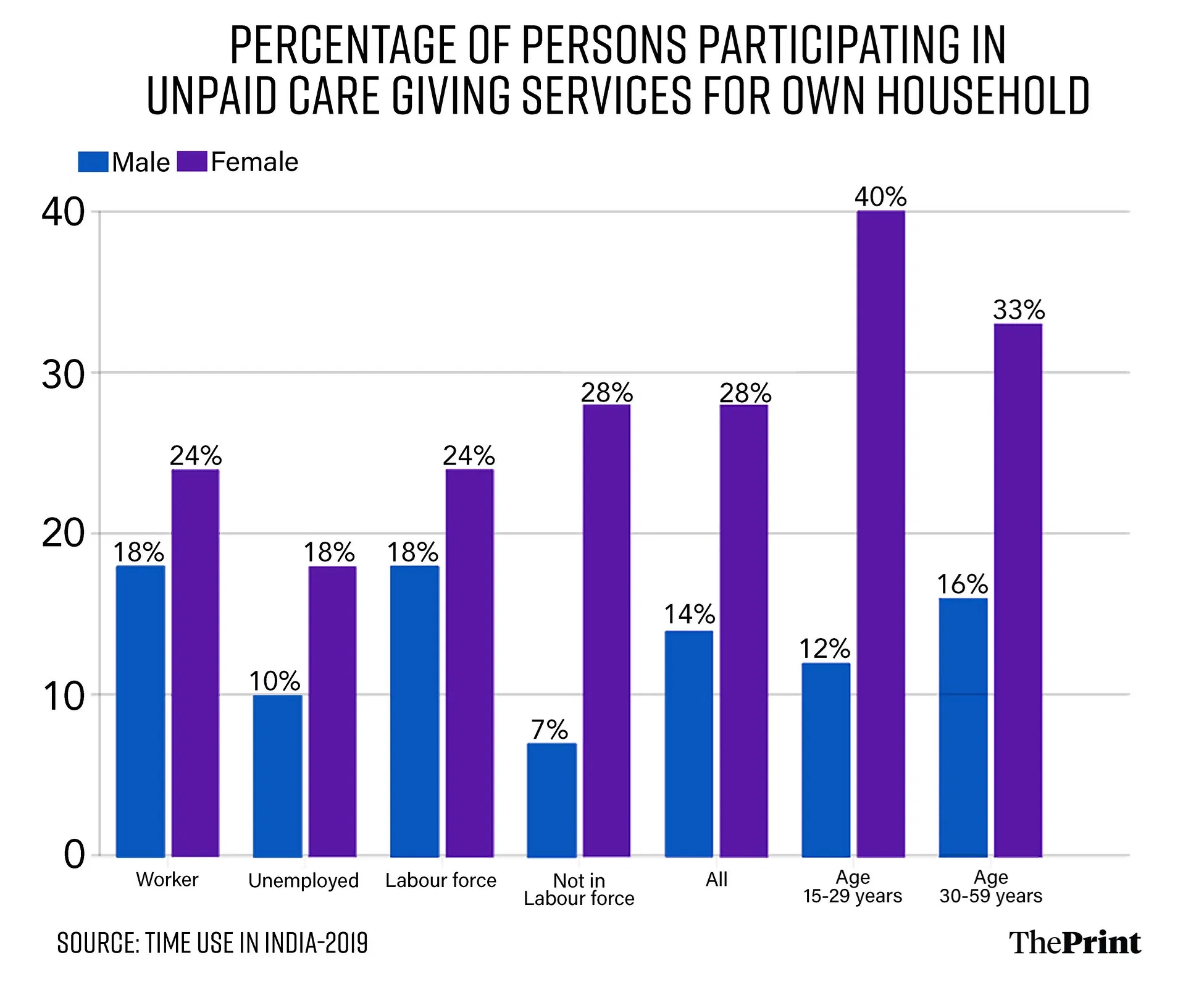
Among several factors influencing women’s decisions to leave their jobs or refrain from joining the workforce, research indicates that caregiving responsibilities for their children and elders within the family significantly shape Indian women’s employment choices. Delving deeper into family structures and female work status sheds light on this relationship.

The data from the Periodic Labour Force Survey (PLFS) for 2022-23 allows us to quantify this connection and reveals that about 45 percent female youths (excluding females currently in education), who have received formal vocational training are found to be working in nuclear family setups. In contrast, joint families exhibit lower female participation in the economy, with about 32 percent of females working in such setups.

Further analysis within nuclear families indicates an increase in the work status of female youths without children, with about 56 and 43 percent of them in nuclear families with and without children found to be working.

This suggests that the absence or minimal burden of caregiving responsibilities, coupled with limited interference from family elders (other than parents) in decision-making, likely contributes to higher participation in nuclear families.

Family structures, be it nuclear or joint, are shaped by a complex interplay of cultural, social, economic, and personal factors, often beyond the control of individuals or government interventions. Nonetheless, fostering a supportive environment can play a crucial role in minimizing the impact of family structures on female participation. Affordable and quality childcare centres can be potential solutions to address these challenges.

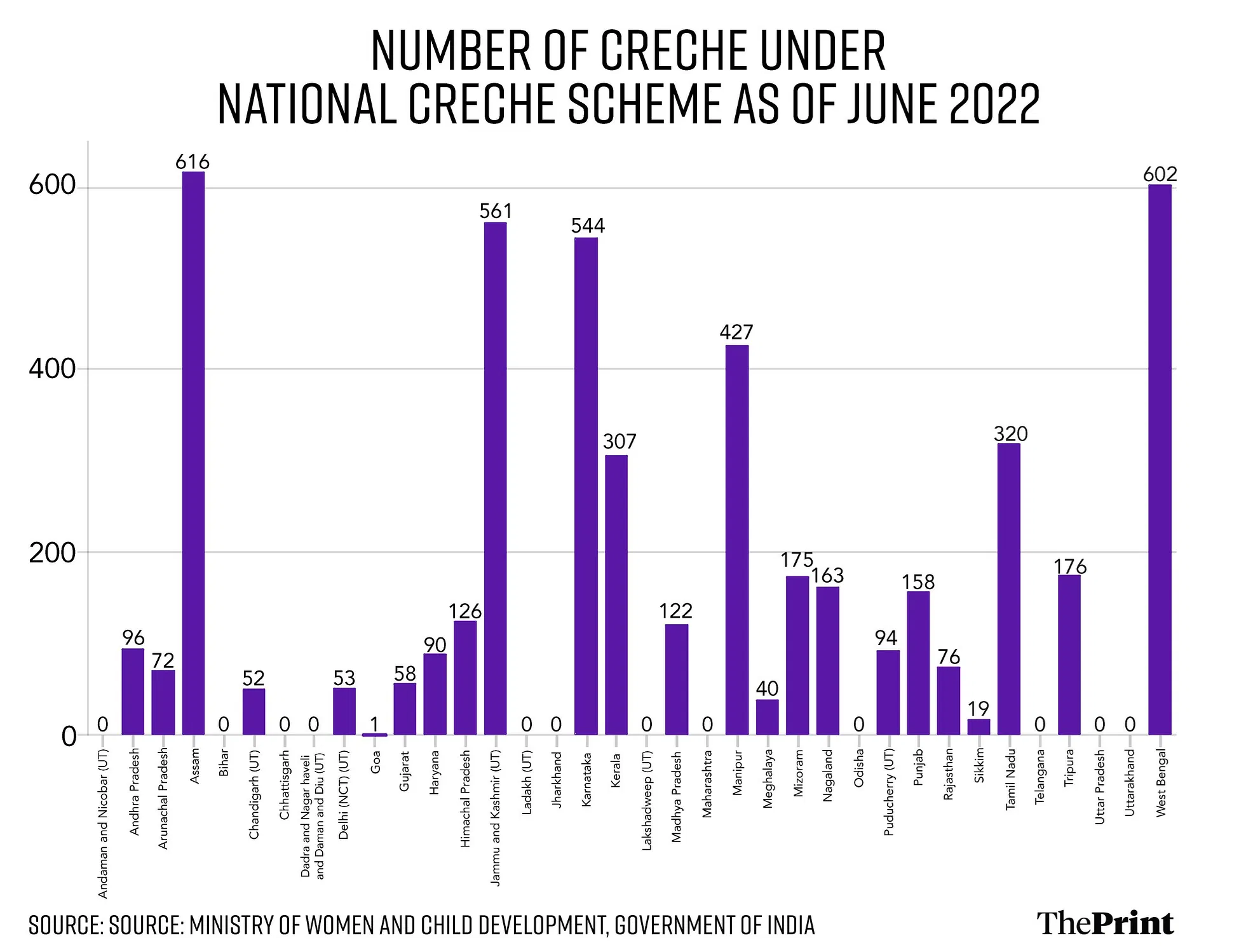
India has witnessed progressive legislation aimed at improving female participation in the workforce. The National Creche Scheme, later revised as Palna in 2022, provides day-care facilities for children (6 months to 6 years) of working mothers.

Another noteworthy initiative is the 2017 amendment to the Maternity Benefit Act, encouraging establishments with fifty or more employees to allow work-from-home options for women. It also mandates companies with more than 50 employees to offer a creche on-premises, with costs borne by the employers.

While these government initiatives are commendable, several factors have limited their impact on overall female labour force participation. The number of creches under the scheme has declined over the years, and budget allocations have shrunk.

Additionally, the scheme predominantly caters to the economically disadvantaged section of society. Companies eligible to offer creche facilities under the Maternity Benefit Act of 2017 frequently fall short in providing these amenities on their premises, and the lack of official data on compliance further complicates the assessment of their effectiveness.

Despite childcare remains a major constraint, India’s rapidly aging population adds another layer of caregiving responsibility often assigned to women. While a predominantly young country, India boasts the second-largest aged population globally.

According to the UN Population Fund’s India Ageing Report 2023, there are 149 million people above the age of 60, comprising around 10.5% of the country’s population. With increasing life expectancy, this number is expected to double by 2050. Women, traditionally responsible for caring for senior household members, face challenges balancing work and elder care responsibilities.

Yet, not all seniors need caregiving; some actively support the younger generation by engaging in family caregiving responsibilities instead of being recipients. However, as they reach a certain age, they too require special care, and conventionally, the responsibility of providing that care is often assigned to women.

Government initiatives like the Atal Vayo Abhyuday Yojana (AVYAY) aim to support senior citizens. However, considering the increasing demand and to address the specific needs of day care centres, these initiatives must focus and broaden their coverage and raise awareness.

Women, irrespective of economic or social backgrounds, bear the weight of caregiving responsibilities. Government welfare programs addressing such needs should broaden their coverage to encompass all sections of society rather than focusing solely on the marginalized. However, the solution lies not just in government action, but in collective effort.

Companies in India grappling with skilled talent shortages can expand the pool of skilled resources by encouraging more women to join the workforce. Investing in childcare and elder care centres not only aligns with societal needs but also contributes to economic growth. By strategically utilizing Corporate Social Responsibility (CSR) funds to support these initiatives, companies can make meaningful contributions to society and the economy. It’s a win-win situation that supports families, fosters workforce participation, and drives sustainable development.

Asrar Alam, Associate fellow, National Council of Applied Economic Research (NCAER). Views are personal.

The Digital Harvest: Unlocking AI’s Promise in Revolutionizing Agriculture

Unlocking the full potential of AI, ushering in an era where technology and agriculture converge.

In the dynamic landscape of agricultural development, rural progress undergoes a significant metamorphosis with the infusion of technology, contributing to a structural transformation that reverberates across rural communities.

Despite agriculture’s historical resistance to digital integration, the sector is experiencing a paradigm shift marked by the burgeoning development and commercialization of agricultural technologies. This evolution, albeit fraught with challenges, holds a promising trajectory as artificial intelligence (AI) emerges as a linchpin in the quest for optimal agricultural productivity and sustainability.

The COVID-19 pandemic, acting as a catalyst, spurred the integration of AI into agriculture, urgently demanding innovative solutions to surmount challenges and safeguard food security. From predictive and monitoring tools for droughts to robot-assisted methodologies addressing skilled manpower shortages, AI is a versatile ally in navigating the complexities of the agricultural landscape.

More than 87% agricultural holdings in India belong to smallholders (<2 ha). The small size of landholdings, giving rise to inefficient farming practices and restricting economies of scale, poses a formidable obstacle for farmers striving to embrace contemporary agricultural techniques. AI serves as a visionary partner to farmers, foreseeing and predicting agricultural yields with a precision that transcends traditional methods.

Further, crop diversification emerges as a viable solution to enhance resilience. A significant portion of agricultural land is dedicated to a few staple crops, contributing to soil health issues and increased susceptibility to pests and diseases.The predictive prowess of AI becomes especially evident in its capacity to anticipate crop health, identify nutritional deficits, and pinpoint pest incidences through the meticulous analysis of high-resolution images.

This, in turn, facilitates a level of accuracy in resource allocation and management. The fusion of AI with Global Positioning System (GPS) technology ensures the exact positioning of seeds, fostering consistent crop growth, optimizing nutrient utilization, and mitigating wastage appreciably.

Sustainability issues in the current arena are gaining momemtun. Several regions in India grapple with water scarcity, aggravated by inadequate water management. The challenge is compounded by inefficient irrigation methods and the excessive exploitation of groundwater.

The advent of AI-powered irrigation systems further underscores their efficacy, demonstrating promising outcomes in the realm of water conservation. Real-time data, coupled with weather predictions, becomes the guiding force behind AI-powered irrigation systems. These systems organize optimal watering schedules, that not only decrease water wastage but also usher in an era of efficient water consumption.

Furthermore, AI steps in as a vigilant tool, detecting early signs of diseases and insect infestations. The use of AI extends beneath the surface as well, as it continually monitors soil health. This empowers farmers to implement targeted soil management practices, enriching fertility and paving the way for long-term sustainability in agriculture.

The incidence of extreme events are increasing. Irregular weather patterns induced by climate change adversely affect crop yields, leading to increased occurrences of droughts, floods, and extreme weather events. Farmers often lack the resources to cope with these changes.

AI’s prowess is established in navigating the complex terrain of climate-related datasets, elevating the precision of climate predictions and providing profound insights into the future ramifications of climate change. This capacity proves pivotal in enhancing the accuracy of climate predictions, offering a clearer understanding of the impending impacts of climate change.

The volatile nature of agricultural input costs and the uncertainty surrounding crop prices expose farmers to significant financial risks, thereby deterring them from making crucial investments in modern technologies. This precarious situation further contributes to the absence of a stable income for farmers.

The dearth of rural infrastructure, spanning essential components such as roads, storage facilities, and market linkages, amplifies the challenges faced by the agricultural sector. Post-harvest losses are exacerbated, and the smooth movement of agricultural produce is impeded, adversely affecting the overall efficiency of the farming ecosystem.

The absence of transparent mechanisms for price discovery exacerbates the predicament, as farmers often find themselves at a disadvantage when negotiating the remuneration for their produce.

The literature unfolds the extraordinary potential of AI in reshaping the intricate web of agricultural supply networks. Equipped with real-time information, predictive analytics, and the robust foundation of blockchain technology, AI enhances efficiency throughout the supply chain.

It increases production, minimizes losses, and assures a level of operational efficiency that propels agriculture into a new era of productivity.

Logistics, a critical artery of the supply network, undergoes a metamorphosis under the influence of AI. The technology dissects numerous elements – transit routes, storage conditions, and demand patterns – with a precision that surpasses human capacity.

AI also delves into market patterns and historical pricing data, offering insights on futuristic agricultural commodity prices.

This foresight sensitizes the farmers and stakeholders, empowering them to make educated choices in a dynamic market landscape. Through nuanced analysis, AI categorizes products based on parameters such as size and ripeness, introducing a level of precision that enhances supply chain efficiency.

The transformative potential of AI in the realm of agricultural exports unfolds as a narrative of unprecedented growth, efficiency, and transparency. The integration of AI with radio-frequency identification (RFID) and blockchain technology transforms the export supply chain into a transparent and accountable ecosystem.

Nevertheless, for AI to transform the agricultural sector, government agencies and commercial enterprises might need to take a more active role in the transition. Such aspirations are especially important to ensure that the government and societal demand for reduced emissions and increased sustainability is met in the technological shift.

For the transformation to be successful, farmers must have continuous and easy ways to acquire up-to-date knowledge of how to apply smart technologies. Therefore, ensuring that technical, agricultural education is easily accessible through for example flexible, on-demand courses are needed.

Additionally, smart farming techniques need to be modifiable to match the varying transparency and adaptability demands that different farmers have. In the Transition of the agricultural sector into a more data-driven and digital environment, the technical infrastructure needs to be secure.

This narrative suggests a vision for collaborative efforts between institutions of eminence, like ICAR, IITs, Policy Think Tanks, and other institutions of excellence pooling resources and expertise to navigate the intricate landscape of AI implementation in agriculture.

This collaboration becomes a cornerstone for unlocking the full potential of AI, ushering in an era where technology and agriculture converge to shape a more efficient, transparent, and sustainable future for agricultural growth.

Dr Raka Saxena is Principal Scientist at National Institute of Agricultural Economics and Policy Research and Laxmi Joshi is Fellow at National Council of Applied Economic Research, NCAER. Views are personal

Distrust of employers is bred into Indian policy. It needs to end

Jan Vishwas Bill 1.0 recognised this problem but couldn’t do enough. A Jan Vishwas 2.0 that aims higher is needed, so that job creation can be accelerated

Tulsidas’s Ramacharitmanas asks, Jaum mrigpati badha medukanhi bhala ki kahai kou tahi (if a lion kills frogs, will anyone speak well of him)? The Indian Penal Code makes the Indian state very powerful — does it really need jail provisions in half of the 1,536 laws that touch employers? The recent Jan Vishwas Bill, now a law, has reduced corruption demands on employers by removing 113 jail provisions across 23 laws. I make the case for Jan Vishwas Bill Version 2.0 with a shift in policy strategy from retail to wholesale filtering after next year’s general elections to further reduce corruption and accelerate good job creation.

Labour laws are the biggest culprit. The Factories Act, 1948, read with 58 rules, contains more than 8,682 imprisonment clauses. But even simpler laws are hardly innocent: The Legal Metrology Act, 2009, read with 29 rules, has 391 imprisonment clauses; the Electricity Act, 2003, read with 35 rules, has 558; and the Motor Vehicles Act, 1988, read with nine rules has 134. Overall, there are 25,000+ employer jail provisions, of which 5,000+ arise from central legislation.

Stalin’s Secret Police head, Lavrentiy Beria, often said, “Show me the person, and I’ll show you the crime”. Beria’s technology for corruption — selectively using imprisonment clauses in vaguely drafted laws — is hardly unique. Our employer regulatory cholesterol — including thousands of compliances and filings — breeds corruption because some of our 25 million civil servants and 3 million election winners find personal gain in subjectively creating transmission losses between how those laws are written, interpreted, practised and enforced. More painfully, this cholesterol rewards informal enterprises with a sense of humour about the rule of law while punishing the high-productivity enterprises that pay high wages by combining technology, capital and skills. Regulatory arbitrage — corruption — and informality are corrosive because India’s economic challenge is wages, not jobs.

This article’s title comes from a book published in 1950 with six essays by 20th-century writers on their conversion to and subsequent disillusionment with communism and socialism. It chronicles how their search for the betterment of humanity led them to false gods and the personal agony that subsequently caused them to reject them. India’s tryst with false economic gods — articulated in the Avadi Resolution of 1955 — bred distrust of employers that manifested itself in many ways, but among the most poisonous was the false legislative god of criminalisation.

Jan Vishwas Bill 1.0 tackled this with innovation, judgement and stamina. Its innovation lay in a single law amending many laws. Its judgement lay in keeping “good” jail provisions that deter or Distrust of employers is bred into Indian policy. It needs to end Jan Vishwas Bill 1.0 recognised this problem but couldn’t do enough. A Jan Vishwas 2.0 that aims higher is needed, so that job creation can be accelerated deliver consequences for bad behaviour while eliminating “bad” jail provisions that discourage good behaviour. Its stamina lay in constructing the list of 113 “bad” jail provisions eliminated for employers by asking each central ministry to reflect on their criminal provisions and voluntarily surrender the bad ones. This “retail” approach had inclusivity but ended up defending the status quo — few institutions cut the tree they are sitting on — and only about 4 per cent of the 678 Central Acts that matter to employers were touched. Consequently, only 2 per cent of 5,239 jail provisions in central legislation were removed by Jan Vishwas.

The government has wisely signalled Jan Vishwas 2.0 with higher aims. Success requires a new strategy for filtering decriminalisation that shifts from retail (ministry’s volunteering) to wholesale (a positive list). A government committee with cognitive diversity should identify criteria where jail for employers is merited, like harm to others, theft from employees, etc. Subsequently, every central ministry must remove all the 5,000+ jail provisions that do not meet the committee’s criteria.

Early evidence from decriminalisation suggests it reduces the load on the judicial system. Over the last four years — outside the Jan Vishwas Bill — the Ministry of Company Affairs decriminalized over four dozen violations. These cases are now decided by the Registrar of Companies, and MCA data suggests ROC orders issued jumped from 157 in 2019 to 765 in 2023. These orders entail a penalty but no prosecution and are rarely challenged in court.

A fertile habitat for job creation hardly implies zero compliance, filings or jail provisions. If that worked, SWAT Valley in Afghanistan or Waziristan in Pakistan would be hotbeds of entrepreneurship. But every doctor knows the dose makes the poison — anything powerful enough to help has the power to hurt, and our excessive regulatory cholesterol currently hurts productive and compliant employers. More good enterprises will create the good jobs that tackle our biggest economic challenges: Low wages, low tax-to-GDP ratio, missing middle of enterprises, demand for reservations, low labour force participation by women, financing skill development and slow farm-to-non-farm job transition. The most sustainable reform for keeping regulatory cholesterol low is civil service reform. But life is second best at best, so decriminalisation is urgent. Also because our excessive laws breed excessive change; there were 11,000+ regulatory changes in 2023, more than 10 daily!

India will soon have the world’s third-largest GDP because of higher formalisation, urbanisation, financialisation, industrialisation and human capital. But becoming a top 10 per-capita GDP country is currently sabotaged by the siblings of corruption and informality. There is nothing cultural about either; suggestions that there is something “Indian” about the siblings is, at best, the soft bigotry of low expectations and, at worst, racism. India’s war on poverty will struggle till millions of good jobs in productive enterprises are assassinated before birth by the failed legislative god of excessive jail provisions and regulatory cholesterol. The Vishnu Sahasranama knew this long ago: Saha-srarchi sapta-jihvah saptai-dha sapta-vahanah, Amoorti ranagho chintyo bhaya-krudbhaya-nashanah (amateur translation: Fear is created so it can be taken away). A new wholesale strategy for amendments to the Jan Vishwas Bill will deliver lower corruption, higher wages and productive enterprises. All three bring India’s new tryst with the destiny of combining mass democracy with mass prosperity within grasp.

The writer is with Teamlease Services

Deciphering barriers, leveraging opportunities

In India, women still face numerous hurdles to access employment and, once employed, to access decision-making positions.

Claudia Goldin’s winning the 2023 Nobel Prize in the Economic Sciences, with her comprehensive account of women’s earnings and their underrepresentation in the global labour market, has aroused renewed interest among the international community in the persistently low female labour force participation rates across many countries. The G20 New Delhi Leaders’ Declaration 2023 also focused on the importance of women’s economic empowerment, recognised as a driver of national prosperity.

Unfortunately, in India, women still face numerous hurdles to access employment and, once employed, to access decision-making positions. Despite constitutional provisions safeguarding gender equality and initiatives like the National Policies for Women in 2001 and 2016, Mission Shakti, etc., gender inequality and discrimination persist in India. Understanding the difficulties and seizing opportunities to increase women’s economic involvement are essential to solving the puzzle of the low female labour force participation rate.

Grip of unpaid work

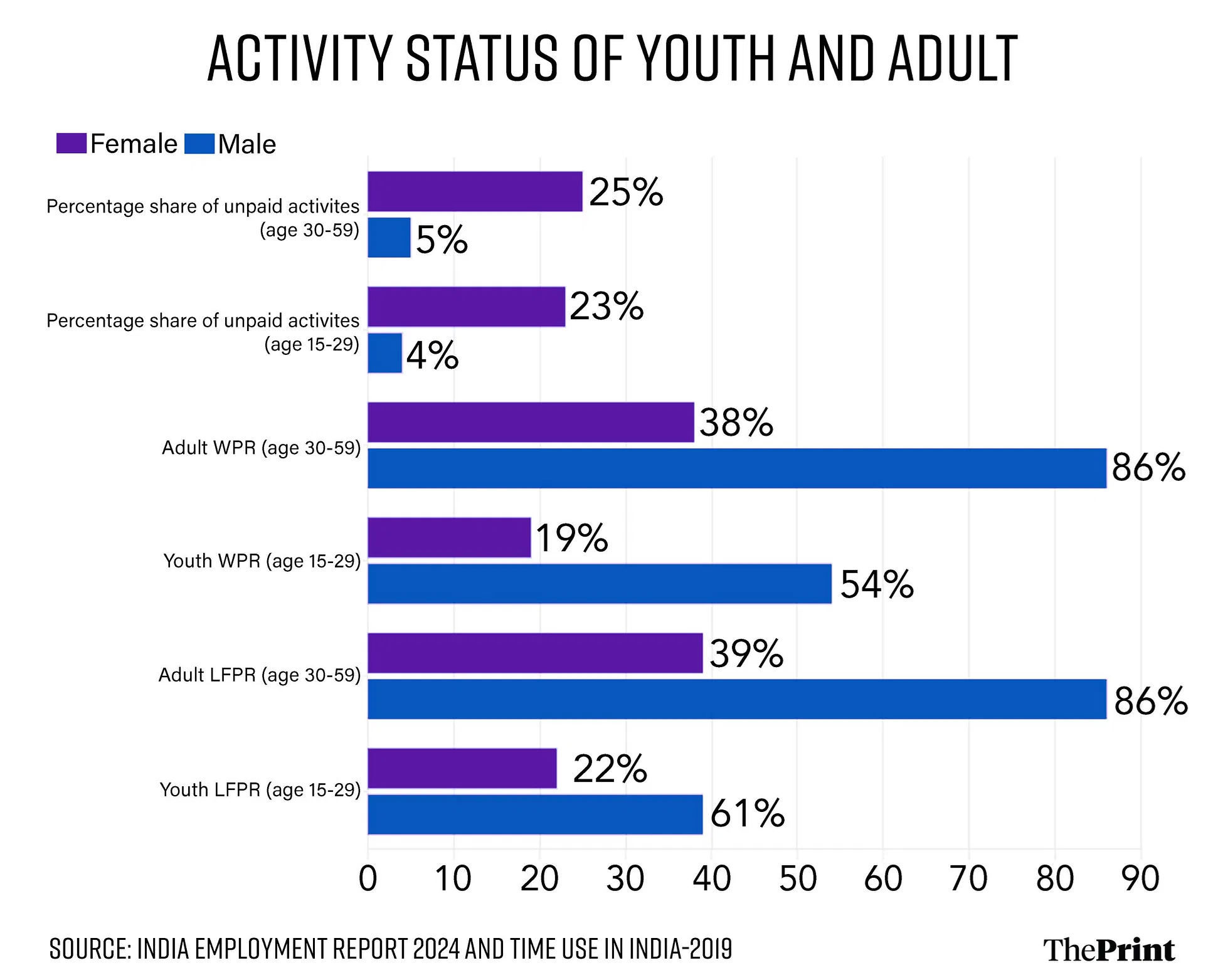
Everyone shares the same “time budget” of 365 days a year and 24 hours a day. However, the ability to allocate time freely is influenced by societal norms and gender roles. The significant disparities in time spent on unpaid work between women and men underscore the need for a closer examination. In rural India, women spend an average of 301 minutes per day on unpaid work, while urban women dedicate 293 minutes. In contrast, rural men devote only 98 minutes, and urban men spend 94 minutes on these activities. This stark contrast in unpaid work could be a key factor contributing to the gender gap in the labour market. Every extra minute women spend on unpaid work costs them the opportunity to earn a living and be independent.

Data from the Periodic Labour Force Survey (PLFS) 2021–22 corroborate these findings, revealing that a whopping 76 per cent of women in the productive age group (15–59) reported being out of the labour force due to childcare and household responsibilities.On top of that, 7 per cent cited social reasons for not being employed. However, research from different parts of the world indicates that access to childcare programmes can significantly boost women’s participation, ranging from 5 per cent to 47 per cent, depending on various contextual factors.

Work from Home: A Catalyst

Women, with their natural instincts, outdo men when it comes to voluntarily engaging in childcare, elderly care, and other household responsibilities, but sadly, these instincts became gender norms. While it might take several generations to overcome the social barriers imposed by these gender norms, workplaces could offer a conducive environment for women to stay in the workforce. The workplace being averse to employing young, unmarried women because they will soon get married and then bear children is not uncommon. But hold on—research finds that women demonstrate unparalleled dedication in various professional domains. Their work ethics, attention to detail, and ability to multitask bring immense value to organisations. Studies consistently highlight the positive impact of gender diversity in the workplace, emphasising the significance of women’s inclusion. Women’s participation in the workforce has a direct impact on economic productivity as they bring diverse skills, perspectives, and talents. Thus, it wouldn’t be a stretch to say that a workforce that includes women is more innovative, efficient, and better positioned to address the complex challenges of a rapidly evolving global economy.

How not to lose such a productive and potentially large proportion of aspirant women to social barriers? Remote work could possibly be a solution. The concept of ‘Work from Home’ (WFH) gained prominence, especially in the wake of global events such as the pandemic. In a country like India, where women’s participation outside the home is frowned upon, WFH can be a game-changing solution. It provides women with the flexibility to balance their professional and personal responsibilities by diminishing the traditional dichotomy between work and home life. As observed in the State of Working India Report, 2023, a significant portion of employed women in India depend on public transportation for their daily commutes, a factor frequently identified as a hindrance to women’s participation in the workforce. This challenge could potentially be mitigated through the adoption of WFH practices. While WFH presents numerous advantages, challenges such as blurred work-life boundaries, potential feelings of isolation, and the need for robust digital infrastructure should be acknowledged and addressed to ensure a sustainable and healthy work environment.

India, with its high population growth rate, stands at a pivotal moment where tapping the potential of the demographic dividend could lead to remarkable economic growth. Nevertheless, this hinges on the meaningful engagement of women in the economy. Moreover, over the years, India has made substantial investments in educating its female population. The exclusion of women from the workforce implies an underutilization of the skills acquired through education.

The PLFS data also shows that of the total men who are trained in vocational courses, about 80% stayed out of the labour force as they proceeded to pursue higher education. On the other hand, this proportion is only 11% in the case of women, while an additional 87% of women stayed out of the labour force to attend domestic duties.To reap the benefits of educational investments, it is essential to create avenues for women to apply their learning in professional settings.

The rapid evolution of digital technologies has heralded a transformative era, reshaping every aspect of life across the globe. Digital advancements present a unique opportunity to break down barriers and empower women economically. Freelancing, online entrepreneurship, and remote work options can provide women with a platform to transcend the constraints posed by traditional roles or geographical and social barriers.

Digitalization has democratised access to education and skill development. Online courses, webinars, and digital skill-building platforms can allow women to acquire relevant skills irrespective of their geographical location. This, in turn, can enhance their employability and equip them with roles in emerging digital industries.However, despite the positive promises, digitalization also suffers from various challenges. The persistent digital gender divide in the country, due to uneven access to digital tools and literacy, remains a challenge. Bridging this gap is pivotal to ensuring that women, irrespective of their socioeconomic backgrounds, can harness the benefits of digitalization.

The active participation of women in India’s economic growth is not just a matter of equality but also an economic and social imperative. A nation that leverages the talents, skills, and aspirations of its entire population, irrespective of gender, stands to gain immeasurable benefits. To garner India’s demographic dividend and ensure inclusive growth, it is essential to create an environment that empowers and enables women to participate fully and meaningfully in the nation’s progress.

Jyoti Thakur is associate fellow and Poonam Munjal is professor at NCAER, New Delhi

    Get updates from NCAER