7 October, 2026
Published in: The Economic Times
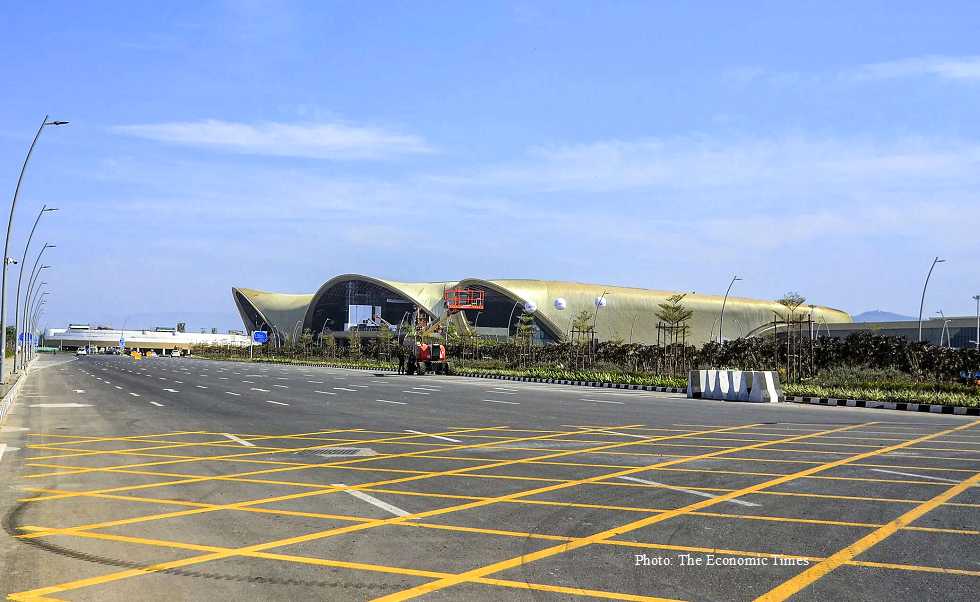


Published in: The Economic Times
The government has addressed market concentration concerns in the latest airport privatisation round, but bidder eligibility and the treatment of concession fees warrant greater scrutiny.
On August 4, 2026, the Government of India approved (in-principle) the proposal of the Ministry of Civil Aviation to privatise 11 airports in 5 bundles through Public-Private Partnership (PPP) mode.
Three issues that came up in the earlier 2018-19 airport privatisation experience related to replacing a public monopoly (Airports Authority of India) with a private monopoly by capping the number of airports that a single bidder can get, weighted technical eligibility condition (with higher weight to experience in the concerned sector), and the treatment of bidding parameter (per passenger fee) while fixing the the regulator.
While the stance on one of these issues has been clarified in the current initiative, it would help if the Government explained its stand on the remaining two issues.
Capping the number of airports awarded to one company
The best practice is to cap the number of airports that a single bidder can be awarded, for several reasons, including preventing market concentration, avoiding thin spreading of resources by the winning bidder, the need for yardstick competition to decrease the information asymmetry that the regulator (in this case, the Airport Economic Regulatory Authority, AERA) faces, and to increase the likelihood of finding an alternative private provider in case the original awardee fails to fulfil its obligations.
It is for these reasons that, though GMR was the only qualified bidder for both Delhi and Mumbai airports originally, both airports were not given to the same company.
Similarly, though Ayala – International Water (Manila Water) was the least cost bidder for both the east and west zones of Manila, both the zones were not awarded to the same company.
Likewise, when the Government of Delhi was privatising the power distribution segment, it was considered prudent to divide the area into three zones (in addition to the Lutyens Delhi zone, which NDMC serves) and award them to separate companies.
As we know, airport tariffs [specifically, the UDF paid by passengers and the Landing charges paid by the airlines] are regulated and are set by AERA. Important inputs in setting these tariffs by AERA include the amount of capital and operational expenditure incurred by the respective airport companies.
This number can be opaque with a single provider, and with competing providers, the regulator can get a better estimate of the expenditure incurred that would need to be compensated, while setting the UDF and the Landing charges.
This is the whole idea behind facilitating yardstick competition in natural monopolies.
However, this important tenet was overlooked in the last round of airport privatisation (2018-19), as reflected in the minutes of the Public-Private Partnership Appraisal Committee (PPPAC) meeting on December 11, 2018.
It was stated in that meeting that the Empowered Group of Secretaries (EGoS), in its meeting held on November 17, 2018, decided that no restriction needs to be placed on the number of airports to be bid for or to be awarded to a single entity, and PPPАС decided not to re-examine the matters which were already decided by the EGoS.
So, the PPPAC needs to be complemented for its decision in August 2026, whereby the cap on the number of airports that a company can be awarded has been restored “to mitigate the risks arising from market concentration and potential over-leveraging, including their possible cascading impact across projects”.
Technical eligibility of bidders
The Government’s Model Request for Qualification of bidders prescribes technical eligibility for bidders in the form of a weighted experience score, with greater weight given to experience in the relevant sector.
This stands to reason, given what happened in the infamous Morbi bridge collapse of 2022, where a bridge contract was given to a watch company resulting in the deaths of 140 people. However, in the 2018-19 airport transaction, EGoS had decided that “prior airport experience may neither be made a pre-requisite for bidding, nor a post-bid requirement”.
Therefore, it was decided to keep the experience in all infrastructure sub-sectors (without weighting) as per the Harmonised Master List of the Ministry of Finance.
In the current round of airport privatisation bidding, however, the PPPAC has decided to proceed with the unweighted experience score criterion used in the 2018-19 bidding round.
“Accordingly, eligible technical experience would be assessed with reference to the infrastructure sub-sectors included in the Harmonised Master List of Infrastructure”.
Maybe restoring the weighted score would have been better, given the experience of the Morbi bridge collapse.
Bidding parameter as a cost element
Per-passenger fee was the bidding parameter for the 2018-19 airport transaction, and it has been retained in the current proposal for 11 airports.
While the per-passenger fee is a relatively robust bidding parameter, it should be ensured that it is never construed as a cost to be offset by higher UDF and landing charges.
The concession fee (per-passenger fee * number of passengers using the airport) should come out of profits, just like dividends, and can never be considered a cost.
If the bidding parameter is considered a cost to be reflected in higher UDF and landing charges, then this would amount to the Government awarding the project based on the highest UDF – a preposterous proposition in a democracy.
Also, there would be no limit to what the bidders can bid, as higher UDF and landing charges would compensate them. In other words, if the bidding parameter is made a cost element (just like wages), then it cannot be the bidding parameter.
The table below shows the UDF trend vis-à-vis the bid parameter in recently privatised airports. In addition, international passengers are subject to a much higher UDF, and it has also been imposed on disembarking passengers.
While AERA excludes the bidding parameter from the calculation of passenger tariffs and treats it as non-pass-through expense, given that there is information asymmetry at the regulator-end (the regulator does not exactly know the actual capital and operational expenditure), the extent of increase in UDF, which has increased from ₹150 in 2022 to ₹735 in 2025-26 (when the winning bid was ₹115 per passenger) per embarking domestic passenger in the case of Mangaluru, for example, gives rise to the suspicion that some element of the bidding parameter has been incorporated in the higher UDF.
So, in the current round of airport privatisation, it should be explicitly stated that the bidding parameter cannot be construed as a cost to be compensated for through higher UDF and landing charges. This will prevent socialisation of the costs of aggressive bidding.
(The author is is Professor of Practice (Finance & Public Policy) at Shiv Nadar University, Visiting Professor at National Council of Applied Economic Research (NCAER), and former Joint Secretary (Infrastructure Policy & Finance), Ministry of Finance, Government of India). Views are personal.