2 August, 2025
Published in: The Hindu Business Line
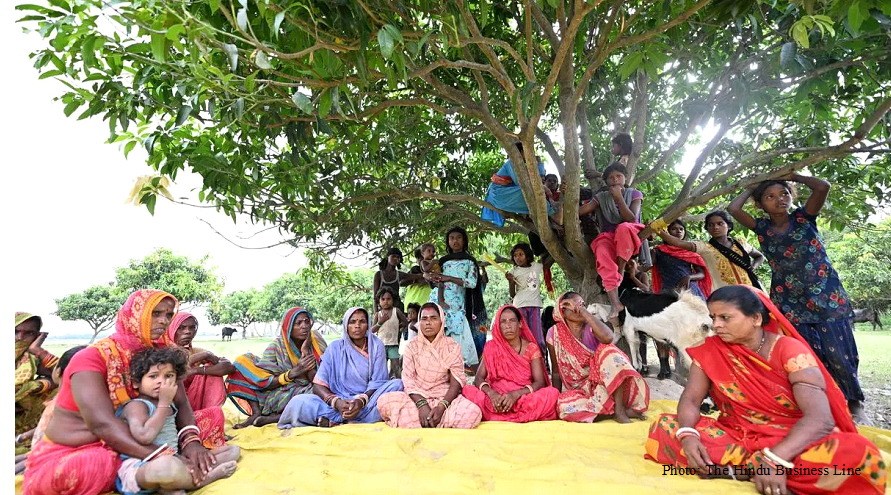


Published in: The Hindu Business Line
There are significant education gaps that need to be addressed. Support systems like creches and safe transport are vital.
In 2016, Bihar made headlines by reserving 35 per cent of all government jobs for women. It was a bold move — an attempt to do more than just include women on paper. The policy extended beyond just classrooms and panchayat halls, signalling that woman belonged in the workforce, in power, and in public institutions.
Fast forward to 2025, another election year. In a move aimed at localising the benefits of this reservation, the Bihar government has now said that only domicile women — those who are residents of the state — can claim that 35 per cent quota.
While this may bring the focus squarely on Bihar’s own women, it raises an important question: Are we enabling them to actually reach these jobs, or just limiting the pool without changing the playing field?
The good news is that more women in Bihar are participating in the workforce. According to the PLFS, Bihar’s female Worker Population Ratio has jumped from a dismal 4 per cent in 2017-18 to nearly 30 per cent in 2023-24. Much of this growth is happening in rural areas.
But here’s the catch — it’s not stable or formal work. In rural Bihar, self employment has ballooned from 35 per cent to a staggering 85 per cent —but mostly as unpaid “helpers” in family enterprises, not as owners or entrepreneurs. Urban women saw a similar trend. The number of those running small businesses or working on their own remained steady, while “helper” roles jumped from 3 per cent to 29 per cent.
Meanwhile, despite quota in place salaried jobs have been shrinking —rural women in regular jobs fell from 27.8 per cent to just 3.6 per cent. Urban salaried jobs among women halved too, from 63 per cent to 30 per cent.
So, yes, women are working more. But they’re not climbing up the ladder — they’re being pushed into informal, often unpaid or insecure roles. That’s not empowerment. That’s survival.
The education gap
For a job reservation to work, women have to be eligible. And that starts with education. In rural Bihar, nearly 45 per cent of women were still illiterate in 2023-24. In urban areas, it’s 27 per cent. Just 3.1 per cent of rural women and 13.4 per cent of urban women held a graduate degree in 2023-24 — barely an increase from 2017-18. Higher secondary education is slowly improving but remains out of reach for most.
Even where girls are enrolled in school, a 2024 study from IIT Patna found that gender norms continue to push them away from competitive subjects like science, law, and public administration — fields that often lead to government jobs.
So, while the quota exists, how many women will actually qualify to claim it?
Another invisible hurdle is time — or the lack of it. According to the Time Use Survey 2024, Bihari women, both urban and rural, spend about five more hours a day than men on unpaid domestic and care work. That’s cooking, cleaning, caregiving — tasks rarely counted as “real work,” but which fill the majority of their day.
Unsurprisingly, per IWWAGE data, around 70 per cent of women in Bihar cite domestic duties as their main reason for not being in the workforce.
Without support systems — like child care centres (creches), safe transport, or flexible work — many women simply don’t have the time to take on paid employment, even if they want to.
On paper, Bihar’s 35 per cent reservation for women looks visionary. And the new domicile clause may seem like a push to make it more targeted. But without investments in education, skilling, child care, housing, and public perception of women’s roles, the policy risks becoming another missed opportunity.
What we need isn’t just a quota. We need to clear the road so that women can walk it.
It’s time Bihar stops framing women’s employment as a symbolic gesture and starts treating it as a structural priority. Otherwise, we’re just making promises on paper — when what women really need is a chance to show up and thrive.
The writer is associate fellow at NCAER, New Delhi. Views expressed are personal.