

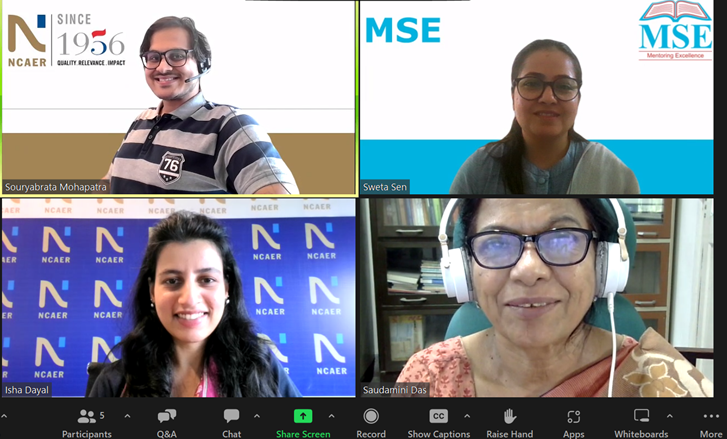
 NCAER hosted an online lecture titled “The role of adaptation in vulnerable Coastal India” presented by Dr. Sweta Sen (Assistant Professor at MSE) and discussed by Dr. Saudamini Das (Full Professor at IEG), as part of its Virtual Dialogue Room Webinar Series moderated by Dr. Isha Dayal and chaired by Dr. Souryabrata Mohapatra on Friday, 26 July 2024, at 4:00 pm IST.
Abstract:
The changing climate has heightened the intensity of cyclonic disturbances and increased vulnerability. Projections indicate at least one severe cyclonic storm will occur over the Bay of Bengal each year until 2050. Our findings reveal that the vulnerable population grows by more than 15% with each tropical cyclone. Particularly, impoverished and vulnerable communities, such as fishermen, require more focused attention and incentives. A critical question arises: Why can the vulnerable population not adequately prepare? We examine various strategies adopted by coastal households, specifically coping and adaptation mechanisms. Using Cumulative Prospect Theory, we provide evidence of loss aversion behaviour, which contributes to a vulnerability trap. Individual behaviour significantly influences household adaptation strategies. Therefore, promoting and incentivising ‘Lifestyle for Change,’ which supports behavioural change for a sustainable lifestyle, is essential for mitigating climate change in coastal India.
For information, see: https://doi.org/10.1016/j.ijdrr.2023.103834
Speaker quotes
- “There is a need to change the adaptive behaviour of the households in Coastal India to transform them into a sustainable livelihood. Incentivising vulnerable communities, especially fishers, to adapt strategies, especially if any cyclonic disaster occurs at a micro-level, should be prioritised.”—says Dr. Sweta Sen
- “Ex-ante cyclone preparedness should include livelihood protection along with lives and properties. Pradhan Mantri Fasal Bima Yojana can be extended to loss of livelihood assets, including fishery.”—says Dr. Saudamini Das
Short bios:
1 Dr. Sen is an Assistant Professor at the Madras School of Economics (India), specialising in the economics of coastal disasters, environmental and ecological economics, development and behavioural economics. She has a keen interest in remote-sensing satellite data and GIS, which is evident in several of her research outputs. Her work has been published in esteemed journals such as Empirical Economics (ABDC A), International Journal of Disaster Risk Reduction (ABDC A), Journal of Social and Economic Development, World Development Perspectives, and GeoJournal (×2). Dr. Sen has received very positive feedback from peers by presenting her research findings at renowned academic events, including those organised by the American Geophysical Union. In addition to her research, she presently teaches fundamental and advanced Microeconomics and a course on Sustainable Development at the postgraduate level. Following her PhD, Dr. Sen worked as a Sr. Researcher at the Institute of Economic Growth—IEG on a G-20 project. She has been involved in numerous projects focusing on financial inclusion, food insecurity, and the impact of the MNREGA scheme.
2 Dr. Das is a full professor in the Indian Economic Services (IES) Section of the Institute of Economic Growth (IEG) and was the Institute’s NABARD Chair Professor from 2016-21. She is a fellow of the South Asian Network for Development and Environmental Economics (SANDEE, Kathmandu) as well as the Indian Society for Ecological Economics (INSEE) and has worked as a Mälar Scholar (2011-12) at the Beijer Institute of Ecological Economics, Royal Swedish Academy of Sciences (Stockholm). She is a Senior Research Fellow of the Centre for Research on the Economics of Climate, Food, Energy, and Environment (CECFEE) at the Indian Statistical Institute (Delhi) and the global network Environment for Development (EfD) at the University of Gothenburg (Sweden). Her research areas are Climate change adaptation, assessment of loss and damage to livelihood due to climate change, valuation of ecosystem services, coastal vulnerability analysis, mangroves, and evaluation of public policy. She is presently an Editor for the Elsevier journal Ecological Economics and Cambridge University Press Journal Cambridge Prism: Coastal Futures.
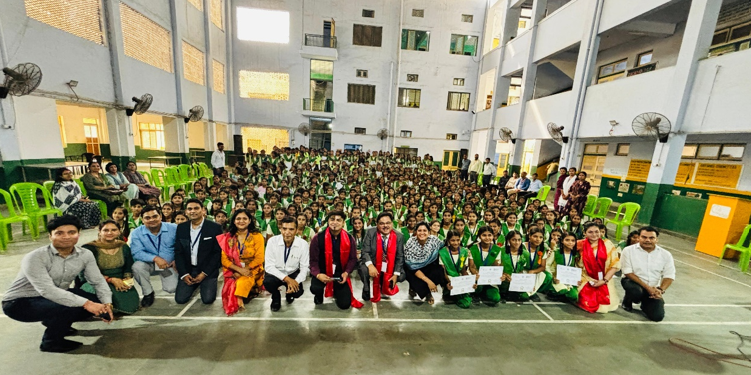
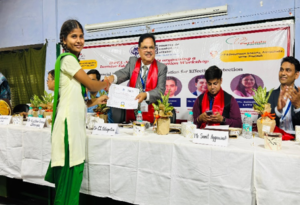 Dr. CS Mohapatra emphasized the importance of financial literacy as the foundation for economic empowerment and financial security. He discussed how educating school children about money management can lead to a more financially responsible generation and preparing school children to understand the complexities of the financial world from a young age.
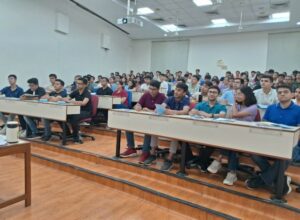
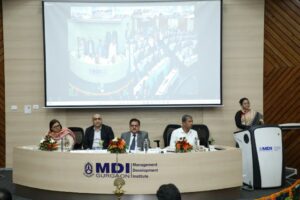 The IEPFA-NCAER workshop conducted in collaboration with the School of Management of Financial Institutions (SoMFI), Management Development Institute (MDI) Gurgaon witnessed an interactive group of over 680 management students. The workshop brought together prominent experts from various sectors including financial sector specialist, former banking regulator, capital market and commercial banking. The focus was on equipping the youth with necessary skills and knowledge to navigate through the complexities of the modern financial landscape.
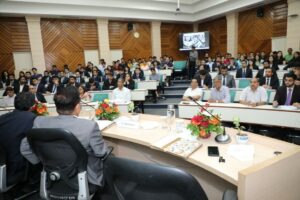 Ms. Anita Shah Akella, CEO of IEPFA and Joint Secretary in the Ministry Corporate Affairs, in her message, conveyed that investor education and protection is on the national agenda and highlighted IEPFA’s efforts in creating a more informed, protected, and empowered community of investors. Through her message, she encouraged the students to actively participate, engage with IEPFA initiatives and take this opportunity to enhance their understanding and promote advocacy of investor rights and education. Ms Akella called for involvement of the youth in driving the progress IEPFA aims to achieve in safeguarding the interests of investors across the nation.
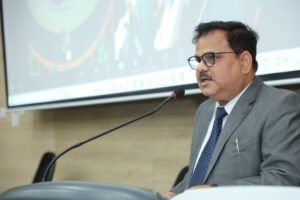 Dr Mohapatra stressed on sustained and synergized investor education efforts at a heightened level with modernised curriculum that adequately addresses the up-to-date protection systems in place including the fraud prevention measures taken by regulators and government. Updated investor knowledge, sustained confidence and trust in the financial markets on the one hand and expanding the retail investor base with a broad-based approach with an inclusive strategy will go a long way in moving fast towards a Viksit Bharat, he stated.
 The panel discussion featured Gaurav Kapoor, VP and Region Head at the National Stock Exchange of India; Shailendra Nath Jha, Former DGM and Deputy Ombudsman at RBI; and Ms. Shifali Jain, Senior VP & Group Head of Institutional Business at Axis Bank. They explored financial education, digital advancements, and investor protection. Gaurav Kapoor emphasized that financial literacy is essential for empowering investors in the rapidly evolving digital world, and stressed the importance of developing sound financial habits early. Ms. Shifali Jain discussed how digital payment infrastructure has enhanced financial inclusivity and highlighted the need to bridge the gender gap in financial literacy. Shailendra Nath Jha pointed out that cyber frauds can be reduced through better digital hygiene and awareness of fraud tactics.
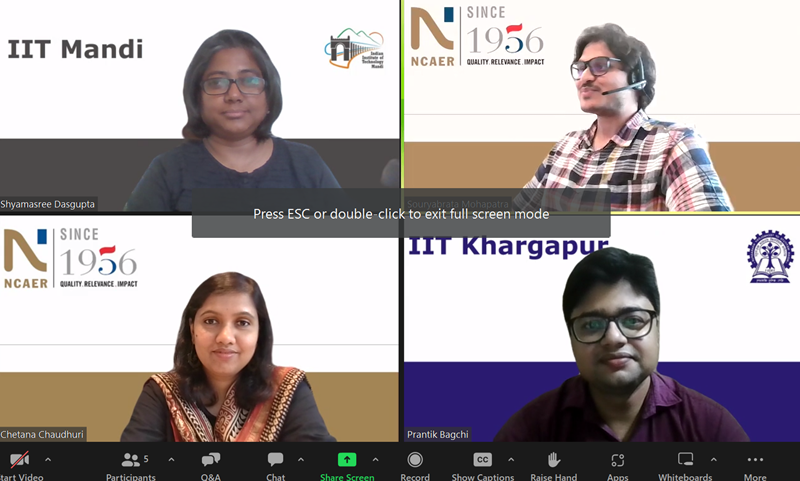 NCAER hosted an online lecture titled “The conundrum of Porter Hypothesis, Pollution Haven Hypothesis, and Pollution Halo Hypothesis: evidence from the Indian manufacturing sector” presented by Dr. Prantik Bagchi (Assistant Professor at IIT Kharagpur) and discussed by Dr. Shyamasree Dasgupta (Associate Professor at IIT Mandi), as part of its Virtual Dialogue Room Webinar Series moderated by Dr. Chetana Chaudhuri and chaired by Dr. Souryabrata Mohapatra on Wednesday, 10 July 2024, at 4:00 pm IST.
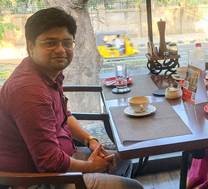 1 Dr. Bagchi is currently working as an Assistant Professor in the Department of Humanities and Social Sciences at IIT Kharagpur. His prior work experiences include IIM Shillong and Madras School of Economics. He completed his PhD from IIT Madras and was a recipient of the Post-Doctoral Equivalent Fellowship for submitting the Thesis in three years and getting the best reviews. His area of interest lies in Natural Resources and Environmental Economics, Energy Economics, and Applied Microeconometrics. He has published papers in several journals, including Annals of Operations Research (ABDC A), Technological Forecasting and Social Change (ABDC A), Journal of Cleaner Production (ABDC A), and many other reputed journals. He has reviewed articles in different Journals, viz. Studies in Microeconomics, Journal of Quantitative Economics, Journal of Safety Science and Resilience, and Transactions on Consumer Electronics (IEEE). He is working as an Associate Editor in SN Business and Economics. His works are featured in IITM TechTalk, The Hindu Business Line, The Times of India, The Telegraph, Press Information Bureau (Chennai), and others. His students received Best Paper Awards in many conferences, such as the 3rd Annual Economic Summit, St. Xavier’s University Kolkata, and the International Humanities and Social Sciences Student Colloquium at BITS Pilani, Dubai (IHSSRC).
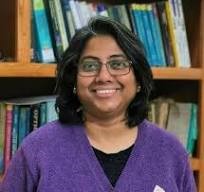 2 Dr. Dasgupta is an Associate Professor and Chair in the School of Humanities and Social Sciences at IIT Mandi. She is an economist by training. Her teaching and research interests remain in the areas of energy, environment, and climate change. She earned her BS in Economics from Calcutta University and her MA from Delhi School of Economics. She obtained PhD from Jadavpur University, Kolkata. She was visiting researchers at Utrecht School of Economics, Netherlands; Joint Global Change Research Institute at Pacific Northwest National Laboratory, USA; and the University of Stavanger, Norway. She has several publications in reputed peer-reviewed journals, namely, Energy Economics (ABDC A*), Energy Policy (ABDC A), Natural Hazards, etc. She has been a member of the Working Group constituted by the Department of Science and Technology, Government of India, related to the Himalayan Ecosystem for preparation of India’s Adaptation Communication to UNFCCC and a Contributing Author in Working Group III to IPCC AR5.
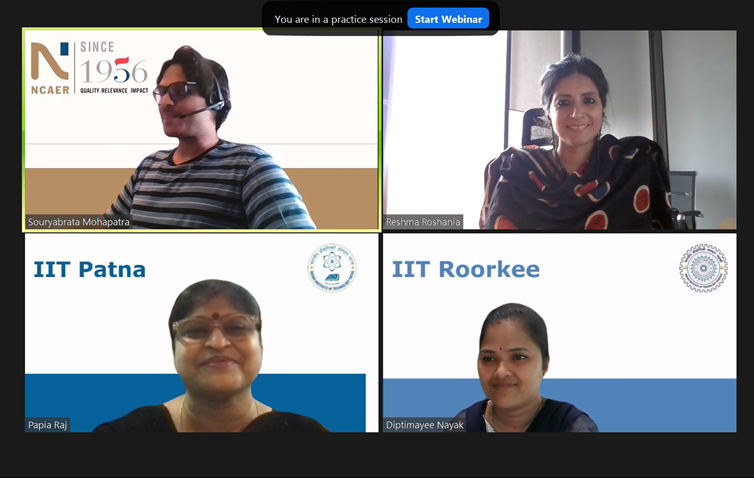 NCAER hosted an online lecture titled “How do households living in arsenic-contaminated regions value safe drinking water?” presented by Dr. Diptimayee Nayak (Associate Professor at IIT Roorkee) and discussed by Dr. Papia Raj (Associate Professor at IIT Patna), as part of its Virtual Dialogue Room Webinar Series moderated by Dr. Reshma Roshania and chaired by Dr. Souryabrata Mohapatra on Friday, 28 June 2024, at 4:00 pm IST.
 1 Diptimayee is an Associate Professor of Economics at the Department of Humanities and Social Sciences at IIT Roorkee. Her research and teaching span the broad areas of environmental economics and public policy. She earned her doctorate from IIT Delhi and has contributed to the scientific academia by publishing several articles in reputed international journals related to non-market environmental valuations of forest and national park ecosystems, groundwater management, and institutional mechanisms like participatory management for ensuring the sustainability of different ecosystems. Moreover, she has undertaken policy-oriented projects that aid in decision-making for the National Green Tribunal (Ministry of Environment, Forest and Climate Change) and the National Mission for Clean Ganga (Department of Water Resources, River Development and Ganga Rejuvenation). She has been involved in program evaluation and other important national projects such as Arth Ganga, the Ramganga river ecosystem services, sand mining in the Subarnarekha river, forest fire studies in Uttarakhand and Madhya Pradesh, and the PM Ujjawala Yojana. She is currently the core instructor of a successful NPTEL course (ID 109107171) on introductory environmental economics.
 2 Papia Raj is an Associate Professor in the Department of Humanities and Social Sciences at IIT Patna. She is a public health expert specialising in social determinants of health. She was the recipient of the Canadian Commonwealth Scholarship and completed her doctorate from McGill University (Montreal). She was a postdoctoral fellow in the School of Population and Public Health at the University of British Columbia (Vancouver). She has received research funding from various national and international organisations, including the Indian Council for Social Science Research (ICSSR), the National Commission for Women (NCW), the National Institute of Educational Planning and Administration (NIEPA), the Canadian Institutes of Health Research (CIHR), and Social Sciences and Humanities Research Council Grant (SSHRC, Canada). Dr. Papia has also been a consultant to various international projects. She serves on the editorial board for various journals, including Sage Open (SAGE), Lancet, Frontiers in Public Health, Waste Management and Research (SAGE), Canadian Journal of Public Health, etc. She has been working on health and development issues in Bihar since 2001 and has extensively published her research findings in both national and international journals of great repute and also in leading newspapers, including the Times of India. She has also recently co-authored a book with her spouse and faculty colleague, Dr. Aditya Raj, titled “Discard Studies in India: A Case of Patna.”