

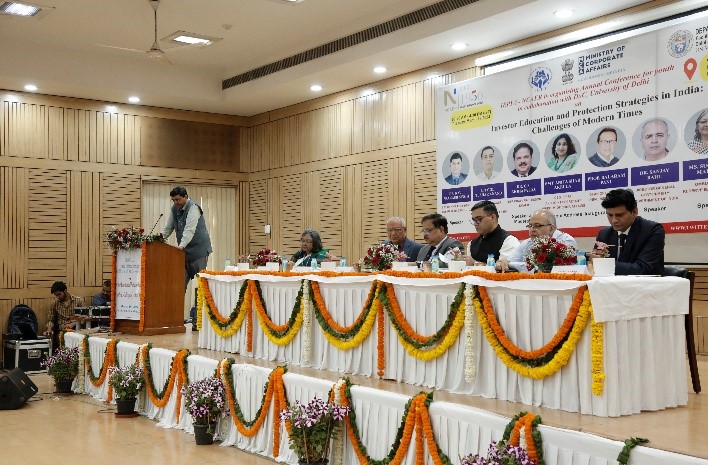
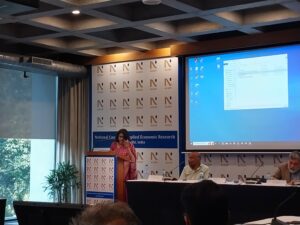
The Investor Education and Protection Fund Authority (IEPFA), in collaboration with the National Council of Applied Economic Research (NCAER) and the Department of Commerce, DSE, University of Delhi hosted a conference for youth to bolster financial literacy and inclusion.
The conference titled “Investor Education and Protection Strategies in India: Challenges of Modern Times” brought experts from various sectors, such as RBI, Ministry of Corporate Affairs, cybersecurity, regulatory bodies, academics and capital market experts to shed light on critical financial issues and empowerment strategies in today’s digital age.
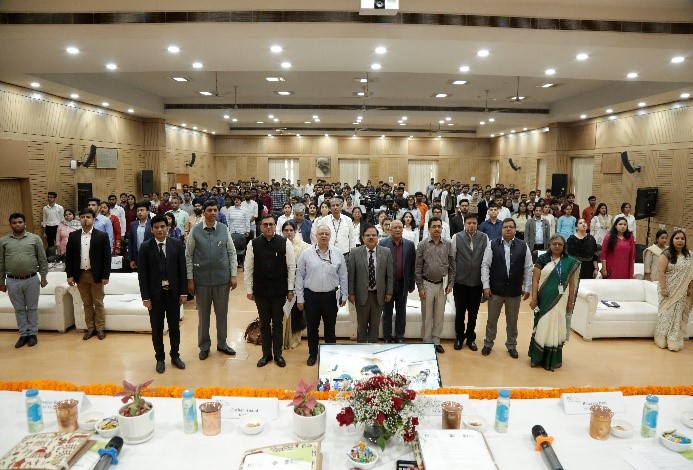 In his address, Prof. Ajay Kumar Singh, Head and Dean, Department of Commerce, Delhi University, underscored the importance of collective efforts in fostering a financially literate and empowered society.
The address set the tone for the day’s proceedings, emphasizing the conference’s commitment to actionable insights and strategies for financial inclusion of youth.
In his address, Prof. Balaram Pani, Dean of Colleges, University of Delhi, highlighted the critical role of investor education in today’s fast-evolving financial landscape and called for unified actions to bridge knowledge gaps and ensure equitable access to financial resources and information.
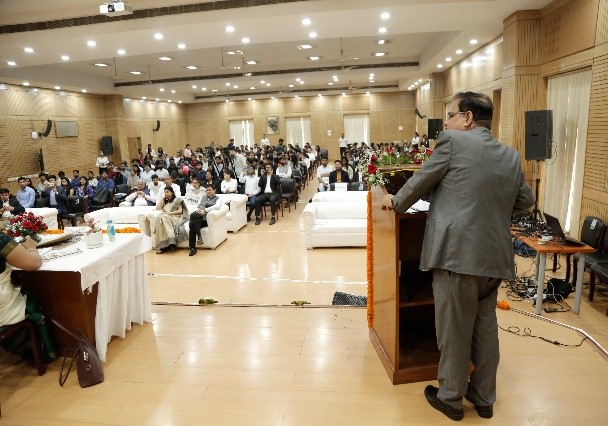 In her message, Ms. Anita Shah Akella, CEO of IEPFA and Joint Secretary in the ministry corporate affairs, emphasized the significance of investor education and protection on the national agenda. She encouraged students to start early with investments to build a brighter and more secure future.
Moderating the discussion, Dr. C S Mohapatra, the IEPF Chair Professor at NCAER, highlighted that the rapid digitalization of financial services, while offering unprecedented accessibility and opportunities, also presents new challenges in this modern era in terms of cyber security, online fraud, and the complexity of modern financial products.
Prof Mohapatra emphasized that younger generation, who stand on the frontier of digital finance revolution needs more attention in terms of education and protection. “Today’s youth, as digital natives, are uniquely positioned to leverage the vast potential of fintech innovations, yet they are also at risk from the very complexities and vulnerabilities these technologies introduce,” he said.
He said it is imperative that the strategies framed by regulators not only educate them about the fundamentals of investing but also arm them with critical digital literacy skills. This includes understanding cybersecurity measures, recognizing online scams, and making informed decisions in an environment saturated with information overload and finfluencers. Dr Mohapatra stated that “by empowering our young investors with knowledge and tools for protection, we are not just safeguarding their individual financial futures but also fortifying the backbone of our economy”.
Lt Col Tushar Anand delved into the microeconomic importance of investor education and protection, emphasizing the initiatives by IEPFA for investor education and the current scenario of claim settlements.
Ms. Suchitra Maurya tackled the complexities of the Grievance Redressal Mechanism, highlighting the significant strides and challenges within the banking sector. She spoke on the evolving landscape of digital banking, coupled with insights on cryptocurrency regulations and Central Bank Digital Currency (CBDC).
Dr. Sanjay Bahl focussed on cybersecurity measures, focusin g on government actions and the common pitfalls consumers face in the digital realm. He spoke about the need for regulatory landscape for finfluencers and financial apps at a time when lot of Apps-related scams have come to light.
Dr. Ravi Prakash Singh stated that the influx of young investors to the capital market has a profound impact by driving innovation through technology adoption, embracing risk for long-term gains, promoting socially responsible investing, leveraging access to information and education for informed decisions.
Concluding the discussion, Mr Sumit Aggarwal, AGM at IEPFA, extended a vote of thanks, acknowledging the invaluable contributions of all the participants, speakers, and attendees. He lauded the collaborative spirit of the conference, aligning stakeholders towards the shared goal of enhancing financial literacy and safeguarding investor interests.
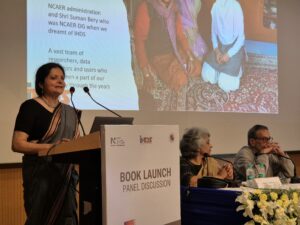 NCAER’s National Data Innovation Center hosted the book release ceremony of “India’s Social and Economic Transformation in the 21st Century,” a collected volume of papers using data from the Indian Human Development Survey, curated by the editors, Pallavi Choudhuri, Sonalde Desai, and Amaresh Dubey, and published by Routledge.
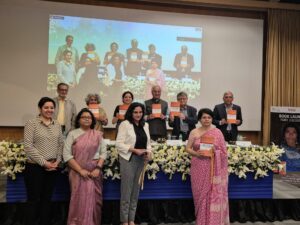 The event commenced with an insightful panel discussion themed “Data for Development: Assessing Human Development in a Rapidly Changing Society,” where the editors and distinguished speakers embarked on a deep exploration of the challenges and opportunities stemming from India’s rapid transformations.
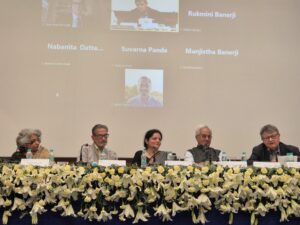 The panel deliberated on identifying priority areas and formulating effective data collection strategies to drive an evidence-driven approach to policymaking. Their discourse provided actionable strategies to navigate the complexities of our evolving society, emphasizing the imperative for evidence-driven policymaking to address persistent social inequalities.
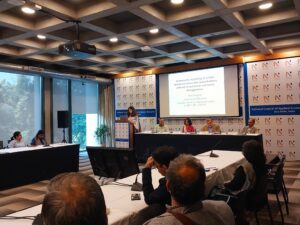 NCAER organised an in-person lecture on ‘Econometric modelling of carbon dioxide emissions and concentrations, ambient temperatures and ocean deoxygenation, by Prof. Alok Bhargava, Professor, University of Maryland, on Friday, 8 March 2024, 3:00 pm, as part of its Dialogue Room Seminar Series.
 This paper analysed several longitudinal data sets for investigating the dynamic inter-relationships between CO2 emissions and atmospheric concentrations, ambient temperatures and ocean acidification and deoxygenation. The methodological framework addressed issues such as the use of temperature ‘anomalies’, diffusion of CO2 to atmospheric stations, distributional misspecification and non-stationarity of errors affecting empirical models, and use of spline functions for modelling trends in temperatures. Longitudinal data on CO2 emissions for 163 countries and atmospheric CO2 concentrations at 10
  stations, ambient temperatures from over 8,500 weather stations and seawater composition from over 380,000 oceanographic stations were analysed for 1985–2018 by estimating dynamic random effects models using maximum likelihood methods. The main findings were that CO2 emissions exhibited rapid upward trends at the country level, while minimum and maximum temperatures showed cyclical patterns; economic activity and population levels were associated with higher CO2 emissions. Second, there were gradual upward trends in annual and seasonal temperatures compiled at weather stations, and atmospheric CO2 concentrations were significantly associated with higher temperatures in the hemispheres. Third, there was a steady decline in dissolved oxygen levels, and the interactive effects of water temperatures and pH levels were significant. Overall, the results underscore the benefits of reducing CO2 emissions for ambient temperatures and for ocean deoxygenation. Synergies between CO2 emissions, ambient temperatures and ocean acidification are likely to exacerbate the melting of polar ice.
 Alok Bhargava is a Professor and Senior Fellow, in Center for Global Sustainability, University of Maryland. Alok Bhargava received his PhD in econometrics in 1982 from the London School of Economics. Dr. Bhargava has taught at University of Pennsylvania, Harvard University, University of Paris, and University of Houston. His research has applied econometric methods for tackling complex policy issues in economic development, health, nutrition, child development, AIDS, obesity, environmental sciences, climate change, and corporate finance. Dr. Bhargava has advised international agencies such as the World Bank, International Food Policy Research Institute, Organization for Economic Cooperation and Development, US Department of Agriculture, Centers for Disease Control and Prevention, and National Institutes of Health. Most of his research articles have been published in top tier academic journals in disciplines such as economics, anthropology, nutrition, psychology, and health sciences.
  Sanjib Pohit is a Professor at NCAER. He is an experienced modeler in the area of trade and environment with 20 years of modelling experience. His domain of research experience includes science and technology policies, institutional economics, transport economics, input-output models, FDI, informal trade, automobile industry, and South Asian integration. Previously, he held position at CSIR-National Institute of Science, Technology & Development Studies as Professor AcSIR & Senior Principal Scientist. He has served as members of several committees of Government of India including climate Change Modelling group of Ministry of Environment, Forest and Climate Change. He has published in several reputed journals.
  Purnamita Dasgupta is Chair Professor in Environmental & Resource Economics at the Institute of Economic Growth, Delhi. She has been visiting professor at University of Cambridge, UK and Johns Hopkins University, USA. Her teaching and research focus on the relationship between environment and economic development. Her research assignments include CLA of the IPCC and IPSP, author HIMAP, Advisor IPCC’s Scientific Steering Group on Economics, Costing and Ethics; CARIAA and the Association of Commonwealth Universities, UK. She has contributed to modelling for India’s NDCs and NATCOM processes, drafting regulation on e-waste, natural resource accounting for the CAG, Supreme Court committee on NPV for Forests, committee to evolve environmental standards, among others. She has published in journals such as Climatic Change, PLOS One, Environment and Development Economics, Environmental Development, Environmental Health Perspectives.
  Prof. Shreekant Gupta is a former Professor, Department of Economics, University of Delhi. He has also taught at the National University of Singapore and University of Maryland and worked as an environmental economist at the World Bank, Washington DC. He was President of the Indian Society for Ecological Economics (INSEE) and served on the Economic Options Committee of the Montreal Protocol and the Intergovernmental Panel on Climate Change (IPCC). He received his PhD in Economics from the University of Maryland and was Fulbright Fellow at Massachusetts Institute of Technology (MIT) and Shastri Fellow at Queens University, Canada. His research and teaching interest is in environmental economics with a focus on the economics of climate change. He has published in journals such as Climate Policy, Climate Change Economics and is an Associate Editor of Climatic Change (Springer).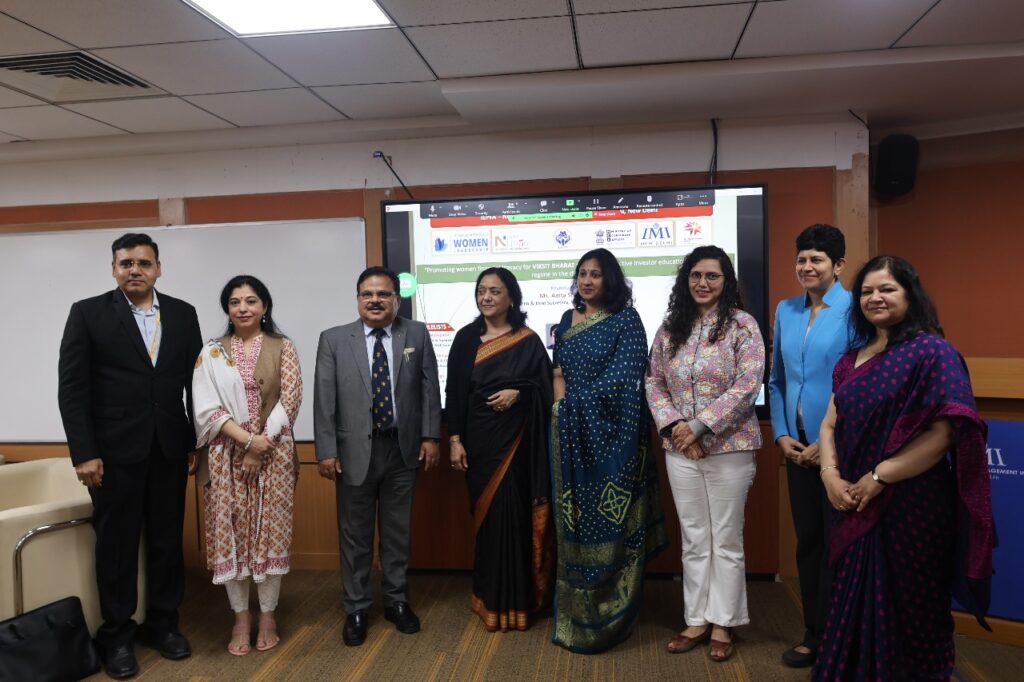
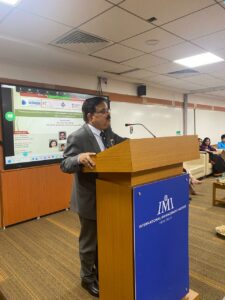 Dr. C S Mohapatra, the IEPF Chair Professor at NCAER, skillfully moderated the workshop, steering discussions towards actionable insights. He maintained a lively and participative throughout, ensuring that the discussions were both engaging and beneficial for the participants. Dr Mohapatra highlighted that as India strives to be a developed nation by 2047 through the “Viksit Bharat @ 2047” mission, promoting financial education is an integral component of empowering women, providing them access to financial information and opportunities to enable them to maximize individual financial well-being in particular, and that of the household in general. Prof Mohapatra shared on sustainable heightened financial literacy with dissemination of updated knowledge that is essential in this dynamic ever changing digitalised world while being alert about frauds and cyber security issues. He also discussed the mechanism of how one can claim the unclaimed shares, debentures, etc. and revisited the investor education and protection regulatory regime prevalent in India and deliberated ways to promote financial literacy for women in a mission-mode approach.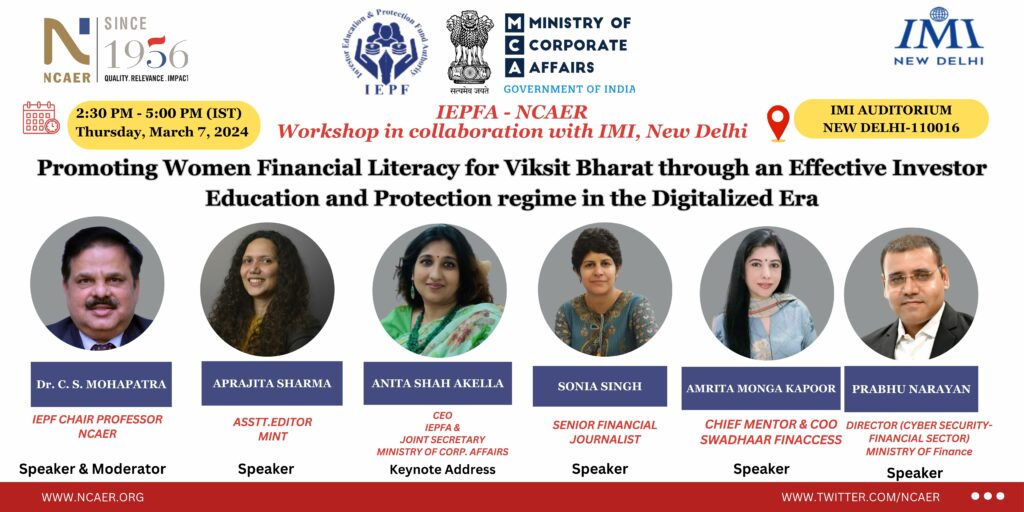
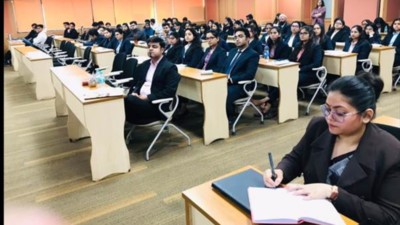 Recognizing the pivotal role of financial education in empowering women and its significance as a catalyst for societal advancement, this workshop, strategically scheduled on the eve of International Women’s Day, aimed to address and adapt financial literacy for the digital age, focusing on both its opportunities and challenges. The concerning low levels of female financial literacy in India prompted a highly participative event, which gathered financial experts, policymakers, and stakeholders in New Delhi to foster discussions on crucial enlightening topics such as claiming unclaimed shares, debentures, and other assets, and to revisit India’s investor education and protection framework. This approach underscores the critical need for enhancing women’s financial literacy for individual, household, and broader societal well-being. The workshop concluded with a highly interactive Q&A session followed by vote of thanks by IMI.
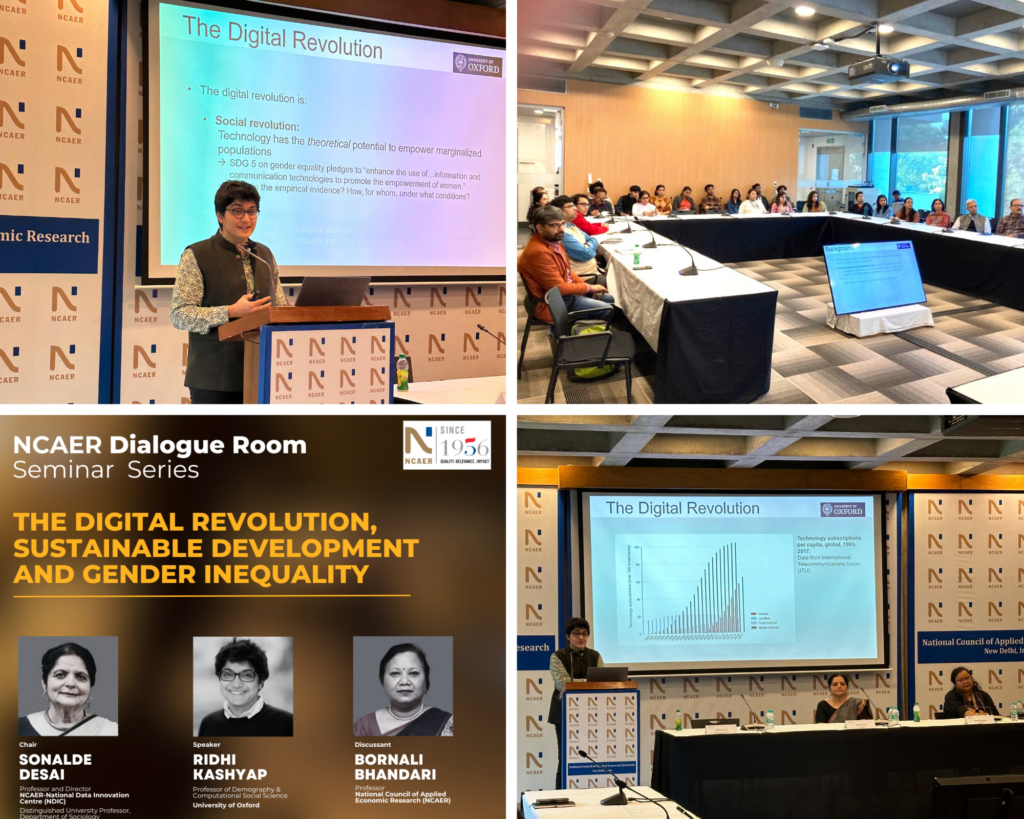 NCAER organised an in-person lecture on ‘The Digital Revolution, Sustainable Development and Gender Inequality’, by Prof. Ridhi Kashyap, Professor of Demography and Computational Social Science at the University of Oxford, on Friday, 23 February 2024, 3:00 pm, as part of its Dialogue Room Seminar Series.
 Ridhi Kashyap is Professor of Demography and Computational Social Science at the University of Oxford and Professorial Fellow at Nuffield College. Her research spans different topics linked to population dynamics and sustainable development, such as gender inequality, population health, family, migration, and the impacts of digital transformations on population and development dynamics. A central theme of her work has been to leverage computational methods and digital data streams from the web and social media for social and demographic research.
 Sonalde Desai is a Distinguished University Professor, at the Department of Sociology, University of Maryland, and Professor and Centre Director at the NCAER-National Data Innovation Centre, New Delhi. She is a demographer whose work deals primarily with social transformation and its impact on the lives of individuals with a focus on education, employment, gender, and maternal and child health. She leads the India Human Development Survey (IHDS) of over 40,000 households, one of the few national panel surveys in India that provides a rich and free public resource for studying the transformation of the Indian society in the twenty-first century between 2004 and 2023. She has published extensively in Indian and international journals and served on editorial boards of several major journals. She is a frequent contributor to Indian English language newspapers. She received a PhD from Stanford University and post-doctoral training at the University of Chicago and RAND Corporation. She was elected President of Population Association of America for 2022 and has been named a Fellow of American Association for the Advancement of Science (AAAS). She also serves on several government committees in India, such as the Standing Committee on Statistics, (Ministry of Statistics and Programme Implementation), the Task Force on Indian Statistical System (NITI Aayog), and Technical Advisory Committee on Surveys (RBI).
 Bornali Bhandari is a Professor at NCAER with a background in international economics and macroeconomics, specifically focusing on the impact of globalisation on development. Currently, she is engaged in a number of industry studies including automobiles, farm mechanisation, and digitisation. Her wider research interests include analysis of skilling from a 3-E perspective (education, employability and employment), e-Governance, infrastructure, particularly the roads and ICT sectors, G-20 issues like climate change financing and reserve currency, FDI and trade-related issues. She also oversees the production of the NCAER Quarterly Business Expectations Surveys.