NCAER organised a launch of the book, The German Chambers of Commerce and Industry, held virtually, with the author, Prof Andrè Habisch of Catholic University Eichstaett-Ingolstadt. The discussion was moderated by Dr Poonam Munjal, Senior Fellow, NCAER. The discussants were Prof Santosh Mehrotra, Visiting Professor, Centre for Development Studies, University of Bath, U.K. and Dr Bornali Bhandari, Senior Fellow, NCAER.This book examines a key factor driving the enduring international success of German companies. Beyond industrial specialisation, peaceful labour relations, local financial markets, and the “Miracle of the Mittelstand”, it focuses on a characteristic aspect of governance within the German economy, symbolised by the Chambers of Commerce and Industry. The book emphasises important characteristics of the Chamber system, including obligatory membership for firms as well as participatory rules of their self-administration.
The book examines the institution’s self-governance, its services, and its mission regarding the general representation of interests. It also identifies the advancement of the dual system of professional education as a central element of the Chamber system. Along with an introduction about how the Chamber system works, interviews, case studies, and historical explanations help to exemplify the true spirit inherent in this form of representation. In particular, they reveal the essence of how the Chambers system contributes to the global success of German companies and fosters their corporate responsibility in a practical way.
Given its scope, the book will be of particular interest to professionals, policymakers, and researchers concerned with how an institutional organisation can support commerce and industry for the public good. The book was developed in collaboration with Laura Sasse and the Practical Wisdom Society.
 Bornali Bhandari is a Senior Fellow at NCAER with a background in international economics and macroeconomics, specifically focusing on the impact of globalisation on development. Currently, she is engaged in a number of industry studies including automobiles, farm mechanisation, and technology. She is also part of the macro group at NCAER. Her wider research interests include analysis of skilling from a 3-E perspective (education, employability and employment), e-Governance, infrastructure, particularly the roads and ICT sectors, G-20 issues like climate change financing and reserve currency, FDI and trade-related issues. She also oversees the production of the NCAER Quarterly Business Expectations Surveys.
 Andrè Habisch is a Full Professor of Social Ethics at Ingolstadt Business School, Catholic University of Eichstaett-Ingolstadt. He is committed to the advancement of trans-disciplinary research, education, and application of practical wisdom in Management, Social Innovation, Applied Sustainability Management, and Catholic Social Thought for Business. His main research interests are social capital theory, social policy, and economic and corporate ethics. He received his PhD from the University of Tuebingen and holds a post-doc qualification (Habilitation) from the University of Würzburg.
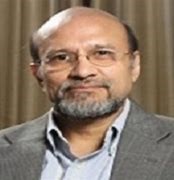 Santosh Mehrotra is currently Visiting Professor, Centre for Development Studies, University of Bath, UK.
He was earlier Professor of Economics, Centre for Labour Studies, Jawaharlal Nehru University. He has a Master’s degree (with Honours) in Economics, from The New School for Social Research, New York, where he was taught by eminent economists Edward J. Nell, Robert Heilbroner, Ross Thomson, and Gita Sen. Thereafter he did his PhD in Economics from Cambridge University.
 Poonam Munjal is a Senior Fellow at the NCAER. She has worked on a wide variety of studies, including the N-SIPI investment index, tourism satellite accounts, impact of investment in housing sector and a number of research studies based on input-output models. Previously, she worked as an Associate Director at PricewaterhouseCoopers Pvt Ltd. and as an Economist in the Economic Research Team of CRISIL Ltd. Her research work has been in the area of macro-economic analysis, tourism economy, national and regional tourism satellite accounts, input-output modelling, social accounting matrix, inter-industry linkages, labour market analysis, and analyses of large sample surveys to draw socio-economic linkages.



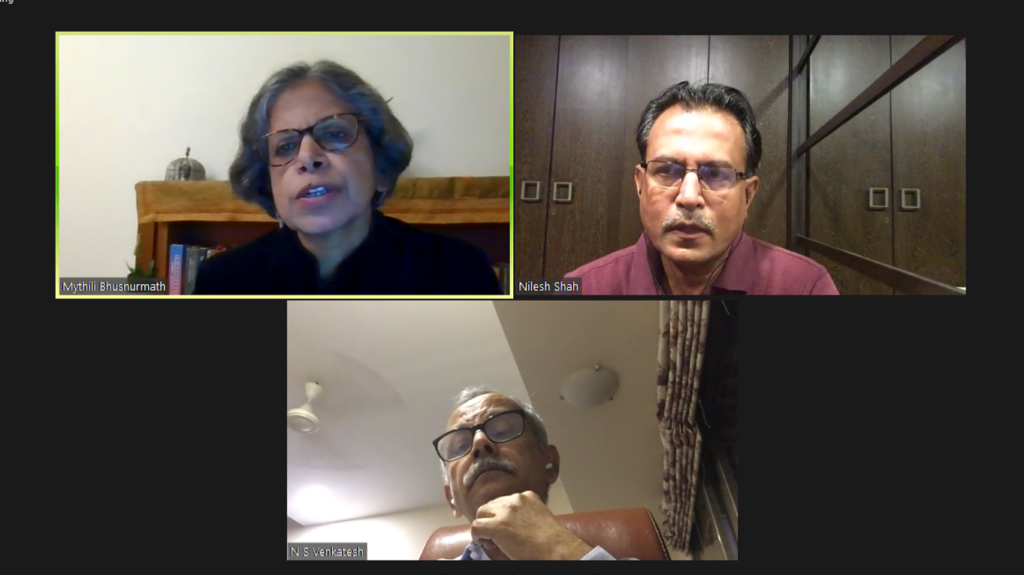 With the Union Budget 2022-23 fast approaching, wish-lists from stakeholders have started pouring in. India’s small investors are important stakeholders, who have contributed towards a baffling growth story of the stock market, despite the pandemic’s adverse impact on the economy. Although some experts are wary of this bull run, retail investors may want to stay put expecting greater returns from the market. However, some of the moot questions are: What are the challenges small investors are facing? And what are their expectations from the government? Hence, the importance of the Union Budget, wherein Finance Minister, Nirmala Sitharaman could announce policy decisions that may impact small investors. The discussions in this webinar delved around some of these questions.
 Nilesh Shah is Managing Director, Kotak Mahindra Asset Management Co. Ltd. He has over 25 years of experience in capital markets, having managed funds across equity, fixed income securities and real estate for local and global investors. In his previous assignments, he has held leadership roles with Axis Capital, ICICI Prudential Asset Management, Franklin Templeton and ICICI Securities. He was the recipient of the inaugural Business Standard Fund Manager of the Year – Debt award in 2004. He is a Chartered Accountant and a merit ranking cost accountant. Mr Shah is presently also a member of the Economic Advisory Council to the Prime Minister.
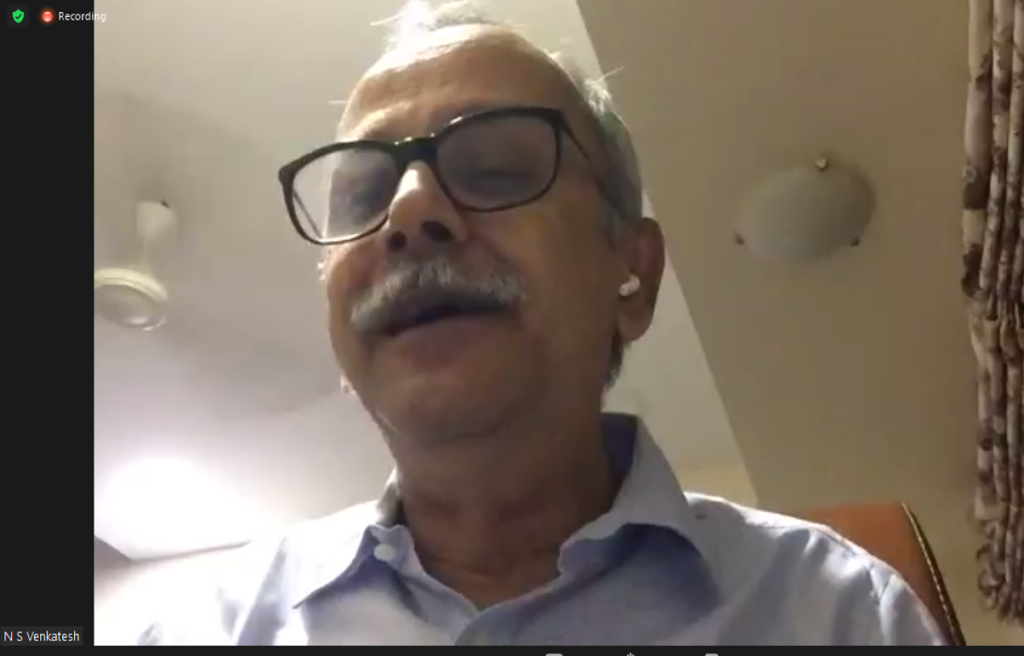 N S Venkatesh is the Chief Executive of the Association of Mutual Funds in India (AMFI). Prior to joining AMFI, a nodal association of mutual funds across India, he was Executive Director at Lakshmi Vilas Bank. He served in Industrial Development Bank of India for over 19 years. He has over three decades of experience in the banking sector, including over two decades in managing Treasury and International Banking. In addition, he has experience in matters relating to finance, risk management, information technology, accounting standards, audit and assurance as well as bank taxation. Mr Venkatesh is a Chartered Accountant by training.
 Mythili Bhusnurmath is Senior Adviser, NCAER, and Consulting Editor, ET Now TV. She holds a Master’s in Economics from the Delhi School of Economics and is a Certified Associate of the Indian Institute of Bankers. She also holds a law degree from Delhi University. She worked with the State Bank of India and Reserve Bank of India before moving to journalism in 1993. She was Opinion Page Editor, The Economic Times, and Editor, The Financial Express.
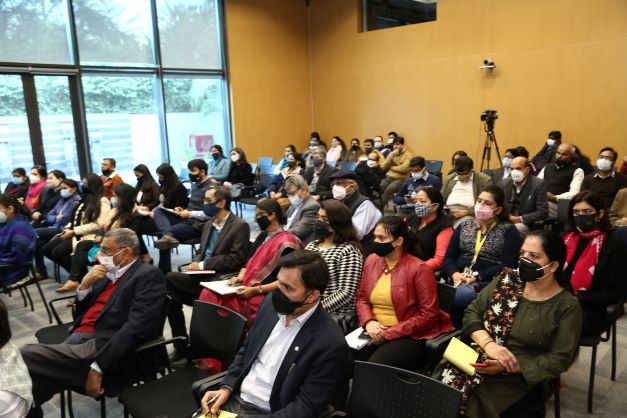 NCAER hosted a lecture by Dr Gita Gopinath, Chief Economist at the International Monetary Fund. Dr Poonam Gupta, NCAER Director General, chaired and moderated the session. The talk by Dr Gopinath focused on the outlook for global growth in the year to come. As the global economy recovers from the pandemic, a great deal of uncertainty remains about new COVID-19 variants and increased inflation pressures in many countries. Dr Gopinath discussed how policymakers can best deal with these challenges in an increasingly uncertain environment.
 The event was held at NCAER’s T2 Conference Centre. It was also live-streamed on NCAER’s YouTube channel. A large number of eminent economists, policy-makers, academics, and mediapersons followed the conversation. The talk was chaired by Dr Poonam Gupta, Director General, NCAER. In the Q & A session following the lecture, Dr Gopinath addressed a range of questions from both the live and digital audience.
 Poonam Gupta is the first woman Director General of NCAER and a member of the Economic Advisory Council to the Prime Minister (EAC-PM). Before joining NCAER, she was Lead Economist, Global Macro and Market Research, International Finance Corporation (IFC); and Lead Economist for India at the World Bank. Her prior appointments include the Reserve Bank of India Chair Professor at National Institute of Public Finance and Policy (NIPFP); Professor at Indian Council for Research on International Economic Relations (ICRIER); Associate Professor, Department of Economics, Delhi School of Economics; and, Economist at the International Monetary Fund. Her research has been published in leading scholarly journals and has featured in The Economist, Financial Times, and Wall Street Journal.