

After decades of feminist advocacy, it is now accepted as a part of conventional wisdom that all data collection systems should provide gender-disaggregated data. However, this ‘add gender and stir’ approach often fails to capture data that is critical for developing gender-friendly policies, especially data on care responsibilities, access to public spaces, and, discrimination in employment. NCAER organised a discussion on re-imagining data systems from a gendered perspective to celebrate International Women’s Day, March 8, 2022.
In recent years, national data collection systems in India have faced considerable challenges. Lack of data, particularly at a time when data are most needed, have hampered both the evaluation of public policies and an understanding of women’s lived realities. The panellists at this discussion comprised a diverse group having extensive experience with the data and evidence ecosystem. They drew upon their past experiences to discuss the importance of gender data and strategies for ensuring its efficient collection and optimal use. Broadly, the seminar address the following questions:
- How can the existing data systems be re-imagined?
- What data should be collected and from whom?
- Who should collect it?
- How do we enable feminist advocates to move beyond data gatekeepers to access pertinent data?
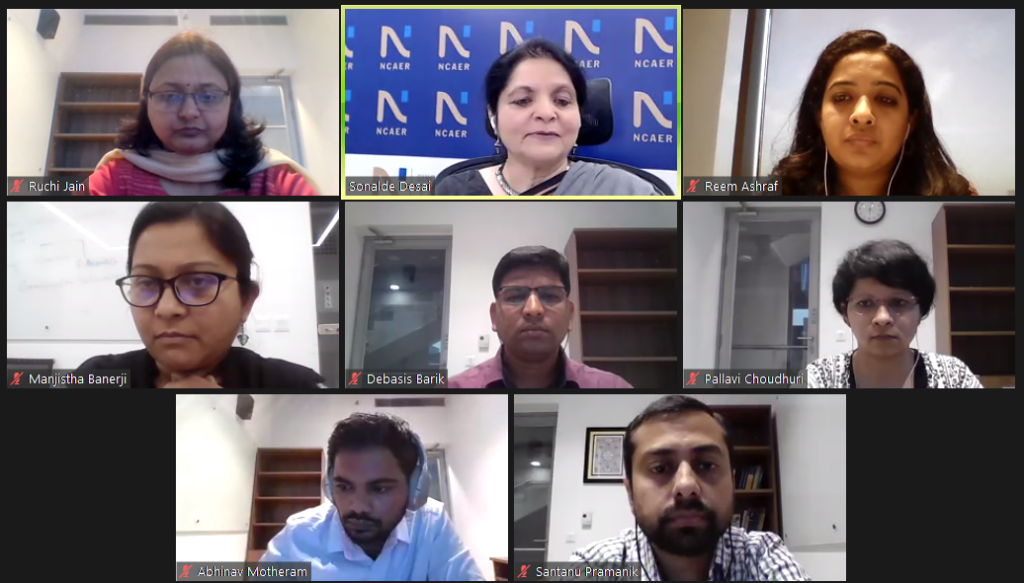
The event was held in a hybrid mode, in-person and virtual. Speakers at this forum included the following:
Panellists:
 Rukmini S. is an independent data journalist based in Chennai. In 2004, she began covering Mumbai city for the Times of India. Since 2010, she has specialised in data journalism. She was the first Data Editor of an Indian newsroom, initially at The Hindu and then at Huffpost India. She now writes for a range of publications, including Mint, IndiaSpend, and The Guardian. Her pandemic podcast, The Moving Curve, won an Emergent Ventures India COVID-19 Prize in 2020. She was awarded the Chameli Devi Jain Award for Outstanding Mediaperson (Honourable Mention) in 2020 and the Likho Awards for Excellence in Media in 2019. She has a post-graduate Diploma in Social Communications Media and an MSc in Development Studies.
 Diva Dhar, Deputy Director (Data and Evidence), Women’s Economic Empowerment, leads the global strategies at Bill and Melinda Gates Foundation and oversees investments on strengthening the gender data architecture and deepening research and evidence for women’s economic empowerment programming and policymaking. Prior to joining the team in 2019, she anchored research and evaluation portfolios for the foundation on nutrition, health systems, ICT, youth and gender in India. Previously, she worked for over a decade in public policy research and design for J-PAL, Innovations for Poverty Action, World Bank, Planning Commission of India, and other non-profit organisations in India, Morocco and Bangladesh. Diva is currently a doctoral candidate in Public Policy at the University of Oxford. She has a Master’s in International and Development Economics from Yale University.
 Mayra Buvinic, an internationally recognised expert on gender and development, is a Senior Fellow with Data2X and a Senior Fellow Emeritus with the Center for Global Development. Previously, she was Director for Gender and Development at the World Bank. She also worked at the Inter-American Development Bank (IDB) where she headed the Social Development Division and was founding member and President of the International Center for Research on Women. She has a PhD in Social Psychology from the University of Wisconsin-Madison.
 Jeemol Unni is Professor of Economics at Ahmedabad University. Earlier she was Director at Institute of Rural Management, Anand (IRMA) and RBI Chair Professor of Economics at IRMA. She holds a PhD. and MPhil in Economics and was a post-doctoral Fellow at Economic Growth Center, Yale University. She is currently a member of the Standing Committee on Economic Statistics constituted by the Government of India. She is on the Editorial Board of The Indian Journal of Labour Economics and Journal of Development Policy and Practice. Her research addresses issues of informal labour, returns to education, social protection and women entrepreneurship. Her latest co-authored book is titled Women Entrepreneurship in the Indian Middle Class (Orient Blackswan, 2021).
 Pallavi Choudhuri is a Fellow at the NCAER-National Data Innovation Center (NDIC). At NDIC, her work focuses on methodological innovations in measuring income, consumption, and women’s time use. Prior to joining NCAER, Choudhuri taught courses in Economics and Finance at the Grand Valley State University as a Visiting Assistant Professor and as an Instructor at the University of Wyoming. She has a PhD in Economics from the University of Wyoming.
 Sonalde Desai is a Professor at NCAER with a joint appointment as Distinguished University Professor in Department of Sociology at the University of Maryland. She directs the NCAER-National Data Innovation Centre (NDIC). She is an internationally known demographer whose work deals primarily with human development in developing countries with a particular focus on gender and class inequalities. At present, she is leading the India Human Development Survey (IHDS), India’s only nationally representative panel study conducted in two rounds in 2004–05 and 2011–12. Preparations are currently on for the next round of IHDS.
 The NCAER-NDIC team interviewed over 5,200 households in NCR, with samples drawn from Delhi as well as districts in the neighbouring States of Haryana, Rajasthan, and Uttar Pradesh. The DMAS survey was initiated in early 2019 and continued until November 2021, allowing us to assess the lives of our respondents before and after COVID-19, and the changes brought about by the pandemic. These households have lived through the difficulties and challenges caused by COVID-19 infections and the lockdowns designed to control the spread of the disease. This webinar discussed the findings on:
 Kalpana Pant is Managing Director, WISE, Indore and Executive Director, Chaitanya, one of the pioneers of community-based micro- finance in Maharashtra.
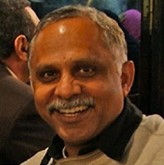 Mathew Titus is Founding Director of Sa-Dhan, the first association for microfinance institutions. He served as a member of the Prime Minister’s Advisory Council on MSME from 2010 to 2014, was Senior Advisor, Ashoka University, Centre for Social Impact and Philanthropy and is now Partner with Market & Ecosystem Advisory.
 Jayshree Vyas is Managing Director, Shree Mahila Sewa Sahakari Bank, Ahmedabad since 1986. She has earlier served as Board Member at Equitas Micro Finance India and is widely regarded as one of the early leaders in women’s empowerment at the grassroots.
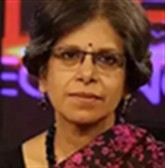 Mythili Bhusnurmath is Senior Adviser, NCAER, and Consulting Editor, ET Now TV. She holds a Master’s in Economics from the Delhi School of Economics and is a Certified Associate of the Indian Institute of Bankers. She also holds a law degree from Delhi University. She worked with the State Bank of India and Reserve Bank of India before moving to journalism in 1993.