Trauma and Psychiatric Disorders
 The third webinar in the NCAER Seminar series on Data Collection Methodology was organised by the NCAER National Data Innovation Centre on August 25, 2021. The webinar is part of a series of thought-provoking discussions on research methodologies in which distinguished speakers in the field share their views and one or more discussants reflect on them from an Indian perspective. The first seminar in this series held in March was presented by Stanley Presser, Distinguished University Professor at the University of Maryland while the second seminar hosted in the month of June was delivered by Frauke Kreuter, Professor of Statistics and Data Science for the Social Sciences and Humanities at the Ludwig-Maximilians-University of Munich (Germany) and Professor at the Joint Program in Survey Methodology at the University of Maryland.
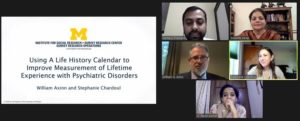 In this third webinar NCAER-NDIC hosted William G. Axinn, Professor of Survey Research, Population Studies at the University of Michigan, and Stephanie Chardoul, Director of Survey Research Operations (SRO) at the University of Michigan. P. Arokiasamy, retired Professor at the International Institute for Population Sciences was the discussant for the talk. It was held virtually.
 Accurate lifetime measurement of the general population’s experience with health disorders poses a significant challenge. However, these lifetime measures are crucially important to establish population prevalence and to enable population-level research. The study presented in this webinar focuses on psychiatric disorders, specifically alcohol use disorder (AUD), major depressive disorder (MDD), generalised anxiety disorder (GAD), and post-traumatic stress disorder (PTSD), and uses life history calendars (LHCs) to dramatically improve lifetime measures of these disorders. It features a large-scale general population experiment using WHO’s Composite International Diagnostic Interview (CIDI) to measure AUD, MDD, GAD, and PTSD. Respondents for this study were randomly assigned to receive an integrated LHC and CIDI interview and a CIDI interview with no LHC. The study brings forth that the careful use of the LHC increases rates of both screening and diagnosis for the disorders, and produces greater reporting of exposure to potentially traumatic experiences. The LHC also produces accurate reports of age of onset, which is valuable for analyses of causes, consequences, and service needs related to mental health.
 William G. Axinn is Professor of survey research, population studies, sociology and public policy at the University of Michigan. Axinn is a social demographer studying community, intergenerational, and social psychological influences on marriage, childbearing, reproductive health, mental health and the natural environment. He is director of the Chitwan Valley Family Study (CVFS), a 25-year, mixed method, whole-family longitudinal study in Nepal. He is also co-investigator on multiple different data collection projects related to family change and reproductive health in the US
 Stephanie Chardoul is the Director of Survey Research Operations (SRO) at the University of Michigan’s Survey Research Center (SRC). During her tenure at SRC, she has been the Manager of the Survey Services Laboratory (telephone facility), Senior Survey Director, Director of the Project Design and Management Group, and Director of Proposals. Her substantive interests include cross-cultural survey methods, building survey research infrastructure, and mental health. Stephanie has been a member of the Data Collection Coordinating Centre for the long-running World Mental Health Survey Initiative, and is the Director of the WHO Composite International Diagnostic Interview (CIDI) Training Centre.
 Perianayagam Arokiasamy served as faculty for over three decades at the International Institute for Population Sciences, Mumbai. His subject areas of teaching and research expertise cover demography, public health, ageing and global health, development studies and large-scale health survey research. As the lead Principal Investigator, he directed several surveys and research studies including LASI Wave 1, SAGE India wave 1, 2, and 3, WHO-World Health Survey, NFHS-3 (2004-09).
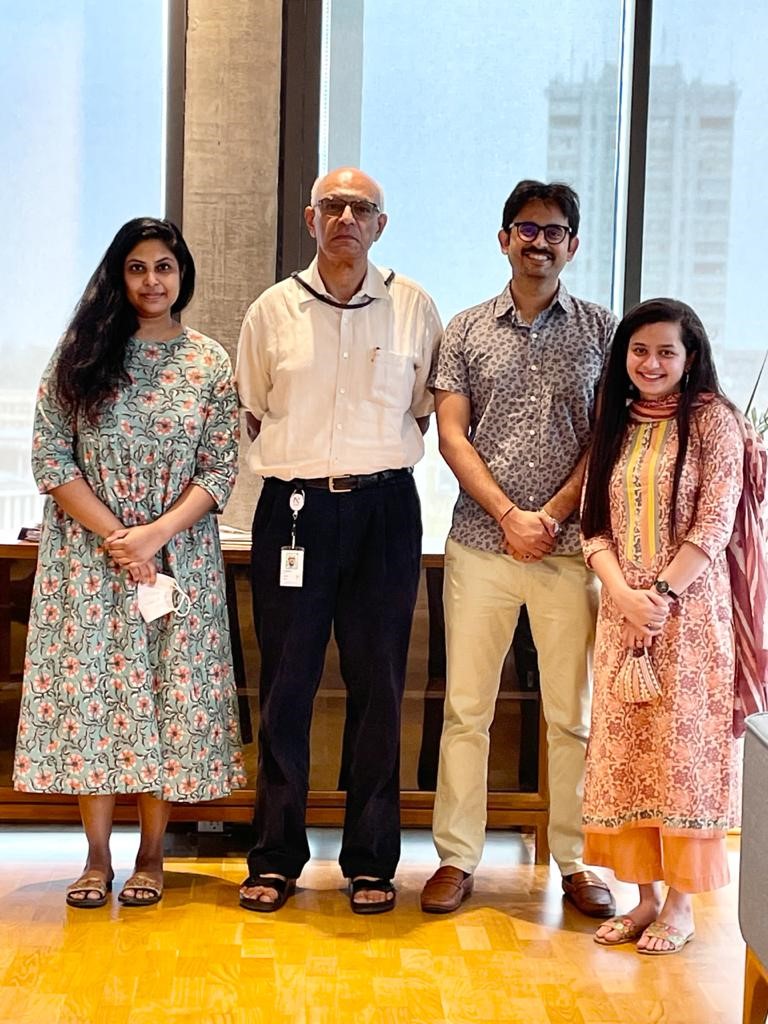 The Authority inter-alia administers the fund for the education and protection of the investors. IEPFA established this chair at NCAER in August,2020. Under the guidance of the IEPF Chair Professor Dr KP Krishnan, the IEPF unit focuses on conducting research on contemporary issues related to investor education & protection, analysing & reviewing the underlying economic, legal, and regulatory foundations. Additionally, the research unit aims to develop knowledge products, case studies, research articles and organizing workshops, conferences, seminars on issues related to investor education & protection.
 NCAER hosted its marquee event, the India Policy Forum (IPF) from July 12 through to July 15, 2021. As in 2020, the IPF 2021 Conference was hosted virtually. The IPF is the leading economic policy event in the summer season of Delhi, featuring a galaxy of eminent policymakers, and economists and academics worldwide working on India. The IPF, now in its 18th year, promotes rigorous empirical research on Indian economic policy through commissioned papers presented at the conference. These papers are discussed by leading researchers and top Indian policymakers, and then edited and published in the annual India Policy Forum volume.
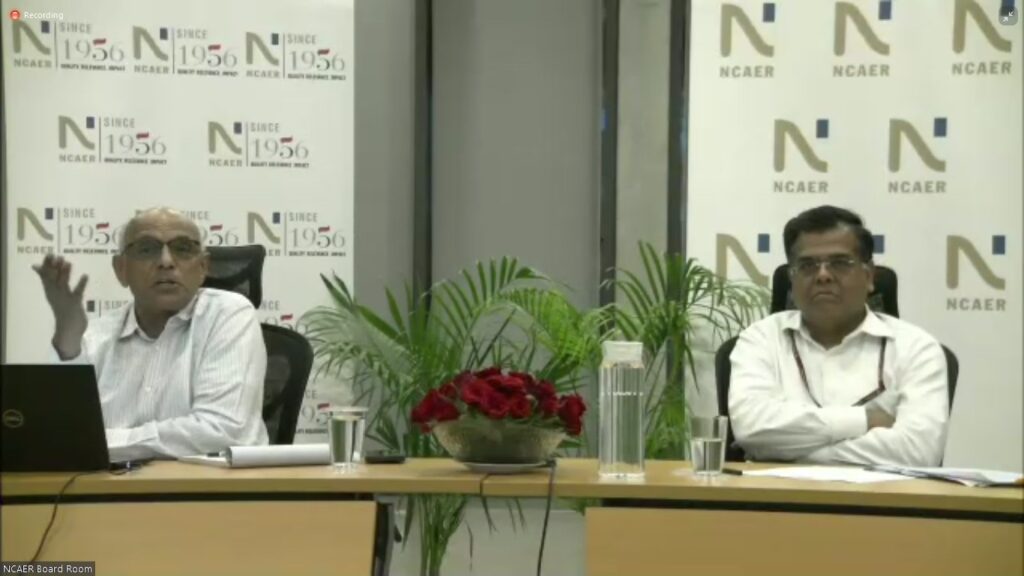 With the country facing unprecedented health and economic challenges, the high-calibre discussions during IPF’s 18th edition focused on the key economic challenges facing India and policies needed to guide the nation out of the grim and far-reaching impact that the pandemic has had on both lives and livelihoods. The IPF 2021 was attended by over 40 presenters, discussants, and panellists, deliberating on four IPF research papers, as well as two lectures, and two Roundtable events focusing on pressing issues. The Conference thus brought together policymakers, experts, researchers, and academics from all over the world. Former RBI Governor, Dr Raghuram Rajan, and former Chief Economic Adviser, Dr Arvind Subramanian, were among the Chairs of the paper presentation sessions.
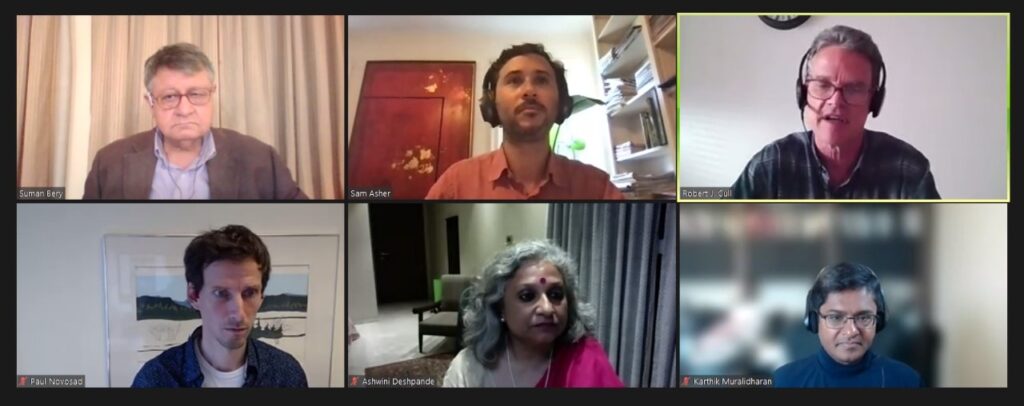 The welcome remarks at the Conference were delivered by Dr Surjit Bhalla, Executive Director, IMF and Governing Body member. Among the highlights of the event was the first policy roundtable, moderated by Dr K P Krishnan, IEPF Chair Professor at NCAER, and former Union Secretary in the Ministry of Skill Development and Entrepreneurship. The participants at this roundtable, which discussed the future of economic reforms, included the current Finance Secretary, Dr T.V. Somanathan, and three former Finance Secretaries, including Mr Montek Singh Ahluwalia, Dr Vijay Kelkar, and Mr Ashok Chawla. While expressing his views on crucial issues such as reforms, deficit monetisation, protectionism, the banking sector, and health insurance, Dr T.V. Somanathan said, “What may seem impossible at one time may become feasible later. Bad ideas don’t necessarily drive out the good and the good ideas keep surviving and coming back from time to time”. He also mentioned that GST systems had been tightened and improved, which would lead to an increase in revenue in the near future.
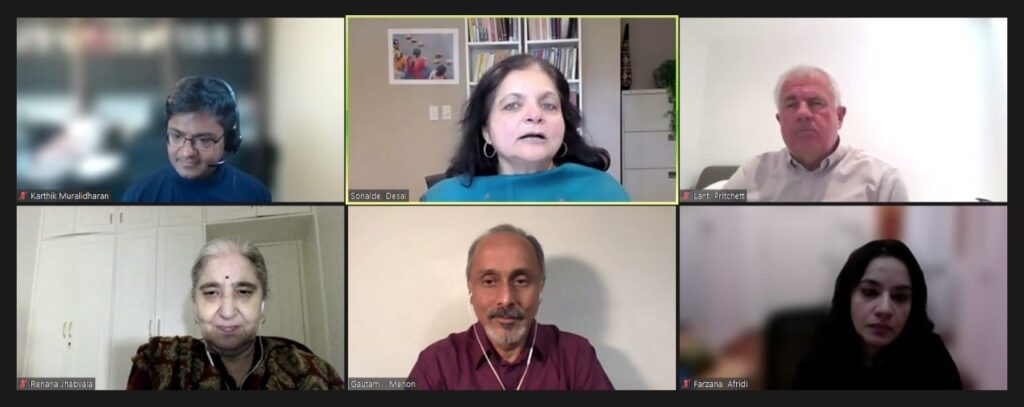
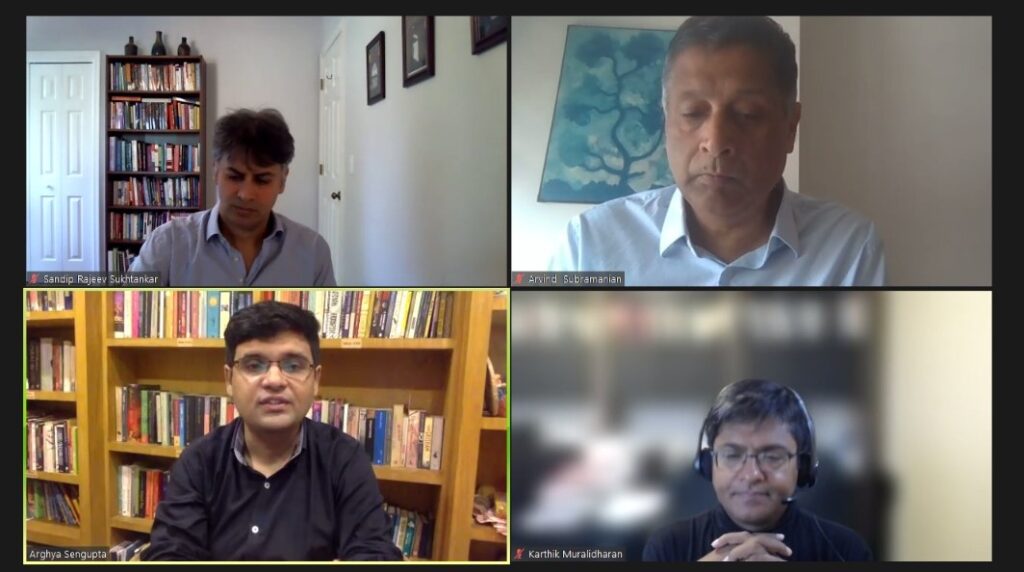 The second roundtable at the event, on “Emerging from the Long Shadow of COVID”, which was moderated by Dr Sonalde Desai, Distinguished Professor at University of Maryland & Professor NCAER, brought to the fore the issues of reopening schools during the pandemic and its impact on various sections of society.
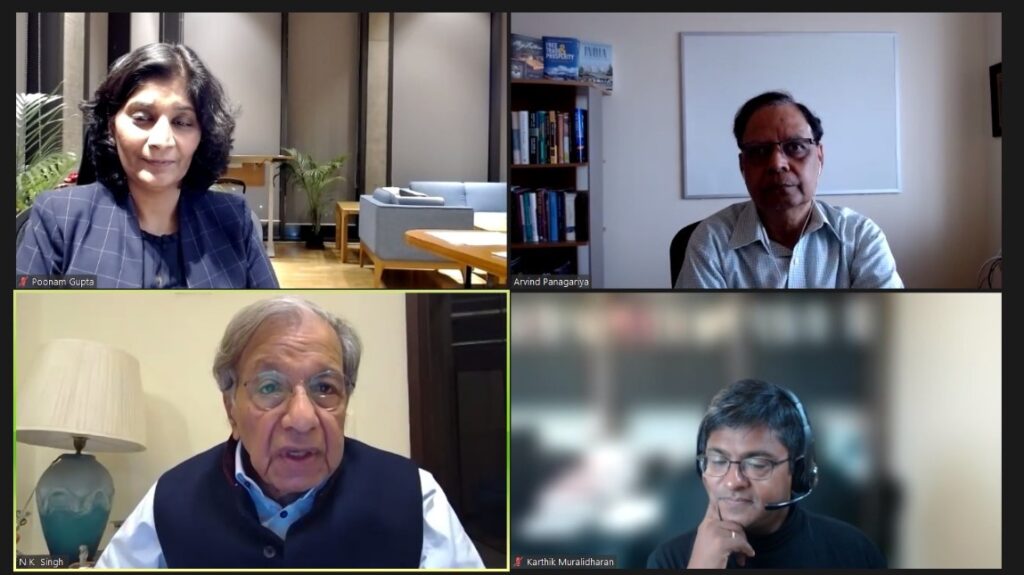 The IPF concluded with a seminal lecture on ‘Federalism during the Pandemic”, which was chaired by Dr Arvind Panagariya. Mr Singh commenced his lecture by commending NCAER for conducting the IPF as “an exceedingly cohesive event in short time”. Congratulating the new Director General, Dr Poonam Gupta on her assumption of office on 1 July 2021, he stated, “We look forward to her able stewardship and guidance in steering NCAER to new heights.”
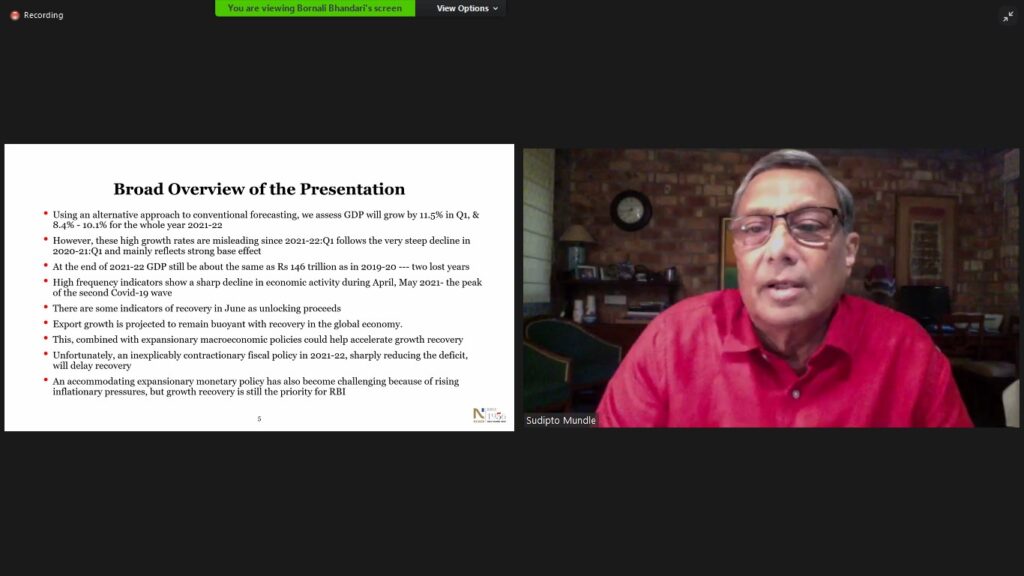 Where will the Indian economy go from here? What should be the policy response to this massive shock that has entered the second year, to help restore the recovery process? How should macroeconomic policy navigate its way between the conflicting policy goals of stimulating economic recovery and containing inflation, which has started rising now?
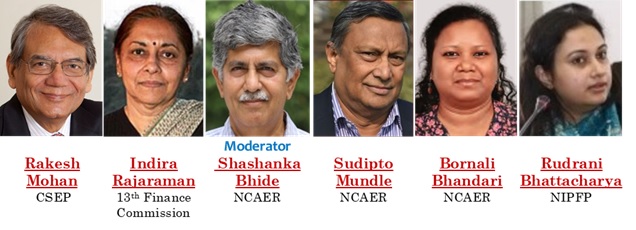
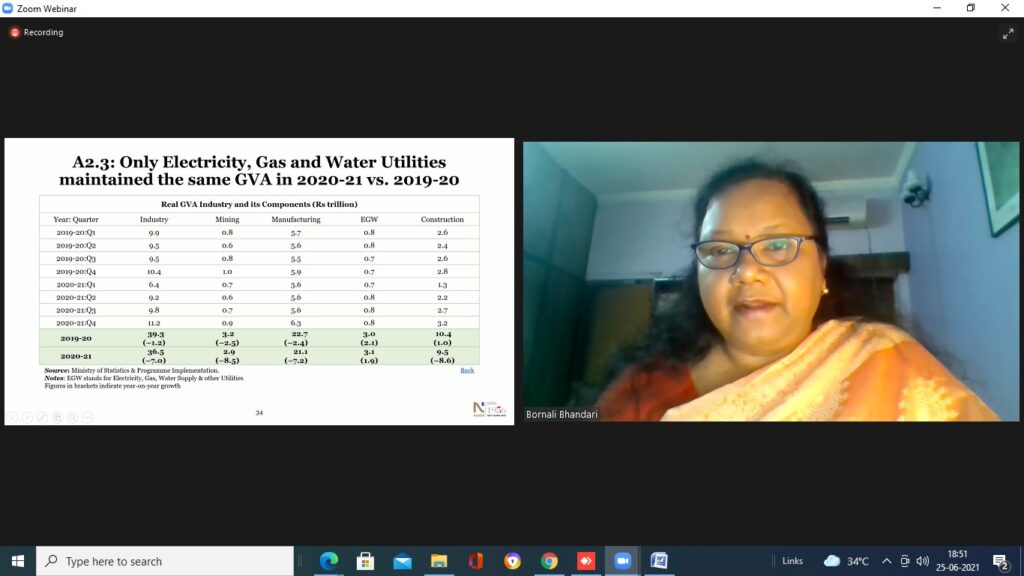 On Friday, June 25, the NCAER macroeconomic team addressed these questions while presenting NCAER’s Quarterly Review of the Economy for 2021-22:Q1. The QRE’s principal authors, NCAER Distinguished Fellow Sudipto Mundle, Senior Fellow Bornali Bhandari, and Assistant Professor, NIPFP, Rudrani Bhattacharya, presented the report. Distinguished guest speakers, Indira Rajaraman and Rakesh Mohan spoke at the webinar . Indira Rajaraman is a former Member of the 13th Finance Commission. Rakesh Mohan is President and Distinguished Fellow at the Centre for Social & Economic Progress (CSEP). The discussion was moderated by NCAER Senior Adviser, Research Programmes, Shashanka Bhide . NCAER Officiating Director General, Anil Sharma gave the welcome remarks.