NCAER held the 17th India Policy Forum (IPF) virtually during July 13-16 2020, a first for the conference. The IPF is organized by NCAER under the guidance of NCAER Director General Dr Shekhar Shah, who is assisted by his IPF co-editors, Dr Barry Bosworth of the Brookings Institution in Washington D.C., and Professor Karthik Muralidharan, Tata Chancellor’s Professor of Economics at the University of California, San Diego. Arvind Subramanian, former Chief Economic Adviser for India, has called the IPF “the leading economic policy event in the summer season of Delhi.”
Taking advantage of its worldwide reach, the 2020 IPF turned out also to be a truly global event, featuring a much larger audience than usual with over 200 researchers, including two Economics Nobel Prize winners, senior policymakers, and eminent panelists from India and overseas. With India in July 2020 facing massive health and economic challenges unprecedented in its history, the 17th NCAER IPF focused on high-calibre discussions around the key health and economic challenges facing the nation, all based on rigorous research by some of the best economists worldwide working on India.
While inaugurating the 17th IPF and welcoming participants, Dr Shah outlined the particular importance of the IPF in these difficult times as it brought together incisive policy research, ideas, and evidence-informed pathways to respond to the pandemic. During the four days of the IPF 2020, over 30 authors, discussants, and chairpersons engaged on four IPF research papers and two high-level round-table discussions around the safety net, economic growth, and jobs challenges of the Coronavirus pandemic. The IPF papers and the Policy Roundtables 1 and 2 are listed in the hyperlinked IPF programme below containing links to the IPF papers, slide presentations, and individual session videos.
The four-day event began with a felicitation for longtime IPF Advisory Panel members, MIT Professors Esther Duflo and Abhijit Banerjee, the winners of the 2019 Nobel Prize for Economics. The felicitations were marked by deep appreciation of both their professional achievements and their personal qualities of generosity, compassion, and commitment to the cause of bettering the lives of people through research. Speakers included Karthik Muralidharan, Pranab Bardhan, Dilip Mookherjee, Maitreesh Ghatak, and. besides Shekhar Shah, former Director Generals of NCAER Rakesh Mohan and Suman Bery. Muralidharan applauded Duflo and Banerjee for “transforming developmental economics from a theoretical field to one of cause and effect, and for ushering in change through evidence-based policy research.” Bardhan noted that the India Policy Forum was a particularly apt venue for celebrating the work of Banerjee and Duflo because “the IPF has always showcased transformative research that has consistently influenced policy”.
Professor Pronab Sen, Programme Director, International Growth Centre, India, and former Chief Statistician of India then delivered the 2nd T N Srinivasan Memorial Lecture on Data in the Times of the Coronavirus. The session was chaired by Mr Amitabh Kant, CEO NITI Aayog. In his opening remarks, Kant highlighted the need for real-time, granular data, perhaps even at the district or sub-district level in dealing with the coronavirus pandemic.
While delivering the T N Srinivasan Memorial Lecture, Professor Pronab Sen’s noted that developing countries that have low resilience and capacity to deal with crises ironically require data that permits decision-making in near real time. Cross-sectional data that most developing countries collect is not well suited to this. For this he urged governments to blend panel data sets with cross-sectional data and to use administrative data much more thoroughly and rationally. For India he urged the use of high-frequency and highly granular GST data for mapping economic activity.
The full text of his Lecture is available here.
The four IPF papers, all built around the ongoing pandemic, were presented sequentially through July 14 to 16. Details of the paper authors, chairs, and discussants are in the programme below. Against the backdrop of the pandemic, Prachi Mishra presented her paper on the state of the economy, Ajay Shah on health policy, Barry Eichengreen, Poonam Gupta, and Rishabh Choudhary on inflation targeting, and Anirban Sanyal and Nirvikar Singh on structural change among the Indian states. Among the high-level participants, the IPF was privileged to have two former RBI Governors and one Deputy Governor, the Union Health Secretary and the Union Expenditure Secretary, the head of the All India Institute of Medical Sciences, the Chairman and a Member of the 15th Finance Commission, and at least two former Chief Economic Advisers.
With the pandemic in the background, the IPF also hosted two policy roundtables on the lessons of the pandemic for meeting the challenges of India’s safety nets, economic growth, and employment. Details are available in the hyperlinked programme below.
The IPF Editors, Shekhar Shah, Barry Bosworth, and Karthik Muralidharan closed out the IPF 2020 on July 16th noting the considerable positive feedback they had received from the participants suggesting that this IPF was one of the best IPF in recent times despite it being the first IPF held virtually in 17 years.
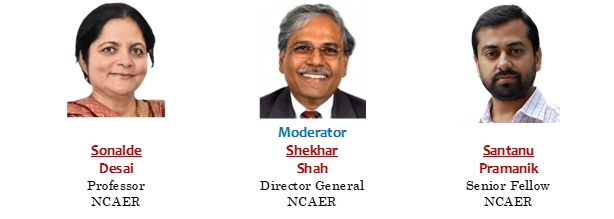
NCAER hosted Sonalde Desai and Santanu Pramanik from its National Data Innovation Centre to share the results of Round 3 of its rapid response Delhi NCR Coronavirus Telephone Survey (DCVTS-3) launched on June 15 and completed on June 23. NCAER Director General Shekhar Shah moderated the discussion. DCVTS-3 builds on DCVTS-1, fielded during April 3-6 (results released April 12), and DCVTS-2, fielded April 23-26 (results released May 1).
From one of the most stringent lockdowns in the world, India is rapidly moving to ease restrictions even as the peak still seems far and infections to date, nationally, have crossed 6 lakhs and are growing. Delhi NCR, with its recent surge, has climbed to third place in the country, with nearly 90,000 cases to date and the highest caseload and deaths per 100,000 population in the country. The weeks of lockdowns and reopening have led to changing attitudes and practices in Delhi NCR, and to the many ways in which households are adjusting to the economic stresses that the pandemic, the lockdowns, and now the lifting of restrictions have produced. The rapid response DCVTS are designed to understand these adjustments and changing attitudes and practices.
The DCVTS team carried out Round 1 in April shortly after the first lockdown started. Round 2 gauged household reactions to a continuation of the first, stringent lockdown. The team fielded DCVTS-3 at a crucial moment when restrictions were coming off but Coronavirus infections in the NCR were accelerating rapidly and the region’s healthcare infrastructure and testing facilities were coming under historically unprecedented stress.
DCVTS-3 resurveyed households contacted in Rounds 1 and 2, doubling the size of its sample from the rural and urban districts of Delhi, Rajasthan, Uttar Pradesh, and Haryana. The webinar was attended by over 140 participants.
NCAER DCVTS Round 3 results and the Press Release is available on this webpage
India is reopening its economy even as infections surge. The cost of remaining closed has proved to be just too great. From one of the most stringent lockdowns in the world imposed at short notice in March when India had registered some 500 positive cases, the country is rapidly easing restrictions when the peak still seems far and total infections to date have crossed well beyond the 400,000 mark and are growing.
Coming on top of India’s economic slowdown since 2016-17, the lockdowns have triggered the worst economic downturn in India’s history. On May 15, NCAER presented the interim results from its Quarterly Review of the Economy for the first quarter of 2020-21 to assess the economy-wide impact of India’s biggest economic shock and what the future might hold. The Central Government had just announced its major stimulus package.
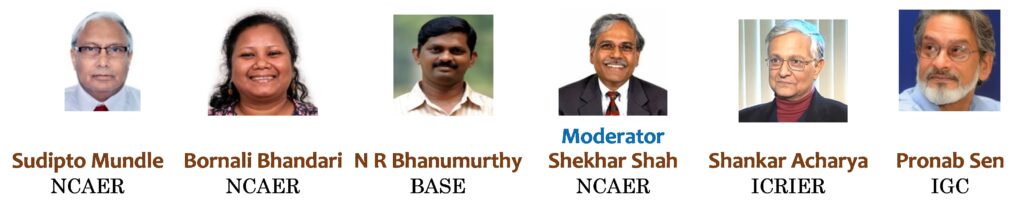
On Thursday, June 25, as we near the end of this quarter, NCAER presented a deeper analysis of possible growth and inflation scenarios that the Indian economy may face depending on how consumption and investment demand responds to the stimulus and how it overcomes the many supply side constraints that are everywhere. The QRE’s principal authors, NCAER Distinguished Fellow Sudipto Mundle, Senior Fellow Bornali Bhandari, and NIPFP Professor and now Vice Chancellor, BASE in Bengaluru, N R Bhanumurthy, presented their new findings. Two distinguished QRE guests, Shankar Acharya, Honorary Professor at ICRIER and former Chief Economic Adviser to the Government of India, and Pronab Sen, Programme Director at IGC India and India’s former Chief Statistician offered their comment. The discussion was moderated by NCAER Director General, Shekhar Shah and was attended by over 250 participants.
The Review and presentation is available on this webpage.
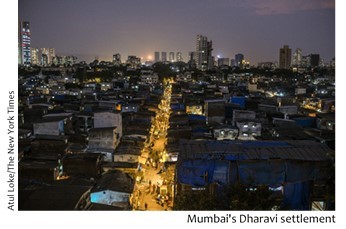
Social distancing has been adopted worldwide to combat the Coronavirus. Are the returns to social distancing the same in India as in other, higher-income countries? Is the dilemma of balancing lives and livelihoods for India the same as that for richer nations? Going forward, should India be chalking out a more distinctive, data-driven, urgent roadmap for recovery built on its social realities and on what we are learning about the virus?
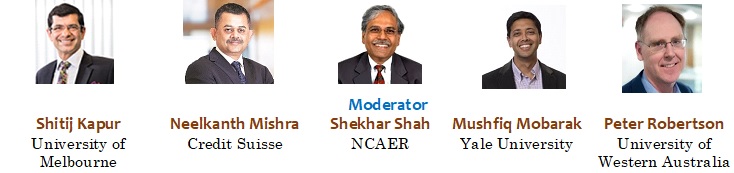
 In this webinar, NCAER hosted Shitij Kapur, Dean of the Faculty of Medicine, Nursing and Health Sciences at the University of Melbourne, Peter Robertson, Professor of Economics and Dean of the Business School at the University of Western Australia, Mushfiq Mobarak, Professor of Economics at Yale University, and Neelkanth Mishra, India Chief Economist and Managing Director at Credit Suisse, to answer these questions. They discussed options for what a distinctly Indian roadmap for recovery could be. Shekhar Shah, NCAER’s Director General, moderated the discussion, during which the panellists also responded to write-in questions from webinar participants.
Shitij Kapur presented results from the independent report Roadmap to Recovery, for which he led an expert taskforce of nearly 100 researchers from eight Australian universities, including in epidemiology, economics, modelling, infectious diseases, public health, psychology, political science, and communications to propose two, evidence-based, actionable options for Australia’s urgent recovery from its pandemic shutdown. The two strategies, an elimination strategy and a controlled adaptation strategy, form the core of this independent report released April-end and produced in just three weeks. Kapur noted that the federal and provincial Australian governments have more or less followed a hybrid of both strategies.
Kapur attributed Australia’s success in suppressing the virus (there were two new reported cases on May 22nd) to its obvious geographical advantage and well-resourced public health and fiscal capacities, but also drew attention to the remarkable and sometimes unexpected cooperation between politicians and experts and the surprising trust between communities and politicians. Kapur emphasised the power of independent inquiry, public trust and transparency and clarity of communications as requirements for success.
Robertson talked about the taskforce’s difficult job of valuing lives vs the cost of the lockdown and explained how they went about it using the “value of a statistical life” for Australia and the lockdown cost the government provided them of about 1% of GDP per month. He talked about some of the regional differences between Western Australia and the rest of the country. He also emphasized the need for effective communication, noting the manner in which various States had come up with clear stage by stage recovery plans.
Mushfiq Mobarak discussed work he has recently co-authored at Yale on whether the benefits of social distancing vary across high- and low-income countries (Barnett-Howell & Mobarak, 2020). Their conclusion was that developing countries may not be best suited for strict social distancing. The benefits may be lower. Developing countries have predominantly younger populations: some 17% of the population in high-income countries was elderly vs only 3% in low- and middle-income countries (LMICs); and flattening the curve is unlikely to release the pressure on health systems in LMICs. And the costs of strict social distancing may be higher, because of losses and food insecurity for day-wage workers, migrants, agricultural workers, and micro and small businesses.
This did not mean that there should be no distancing, or that strict social distancing might not have been appropriate, initial emergency response. He suggested a few principles here: enforce universal mask wearing, allow people out only for economic livelihood activities, enlist families to protect the young and vulnerable, ban social and religious gatherings, and wash hands, using frugal innovations such as the “Veronica Bucket” where necessary. Mobarak emphasised the importance of getting money in the hands of the poor: if people are going hungry, they will not obey any social distancing norm. He cited India’s advantage with its Aadhar and Jan Dhan infrastructure that can allow money to get to the poor quickly.
Mobarak ended by reminding the webinar, first, about the need to focus policy attention on gender and specific community issues, and second, on the how data from conventional and unconventional sources could be used to guide policy. He gave the example of big data from cell phone usage in Bangladesh—the poor use cell phones differently from the well-to-do—to target relief payments.
Neelkanth Mishra spoke from Mumbai, India’s most severe COVID-19 hotspot (more than 25% of India’s COVID-19 deaths as of May 22nd). He emphasised that in calculating the economic loss from social distancing, the need for firms to survive—since that is where future economic growth will come from—also has to be factored in. Mishra also mentioned the uncertain ability of local administrations to implement lockdowns in many settings. For example, the Mumbai police’s ability to enforce lockdowns has been severely curtailed both because nearly 1,700 Mumbai police had tested positive as of May 22nd and 18 had lost their lives, and because of the difficulty of enforcing citizen behaviour over long periods of time.
At the same time, with Mumbai’s medical infrastructure under severe stress, there are now very difficult questions about when and how to lift the lockdown. He noted that this was not only the problem with India’s financial capital, but domestic migrants desperate to return homes were also showing the limits of social distancing: One in four migrants returning to Bihar from Delhi on special trains, and one in eight from Mumbai, had tested positive; in addition there were migrants who are making their way home without any assistance.
He noted that the one nation one ration card will be an important step in deploying India’s PDS system to provide food security. In ending, Neelkanth felt that there has to be a greater role for society and not just the state in managing the pandemic. He spoke of panchayats and local councils needing to be much more involved in testing and isolation. He said this would not be easy because of the fear that now prevails in society, so that lifting lockdowns will not be a matter of simply switching things on.
The panellists then had a spirited discussion about the core choices India faced. There was consensus about the need to set expectations right, and the question was how best to do it. Because this had started in high-income countries, the response has been to flatten the curve and to raise expectations of cases coming down in a short time during which the healthcare capacity could be enhanced. This worked in countries like South Korea and Australia, but as is becoming clear, this is proving to be difficult to do elsewhere, so the need is to change expectations and turn efforts to managing the disease rather than trying to eliminate it. This requires a change in mind-set among policymakers, and then among citizens.
India is heading that way, but has a lot of ground to cover to overcome fear and change behaviour. There was consensus that an independently developed roadmap that is distinctly Indian, and that comes up quickly with not just one but perhaps two viable options, would be extremely useful even at this stage, especially if it is well communicated. Not that policymakers need necessarily follow it, but the roadmap could provide the guardrails and the guidelines to inform the discussion leading to action.
This NCAER webinar was attended by over 160 participants. The panellists’ presentations and the video of the webinar are available on this page.