The Code on Social Security, 2020, effective from 21.11.2025, recognizes gig and platform workers and mandates social security protections from platforms through a dedicated Social Security Fund. In addition to the Central Government, a few Indian states have proposed welfare contributions through transaction-based social security fees. However, this creates challenges in sectors such as ride-hailing, where platforms have shifted from transaction-based to subscription-based models without their involvement in the transactions.
The study aims to: (i) examine the economic structure of different platform sub-sectors; and (ii) evaluate the applicability of existing State-level laws to ride-hailing services and (iii) propose suitable welfare funding mechanisms using conceptual frameworks and relevant international best practices for India
India’s ambition to become a Viksit Bharat by 2047, envisioned as a USD 30 trillion economy driven by inclusive growth and global leadership requires a fundamental transformation of the financial system that ensures a comprehensive digitalized access, usage and effective grievance redressal. This paper examines the state of digitalization of India’s financial architecture for removing structural inefficiencies, while acknowledging the emerging challenges.
Using extensive empirical evidence from financial regulators, institutions and key ministries, the study analyses the evolution and impact of major digital initiatives taken towards financial sector development. These include screen-based trading, demat accounts, online platforms, the Unified Payments Interface (UPI), which processed 245.117 billion transactions worth Rs.322.83 lakh crore in FY 2025-26 (NPCI, 2026); Jan Dhan-Aadhaar-Mobile (JAM) Trinity which has enabled over 57.78 crore bank accounts as on February, 2026 (PIB, 2026); Direct Benefit Transfer (DBT) system, generating savings of Rs. 3.48 lakh crore (PIB, 2025) by reducing leakages; the Central Bank Digital Currency (CBDC) initiative, and digitalization of investor grievance redressal.
However, these achievements coexist with rising cybercrime losses, cyber fraud and persistent digital divide. Analysing these dynamics, the paper proposes a “Panacea-Paradox Dialectic” framework, highlighting the interaction between technology, institutions, and financial education/awareness. It concludes that while digital finance holds transformative potential, its success depends on an inclusive, well-coordinated, and equity-focused policy design, supported by a five-pillar reform framework through a comprehensive sustainable digital financial strategy that fully aligns with National Strategy for Financial Inclusion and National Strategy for Financial Education.
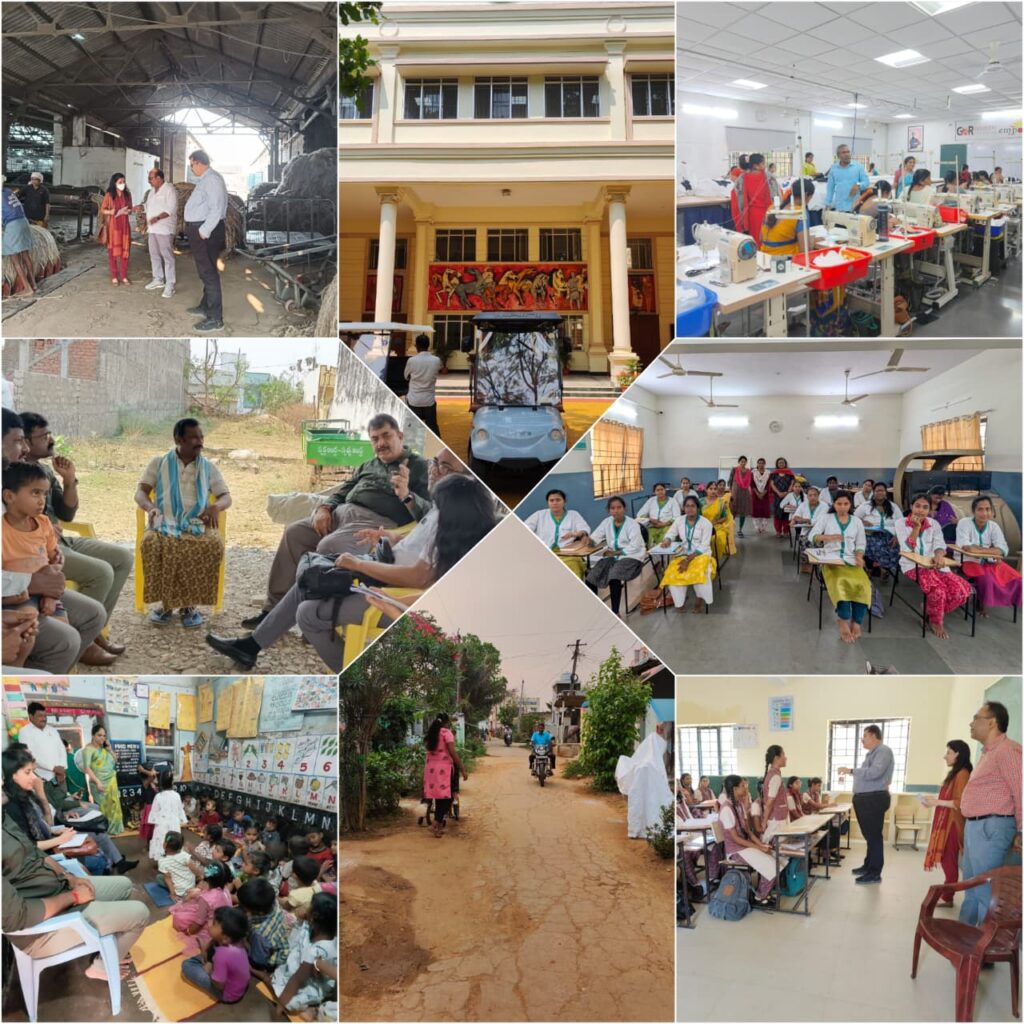
The GMR group established its Corporate Social Responsibility (CSR) arm, the GMR Varalakshmi Foundation (GMRVF), in 1993. The Vision of the Foundation is to make a sustainable impact on the human development of underserved communities through initiatives in Education, Healthcare and Livelihoods. The objectives of the study are two-fold. First is to study the direct impact indicators on the initiatives undertaken by the GMRVF in Rajam town and the villages in the Rajam Mandal on areas mentioned above, and two, studying the regional impact of the GMRVF on economic upgradation and social transformation.
The main objective of the exercise is to first time ‘model’ the key fiscal numbers of Uttarakhand, namely revenue, expenditures, deficits and debt for 2026−27, while keeping the GYAN needs in perspective. The GYAN stands for Garibi (Poverty), Yuva (Youth), Annadata (Farmers) and Nari (Women). The projected fiscal numbers for the State should be sustainable in the medium-run and ensure that Uttarakhand remains fiscally disciplined. This will form inputs to budgets in 2025−26. This will also form a baseline for the Phase 2 work of the next Economic Survey.
India has a critical role to play in the global green transition. It can strengthen its position as a global leader in promoting green technology, encompassing renewable energy, waste management, and green hydrogen, and contribute to global decarbonisation efforts by participating in green value chains. These green transition efforts are particularly important as India is currently the third-largest emitter of greenhouse gases (GHGs).
In view of the fiscal constraints, private sector participation will be the key for achieving both the development and diffusion of green technology and for attaining the national emission targets. In this context, it is imperative to identify and implement the policy action that can help mobilise the private sector in a middle-income country. While the significance of economic incentives for climate action from advanced economies such as R&D subsidies and carbon pricing policies is well understood, there is also a need to address the gap in the propagation of policy interventions in emerging markets characterised by structural deficiencies. Further, it is important to understand how and to what extent structural deficits impede the functioning of market signals.
The research programme will investigate the role of structural reform and credibility of policy commitments and emission targets for improving the effectiveness of market signals emanating from price-based and regulation-based climate action in an emerging market context. It will attempt to fill critical knowledge gaps in order to enable India to strengthen its role as a leader in green technology and to mitigate low-carbon transition risks.
As part of the study, The World Bank and NCAER will jointly produce impactful research papers on the following topics:
- The economic gains pertaining to the credibility of emission targets;
- The challenges faced by the private sector and policy implications with regard to green value chains; and
- The adoption of a Federative Emission Trading Scheme (FETS) to enhance Nationally Determined Contribution (NDC) for green transition.
This study will be conducted under The World Bank Knowledge for Change Umbrella Program—Phase IV (KCP IV). The World Bank team will be led by Dr Christian Schoder.

