19 February, 2025
Published in: The Hindu Business Line


Published in: The Hindu Business Line
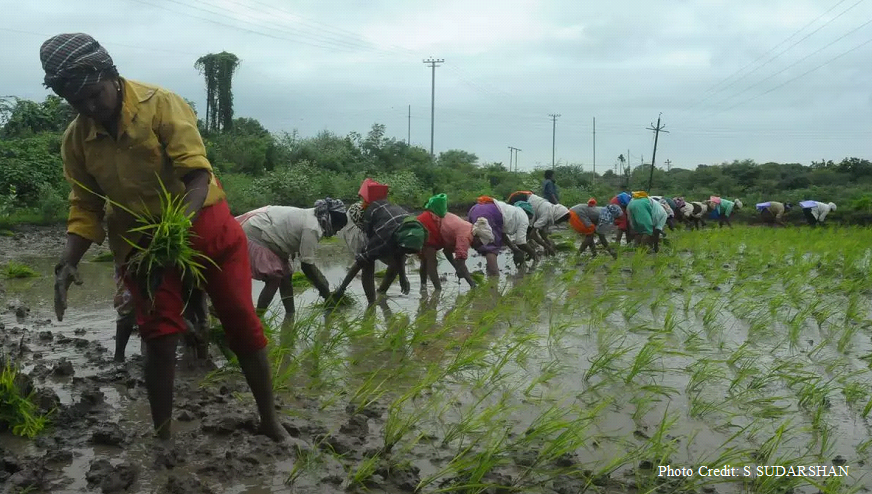
Enhancement of the limit is not sufficient to make the scheme more accessible or beneficial to a broader section of farmers. The repayment schedule is also a significant challenge.
Budget 2025 is one of the most promising Budgets in recent years, aiming to address the needs of the masses after a long time. One of its key announcements, the enhancement of interest subvention limit on the Kisan Credit Card (KCC) is undeniably a great move. However, there is this growing perception that increasing the credit limit will benefit all farmers. The reality, however, is more nuanced. Raising the interest subvention on short-term credit limit from ₹3 lakh to ₹5 lakh is likely to benefit only large farmers, not the majority of small and marginal farmers.
The KCC provides both short-term and term credit, depending on farmers’ needs. Short-term credit is primarily used for operational costs, determined by district-level technical committees and the size of a farmer’s landholding. An additional 30 per cent credit limit is also provided for household consumption and farm maintenance. While there is no upper limit on short-term loans under KCC, the interest subvention previously capped at ₹3 lakh has now been raised to ₹5 lakh. However, the criteria for term credit remain unchanged, so this discussion will focus solely on short-term credit.
As mentioned earlier, KCC is highly dependent on landholding size, which influences the credit limit eligible for interest subvention. This means that farmers who previously couldn’t access credit beyond ₹3 lakh will still not benefit from the increase. Only those with sufficiently large landholdings — who were already capable of borrowing above the previous limit — will now receive interest subvention on a higher amount.
Misleading figure
The claim that 7.7 crore farmers will benefit from this policy may be misleading. This figure represents all KCC holders, but not all will gain from the increased limit. Nonetheless, the role of KCC in improving farmers’ financial security remains crucial. The scheme has facilitated financial inclusion and farm insurance, helping even marginal farmers move away from exploitative informal credit sources. Studies have shown that the availability of credit has a significant impact on farmers’ income and KCC has enabled numerous farmers to sustain better by making crucial inputs accessible.
While raising the subvention limit was long overdue, it is not sufficient to make the scheme more accessible or beneficial to a broader section of farmers. Several challenges persist, the most significant being the repayment schedule. Farmers are required to repay the loan within 12 months, but agricultural income does not ensure a regular cash flow. Even after harvest, cash inflows may be delayed, making timely repayment difficult.
Introducing a repayment deferment period, allowing farmers to start loan repayment after a couple of months and extended repayment tenure, would provide much-needed flexibility, enabling small farmers to manage their credit more effectively and make better farming decisions. For short-term loans, an additional 10 per cent credit limit is provided under KCC for household expenses, which needs to be revised considering the ever-increasing cost of living.
Furthermore, Indian agriculture has an underdeveloped system for integrated farming mainly owing to the higher cost of implementation. Even though integrated farming has shown significant income growth for small farms which is the key highlight of Indian agriculture, this opportunity has not been tracked. Incorporating special provisions for integrated farming through KCC may help to increase farm income.
Data transparency
Information regarding KCC is fairly opaque and there is no publicly available data regarding the credit limit, credit utilisation, and repayment timeline, so it makes it quite unclear how much beneficiaries would benefit from this increased credit limit.
Currently, only data on KCC disbursement is reported, making it difficult to assess the scheme’s inclusivity for small and marginal farmers. Several primary studies have highlighted their limited participation, but this issue will remain unresolved unless comprehensive data on credit allocation and utilisation are made publicly available. Providing more transparent data would help policymakers and researchers evaluate the scheme’s real impact and address existing gaps more effectively.
There is a lot this scheme needs, however, increasing the subvention limit could be a significant step forward. Increasing the personal use limit from 10 per cent to higher, providing repayment deferment, and provisions to promote the implementation of integrated farming through KCC could benefit the smallholder and marginal farmers much more significantly. Better data availability on KCC would help contribute to greater knowledge creation unveiling the unseen issues this scheme may have.
The writer is Research Associate at National Council of Applied Economic Research. Views are personal.