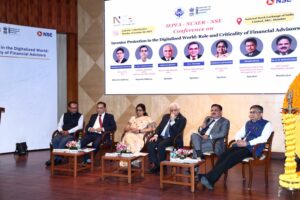
 A joint Conference on ‘Investor Protection in the Digitalized World: Role and Criticality of Financial Advisors’, organised by the Investor Education and Protection Fund Authority (IEPFA), NCAER, and the National Stock Exchange (NSE), was held at the NSE office in Mumbai, on 20 November 2023.
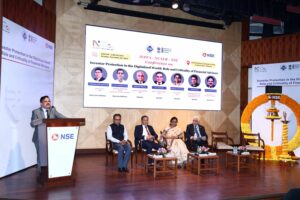 The Investor Education and Protection Fund Authority (IEPFA), set up on 7 September 2016, by the Government of India to administer the Investor Education and Protection Fund, is a landmark initiative of the Union Government. The Authority’s mandate is to ensure timely refund of shares, unclaimed dividends, and matured deposits/debentures, among other things, to investors; distribute disgorged amounts to the rightful applicants; promote awareness among investors; and ensure the protection of their interests. These objectives are part of the government’s efforts to make all citizens equal partners in the country’s financial development.

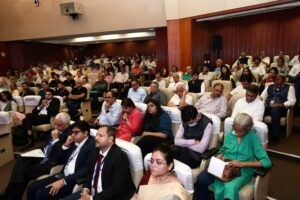 Since its inception, the IEPFA has been fulfilling its mandate with dedication. It has held a number of Investor Awareness Programmes aimed at achieving inclusive financial literacy for stakeholders in rural, semi-urban, and urban areas besides enabling the rightful claimants to get their due unclaimed shares, dividends, and debentures speedily. The joint Conference at NSE signified a continuation of this effort.
Programme:
1:15-2:00 pm Lunch
2:00-2:30 pm Registration
2:30-2:35 pm Introductory address: Dr Harish K. Ahuja, Head PSD – Power & Carbon Markets, Investor Awareness/Services & Primary Market Relationships, NSE
2:35-2:45 pm Welcome Address: Shri Ashishkumar Chauhan, MD and CEO, NSE
2:45-2:55 pm Keynote Address: Lt. Col. Tushar Anand, GM, IEPFA, Ministry of Corporate Affairs
2:55-4:30 pm Panel Discussion: ‘‘Investor Protection in the Digitalized World: Role and Criticality of Financial Advisors“
Panellists:
- Mr Ashwani Bhatia, Whole Time Member, SEBI
- Shri C. Patnaik, Member, IRDAI
- Nilesh Shah, Managing Director, Kotak Mahindra Asset Management Co. Ltd.
- Ms Padmaja Chunduru, MD & CEO NSDL
- Dr C.S. Mohapatra, IEPF Chair Professor, NCAER, Moderator
4:30-4:45 pm Q & A Session
4:45-4:50 pm Vote of Thanks: Dr. Tirthankar Patnaik, Chief Economist, NSE
4:50-5:00 pm High Tea


 A Dissemination Workshop was held on 28 November 2023 at the Energy Management Centre, Thiruvananthapuram, to discuss the report, “Challenges and Policy Implications for Low-Carbon Pathway for Kerala: An Integrated Assessment Modelling Approach”, which is based on a collaborative study undertaken by NCAER in collaboration with Centre for Development Studies and The Celestial Earth, on November 28, 2023. See details of event at: https://cds.edu/event/dissemination-workshop/
 Dr C.S. Mohapatra, the IEPF Chair Professor at NCAER, was invited to participate in an interactive session on “National Strategy for Financial Education (NSFE): Where are we today”, with the officials of the National Centre for Financial Education (NCFE) on 22 November 2023, at NCFE, Mumbai. Keeping in mind the motto of NCFE of working towards “a financially aware and empowered India”, he emphasised the need to expedite the implementation of the “5C strategy”, which includes emphasis on the development of relevant Content in the curriculum in schools, colleges and training establishments; developing Capacity among intermediaries involved in providing financial services; leveraging the positive effect of a Community-led model for financial literacy; devising an appropriate Communication strategy; and, enhancing Collaboration among various stakeholders. He also suggested the introduction of a 6th C in the
  strategy, i.e. a Class or group-oriented approach, for addressing the unique financial challenges faced by different groups, such as homemakers, senior citizens/retirees, college students/youths, and school children. In his address, he highlighted the importance of stronger stakeholders’ coordination along with timely updation of the curriculum. He further stressed on the implementation of a sustainable financial awareness programme covering modern cyber issues, delivery of comprehensive training, and certification, and argued that combining the right attitude with knowledge and skills is the key towards optimising financial well-being.
 Dr Mohapatra had an interactive session titled, “From Knowledge to Wealth: Bridging the Gap between Financial Literacy and Financial Well-being” with the faculty at NISM. This session was inaugurated by the Director of NISM, Dr C.K.G. Nair. During his address to the faculty, Dr Mohapatra stressed the importance of modernising courses on financial literacy, along with rapid digitalisation of the economy. He suggested the introduction of refresher training courses and certification for trainers, master trainers, regulators, fresh recruits, and all others associated with the financial literacy ecosystem. He also asserted the importance of attracting prospective investors and nurturing confidence among them by strengthening institutional capabilities, simplifying processes, and initiating sustained follow-up training and hand-holding. Conducting applied research and comprehensive surveys is also crucial for identifying and mitigating last mile issues in maximising financial well-being.
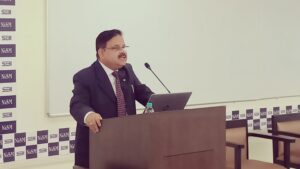 The IEPFA Chair Professor at NCAER, Dr C.S. Mohapatra delivered a special guest lecture on “Financial Stability Architecture in India and Its Role in Promoting Investor Awareness and Protection” to students at the National Institute of Securities Markets (NISM), Mumbai, on 21 November 2023. NISM is a public trust established by the Securities and Exchange Board of India (SEBI) in pursuance of the mandate laid down by the Union Finance Minister in his budget speech of February 2005. While welcoming Dr Mohapatra, Dr
  Rachana Baid of NISM lauded the initiative for collaboration between NCAER and NISM. In his address to the students, Dr Mohapatra focused on the concept of systemic risk and its management, the role of close and effective inter-regulatory coordination, the need for a robust framework for data analysis, and the imperative to deal with cybersecurity risks. He highlighted the importance of financial literacy in ushering in a broadbased financial sector and ensuring its stability.