August 17, 2023
NCAER’s National Data Innovation Centre hosted a web-based panel discussion with eminent researchers and experts, on 17 August 2023, to discuss the dynamics of internal migration in India, and the challenges involved in measurement and data collection, especially streams of migration that are poorly captured by existing data systems. The panel discussion was titled, “DataTalk: A Conversation about Defining and Measuring Internal Migration in India”.

Long lines of migrant families walking across State borders to their hometowns during the pandemic-induced lockdown has brought to the forefront the importance of migration for the Indian economy, development, and society. However, it has also highlighted a lack of awareness of the magnitude of migration in India and the tenuous ties of many migrants to their destinations.  This disconnect was largely due to the unavailability of adequate data on internal migration, resulting in a weak policy response when the pandemic struck. Internal migration is likely to gain more significance as India experiences heterogeneous demographic transformation, with the growing economies of the southern States increasingly relying on migrants from North India to augment their aging workforce. The absence of data and inconsistent definitions of migration hamper policymaking in diverse arenas, including social protection, education, and health.
 In this context, following are some of the questions that were addressed by the panellists: Can we begin to define different types of internal migration? What would it take to improve the existing data collection mechanisms to better capture migration flows? What would new data systems look like? How would measurement differ for migrant men and women?
The discussion was held among an interdisciplinary panel of researchers, policymakers, and journalists, who have studied migration extensively. Following are details of the moderators and panellists who participated in the webinar:
Moderators:
 Sonalde Desai is a Professor at NCAER with a joint appointment as Distinguished University Professor in the Department of Sociology at the University of Maryland. She directs the NCAER-National Data Innovation Centre (NDIC). She is an internationally known demographer whose work deals primarily with human development in developing countries with a particular focus on gender and class inequalities. She leads the India Human Development Survey (IHDS), India’s only nationally representative panel study spanning two decades.
 Reshma Roshania is an Associate Fellow at NCAER. Her research interests include nutrition, food policy, migration, and gender. She completed her PhD in Nutrition and Health Sciences in 2021 from Emory University, where she studied food environments and nutrition status among circular migrant families in Bihar. She has worked in global health and development for close to ten years, specialising in evaluation and research with various organisations including PATH, International Center for Research on Women, Save the Children, and International Medical Corps.
Panellists:
 Chinmay Tumbe is passionate about migration, cities and history, and is currently a faculty member in the Economics Area at the Indian Institute of Management Ahmedabad (IIMA). An alumnus of the London School of Economics and Political Science; the Indian Institute of Management Bangalore; Ruia College, Mumbai; and Rishi Valley School, Madanapalle; he has been a faculty member at the Tata Institute of Social Sciences, Hyderabad. He was a 2013 Jean Monnet Fellow at the European University Institute, Florence, and the 2018 Alfred D. Chandler Jr. International Visiting Scholar in Business History at Harvard Business School, Boston. His first book, India Moving: A History of Migration, was published in 2018 and second book The Age of Pandemics, 1817-1920: How They Shaped India and the World, was published in 2020. He is a member of The Lancet COVID-19 India Taskforce and was a member of the Working Group on Migration of the Ministry of Housing and Urban Poverty Alleviation in 2016-17. He has published widely in leading journals and newspapers and helped set up the IIMA Archives.
 Neetha N. is Professor at the Centre for Women’s Development Studies (CWDS), New Delhi. Prior to joining CWDS in 2006, she was Associate Fellow and Coordinator, Centre for Gender and Labour at the V.V. Giri National Labour Institute, NOIDA. Her research focuses on women’s employment, women workers in the informal sector, domestic workers, unpaid domestic and care work, female labour migration, and gender statistics. She has published extensively in national and international books and journals. Her recent edited books are ‘Working at Others Homes: The Specifies and Challenges of Paid Domestic Work (Tulika Books, 2018) and Migration, Gender and Care Economy, (with Irudaya Rajan, Routledge, 2019). She was the Co-Chairperson of the Working Group on Women’s Employment set up for the formulation of the current (14th) Five Year Plan of the State Planning Board, Kerala.
 Rajni Palriwala retired from the University of Delhi, Delhi School of Economics, as Professor of Sociology, where she also served as Head of the Department and Dean, Social Sciences. She has taught at the University of Delhi; University of Leiden, Netherlands; and SciencesPo, Paris. Her research falls within the broad area of gender relations, covering care and emotion, citizenship and the welfare state, kinship and marriage, dowry, women and work, migration, women’s movements and feminist politics, cross-cultural and comparative studies, and research methodology, though her teaching went beyond these issues. In addition to numerous journal articles and book chapters, she has authored Changing kinship, family, and gender relations in South Asia: Processes, trends and issues (1994) and jointly authored Care, culture and citizenship: Revisiting the politics of welfare in the Netherlands (2005) and Planning families, planning gender: The adverse child sex ratio in selected districts (2008). She has jointly edited Marrying in South Asia: Shifting concepts, changing practices in a globalised world (2013), Marriage, migration, and gender (2008), Shifting circles of support: Contextualising kinship and gender relations in South Asia and Sub-Saharan Africa (1996), and Structures and strategies: Women, work and family in Asia (1990).
 Chandrasekhar S., an alumnus of Delhi School of Economics and Pennsylvania State University, is Professor at Indira Gandhi Institute of Development Research, Mumbai. He was awarded the Mahalanobis Memorial Medal 2016 by The Indian Econometric Society, for outstanding contributions to the field of quantitative economics. He has worked extensively on the issues of urbanisation, labour markets, and internal migration in India.
He coordinated the research initiative, “Strengthen and Harmonize Research and Action on Migration in the Indian Context”, which was supported by a grant from Tata Trusts. The project also coincided with the Government of India constituting the Working Group to Study the Impact of Migration on Housing, Infrastructure, and Livelihood, of which Chandrasekhar was a member. He serves on a variety of government advisory panels connected with key statistics, including the Standing Committee on Statistics, Ministry of Statistics and Programme Implemention, Working Group of Select Surveys, and the All India Financial Inclusion Survey by NABARD.
 Mittali Sethi is an Indian Administrative Service (IAS) officer of the 2017 batch, Maharashtra cadre. She has served as the Sub-divisional Magistrate at Melghat in the Amravati district and as CEO, Zilla Parishad (rural local body) in the Chandrapur district of Maharashtra. She is currently serving as the Director of VANAMATI, an agricultural research and extension institute. Her areas of interest and work include forest rights and tribal issues, public health, waste, and climate change as it applies to people’s lives, and participatory education-with-love for both children and adults.
 Udit Misra is a journalist, and has reported on India’s economy and policy issues for the past two decades. Since 2019, he has been with The Indian Express, for which he writes a weekly explanatory column titled ExplainSpeaking. In 2021, he moderated a series of webinars on India’s internal migrants for the newspaper. He holds a Master’s degree in Economics from the Delhi School of Economics, and is a Chevening South Asia Journalism Fellow from the University of Westminster.


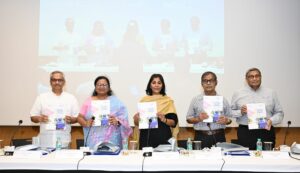 The National Council of Applied Economic Research (NCAER) organised an in-person event to launch its pioneering report, Socio-economic impact assessment of food delivery platform workers, on August 28.
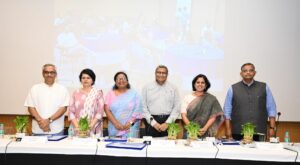 The objective of the report was to conduct a socio-economic impact assessment of food delivery platform workers. The issue of platform workers, especially those engaged in food delivery, has been the subject of extensive debate, especially with regard to their incomes, work conditions, work status, social security, and health insurance, among other things. This report is a contribution to both the literature and policy-making about food delivery platform workers in India.
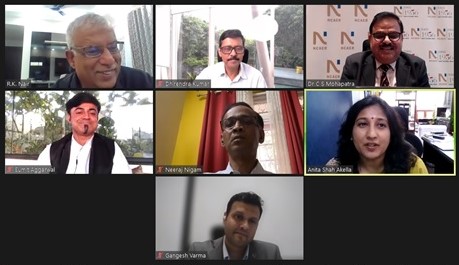 NCAER, in collaboration with the Investor Education and Protection Fund Authority (IEPFA), organised a webinar on “Investor Protection Framework in India: Challenges and Road Ahead’’, on 17 August 2023, to promote financial literacy and investor awareness and protection among investors. The webinar, which was attended by the investor community, and NCAER and IEPFA staff, among others, was organised under the aegis of the Ministry of Corporate Affairs, Government of India.
 The event featured a keynote address by Ms. Anita Shah Akella, CEO of IEPFA and Joint Secretary in the Ministry of Corporate Affairs. Ms. Akella’s address underscored the criticality of financial education and protection in the rapidly evolving financial landscape. She highlighted the need for informed decision-making and of safeguarding investor interests in an environment where financial markets are subject to rapid transformation. She elaborated on the concept of a “financially educated” individual, encompassing a comprehensive understanding of economic fundamentals, adept money management, and insightful decision-making, spanning budgeting, savings, investments, and consumer choices. This holistic understanding empowers individuals to navigate the intricate realm of financial resources, assets, credit, insurance, and taxes, and make prudent choices that resonate beyond individual households, creating positive impacts on communities and societies.
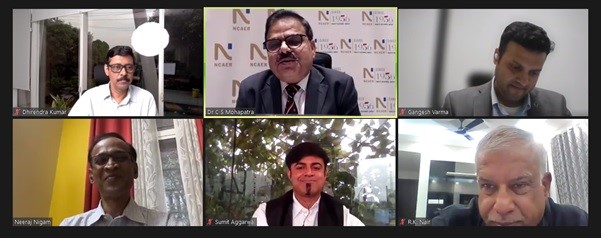 Mr. Dhirendra Kumar, founder of Value Research, delved into the practicality of insurance tools and the need for simplified and comprehensive information disclosure to investors prior to making investment decisions. Mr. R.K. Nair, former Member of the Insurance Regulatory and Development Authority of India (IRDAI), elaborated on insurance matters, emphasising the practicality and transparent information disclosure about insurance tools to investors. Mr. Neeraj Nigam, Executive Director at the Reserve Bank of India (RBI), provided insights into evolving banking systems and the RBI’s role in promoting investor awareness in modern times. Mr. Gangesh Varma, Principal Associate of Technology and Policy at Saraf and Partners, discussed digital initiatives for investor awareness and the indispensable need to educate investors about cybercrime prevention.
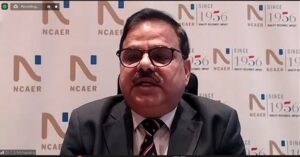 The panel discussion was adeptly moderated by Dr. C.S. Mohapatra, IEPF Chair Professor at NCAER. The IEPF Chair has been established at NCAER with the support of the IEPFA under the Ministry of Corporate Affairs, Government of India. Dr Mohapatra stated that investor protection is a two-way process: while the regulators, government and agencies need to work on policies and their implementation, the investors need to be alert and aware enough to be able to take sound financial decisions. The stakeholders need to strive collectively towards a secure and enabled environment, and investors need to be well-informed, and wary of frauds and mis-selling. He stressed the need for comprehensive research and surveys to guide policy, apart from intensified efforts to build the trust and confidence of investors, both domestic and foreign, as also to ensure the availability of simplified processes and products.
 Concluding the event, Mr. Sumit Agarwal, AGM at IEPFA, extended a vote of thanks, acknowledging the invaluable contributions of all the participants, speakers, and attendees. He lauded the collaborative spirit of the webinar, aligning stakeholders towards the shared goal of enhancing financial literacy and safeguarding investor interests. As global economies embrace digital transformation and financial inclusivity, the event illuminated the pivotal role of financial literacy in unlocking the true potential of these advancements.