

The webinar organised by NCAER is part of the Investor Education and Protection Fund (IEPF) Chair Unit’s webinar series. NCAER established the IEPF Chair Unit in 2020, with funding from the Investor Education and Protection Fund Authority, Ministry of Corporate Affairs. NCAER’s IEPF Chair Unit conducts research on contemporary issues related to investor education and protection, and an analysis of related economic and regulatory issues.
Recently a government-appointed committee to review the quality of audits has recommended that the powers of the National Financial Reporting Authority (NFRA) be enlarged. It should cover much more than investigating misconduct by auditors and company managements. If the committee has its way, the NFRA will be able to seek information from promoters, directors, and executives in the course of investigation into the conduct of auditors. Financial statements certified by chartered accountant are the very bedrock on which everything else is based, whether it is investment decisions by retail investors and mutual funds or lending decisions by banks. Consequently, anything that improves the quality and integrity of these statements is a shot for retail investors.
What does all this mean for investor protection? How can the NFRA deliver on its promise? To discuss this and more, NCAER along with the Ministry of Corporate Affairs, under the aegis of the ministry-funded Investor Protection and Education Chair at the NCAER, organised a webinar on this subject. The panel of experts invited for the discussion were; Amarjit Chopra, former head of the Institute of Chartered Accountants and member of the Expert Committee; Pradeep Ramakrishnan, General Manager, Securities and Exchange Board of India and Hemindra Hazari, Independent Analyst. The discussion was moderated by Mythili Bhusnurmath, Senior Adviser, NCAER.
About the NFRA
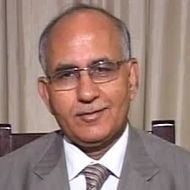 Amarjit Chopra is a Chartered Accountant with more than 46 years of professional experience. He is a senior partner in GSA & Associates LLP, New Delhi. He was elected to Central Council of ICAI for five terms of three years each consecutively from 1998 to 2013 and also served as its Vice President and President. He served the Northern India Regional Council (NIRC) of ICAI for two terms and was its Chairman for the year 1988-89. He completed his Ph. D. from Apex University.
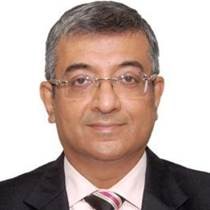 Hemindra Hazari is a Securities and Exchange Board of India (SEBI) registered independent research analyst with over 25 years’ experience in the Indian capital markets. He has specialized in banking and the macro-economy. He holds a Master’s Degree in International Studies from the University of South Carolina, USA and a Bachelors in Economics from St. Xavier’s College, Mumbai.
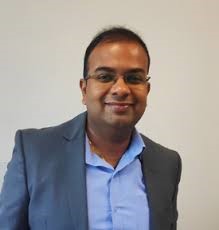 Pradeep Ramakrishnan is General Manager, Securities and Exchange Board of India (SEBI). He joined SEBI in the year 2002 and worked in the Compliance and monitoring division. He is presently at the Department of Debt and Hybrid Securities at SEBI. Previously, he has worked with Madras Fertilizers Limited and Kothari Petrochemicals Limited. He is a commerce graduate and a qualified Company Secretary.
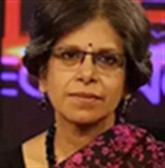 Mythili Bhusnurmath is Senior Adviser, NCAER, and Consulting Editor, ET Now TV. She holds a Master’s in Economics from the Delhi School of Economics and is a Certified Associate of the Indian Institute of Bankers. She also holds a law degree from Delhi University.
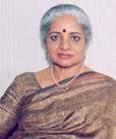 Usha Thorat is a former Deputy Governor of the Reserve Bank of India Her experience covers foreign exchange and reserves management, debt management of Central and State governments, development and regulation of money, forex and government securities markets, rural planning and credit, cooperative banking, customer service and grievance redressal, and payment and settlement systems. She has an MA in Economics from the Delhi School of Economics.
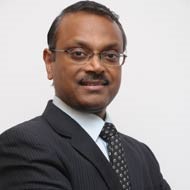 Ananth Narayan is an Associate Professor at the SP Jain Institute of Management and Research. He is an international banking and financial markets expert. He holds over 24 years of experience in banking and financial markets with Standard Chartered, Deutsche Bank and Citibank. He holds a B.Tech. from IIT Bombay, and a post graduate diploma in Management from IIM Lucknow.
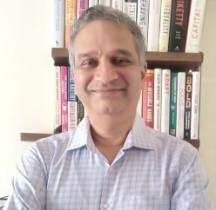 Madan Sabnavis is the Chief Economist at the Bank of Baroda. Prior to this, he was the Chief Economist at Care Ratings Ltd. He has over 30 years of experience across development banking, commercial banking, engineering, commodity exchange and credit ratings. He has an MA in Economics from the Delhi School of Economics.
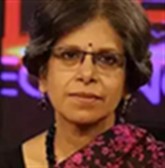 Mythili Bhusnurmath is Senior Adviser, NCAER, and Consulting Editor, ET Now TV. She holds a Master’s in Economics from the Delhi School of Economics and is a Certified Associate of the Indian Institute of Bankers. She also holds a law degree from Delhi University.
 Tanuka Endow is a Professor at the Institute for Human Development (IHD) and the co-ordinator for the Centre for Gender Studies at IHD. Her work is mainly in the area of education, including on the issues of out-of-school children and low-cost private schools. She has worked on Human Development reports and vision documents for various States, including Delhi and Uttarakhand. She has recently contributed to a Human Development Report for the Scheduled Tribes. Dr Endow has engaged in a collaborative study with UNICEF on the post-COVID situation for vulnerable populations in India.
 Paromita Sen set up and now runs the Research and Data Vertical at SEWA Bharat, where she and her team conduct research on entrepreneurship, empowerment, labour, disaster resilience, and leadership amongst others—all through the lens of gender and the informal economy. Under the aegis of the SEWA leadership, she has represented SEWA and has been involved in work with NITI Aayog, the Delhi Government, National Rural Livelihood Mission (NRLM), Commission on the Status of Women (CSW), International Labour Organization (ILO), and the Lok Sabha, amongst others.
 Manjistha Banerji is a Fellow at National Council of Applied Economic Research (NCAER). Her primary areas of research are education, family demography, social change and gender, migration, and survey methods. At the NCAER National Data Innovation Centre (NDIC), she is involved with experimentations on different data collection techniques, telephonic surveys to assess the impact of the COVID pandemic in Delhi NCR, qualitative data collection to understand the risk of impoverishment in the context of COVID-19, and in questionnaire design for the upcoming round of the India Human Development Survey (IHDS).
 S.M. Vijayanand is Former Chief Secretary to the Government of Kerala. He has earlier also served in various capacities in the Government of India, including as the Secretary, Ministry of Panchayati Raj; and Additional Secretary, Ministry of Rural Development, among other positions. He spearheaded the Rajiv Gandhi Drinking Water Mission, Ministry of Sanitation, Government of India (1992-1996). He has also conceptualised and operationalised ‘Kudumbashree’, a women’s Self-Help Group movement in the State of Kerala.
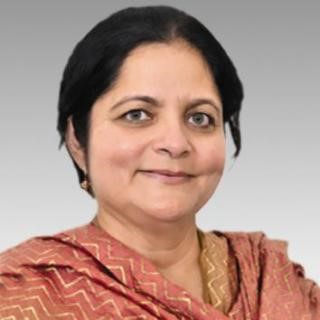 Sonalde Desai is a Professor at NCAER with a joint appointment as Distinguished University Professor in the Department of Sociology at the University of Maryland. She directs the NCAER-National Data Innovation Centre (NDIC). She is an internationally known demographer whose work deals primarily with human development in developing countries with a particular focus on gender and class inequalities. At present, she is leading the India Human Development Survey (IHDS), India’s only nationally representative panel study conducted in two rounds in 2004–05 and 2011–12. Preparations are currently on for the next round of IHDS.
 Gagandeep Kang, Professor in the Department of Gastrointestinal Sciences, Christian Medical College (CMC), Vellore, and currently, Executive Director of the Translational Health Science and Technology Institute, Faridabad, recently became the first Indian woman to be elected Fellow of the Royal Society. Dr Kang’s research focuses on viral infections in children, the testing of rotaviral vaccines and other enteric infections. She has written extensively on COVID-19 policy response, including the book, Till We Win: India’s Fight against the Covid-19 Pandemic, co-authored with Chandrakant Lahariya and Randeep Guleria, (Penguin, 2020).
 Sanghamitra Pati, a physician-cum-scientist, is currently the Director of Regional Medical Research Centre of the Indian Council of Medical Research (ICMR), Bhubaneswar, Odisha. She is an expert in public health and has worked extensively on multi-morbidity research in public health settings. She has also been a lead in the first ever study of multi-morbidity in India.
 Peter Lloyd-Sherlock is Professor of Social Policy and International Development at the University of East Anglia. His main area of research encompasses social protection, health, and the well-being of older people in developing countries. He is also interested in the economic and social effects of non-communicable diseases, such as stroke, heart disease, and Alzheimer’s Disease.
 Aravinda Meera Guntupalli is Senior Lecturer in Global Health, University of Aberdeen. Her research interests are motivated by welfare issues, nutrition, and health. Her recent work is on gender differentials and well-being; nutritional transition, and health inequalities across the life course; and non-communicable diseases and non-monetary indicators of poverty and health in later life mostly using quantitative methods and/or historical perspective. Her research covers various countries, including India, the UK, Kenya, and Zimbabwe.
 Arokiasamy Perianayagam is a Professor at NCAER leading research programmes in the area of health and health economics.