

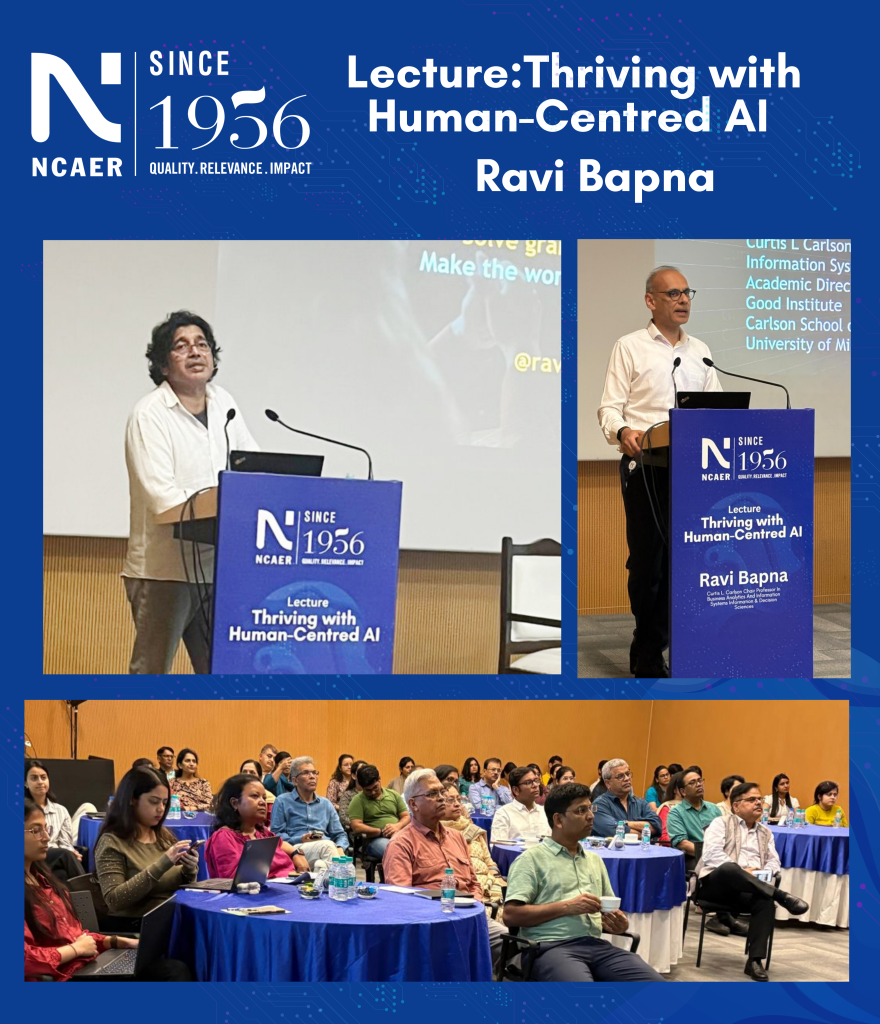
NCAER hosted a lecture, “Thriving with Human-Centred AI” by Ravi Bapna, Curtis L. Carlson Chair Professor in Business Analytics and Information Systems at the Carlson School of Management, University of Minnesota, where he also serves as the Academic Director of the Analytics for Good Institute and the Carlson Analytics Lab (CAL)
The lecture explored how organisations and individuals can harness human-centred Artificial Intelligence (AI) to drive innovation, enhance productivity, and create sustainable value. In his welcome remarks, Mr Suresh Goyal, Director General, NCAER, said that with his extensive expertise in analytics, AI, and Machine Learning (ML), digital transformation, and economics of information systems, Professor Bapna is likely to play a vital role in coordinating research on AI and DPI at NCAER.
The lecture covered various key themes, perspectives, and frameworks associated with the use of AI, including AI dystopia; use of AI in dealing with challenges related to data overload and analysis; foundations for data engineering; the role of AI in powering descriptive, predictive, causal, and prescriptive outcomes; and, the performance of AI in generating and curating information vis-à-vis human resources.
Professor Bapna explained that generative AI is only one subset of a broader AI ecosystem, which also includes traditional machine learning approaches widely used for predictive tasks such as fraud detection and disease prediction. In practice, much of the work in AI projects involves data engineering, including collecting, cleaning, and integrating data, which can account for 60–70 per cent of the effort in building AI systems.
Professor Bapna also discussed the possibilities of use of deep learning AI, reinforcement learning, interaction of Large Language Models (LLMs) with proprietary organisational data and software tools through Application Programming Interfaces (APIs), and training AI to counteract biases inherent in human decision-making. Some of the research questions that the lecture highlighted were:
- Can an agentic-AI based virtual data scientist help MBAs develop stronger analytics capabilities?
- Is there heterogeneity in the usage of agentic-AI across key student characteristics?
- What are the specific mechanisms that link agentic-AI usage with learning outcomes?
The lecture also addressed broader policy and societal issues, including the potential for bias, regulation, and unequal access to AI technologies.
Professor Bapna highlighted the importance of DPI and data ecosystems, particularly in a country like India, where large-scale digital platforms generate valuable data that can be leveraged for research and policy insights. He delineated the limitations of AI, such as its probabilistic tendency, and potential for producing hallucinations or generating inaccurate or insufficient information, which necessitates validation and responsible usage of AI. The breakthrough behind tools like ChatGPT is not just the model architecture, but the large-scale human effort needed to fine-tune these models and add guardrails.
Finally, Professor Bapna emphasised the significance of lifelong learning and responsible governance to optimise the benefits of AI for society. Like any technology, AI carries risks, but its impact ultimately depends on how humans design, govern, and deploy it. “Rather than replacing humans, the real promise of AI lies in augmenting human capabilities. We need to orchestrate and conduct human-AI symphonies to solve grand challenges and make the world a better place”, he noted.
In conclusion, Dr Anil Sharma, Secretary and Operations Director, NCAER, while thanking Professor Bapna for his incisive lecture, suggested the need for continually assessing the role of AI in enhancing human productivity and efficiency, and how AI can help produce solutions for a large number of social problems and glaring questions through better research and policies.

 The report highlighted the emergence of a “silent human capital crisis” with the deficit being especially prominent for women and the youth. While core insights of the report included stepping stones for reversing the deficit, the overall analysis underscored how service access, job quality, and skill formation interact over the life cycle to shape long-term human capital accumulation.
 The seminar was chaired by Mr Suresh Goyal, Director General, NCAER, who steered the discussion and highlighted the policy relevance of the report’s findings. Dr Pallavi Choudhuri, Senior Fellow and Deputy Director at NCAER’s National Data Innovation Centre (NDIC), served as the discussant, offering critical reflections on the report’s findings.
 NCAER and the Investor Education and Protection Fund Authority (IEPFA), Ministry of Corporate Affairs, Government of India, in collaboration with Sapphire International School, organised a workshop on the eve of International Women’s day on the theme “The Future is Now: Financial Education for Gen-Alpha and Bridging the Gender Gap for Viksit Bharat” on March 7, 2026, at SIS Auditorium, Ghaziabad, Delhi-NCR.
 Aimed at strengthening investor awareness and nurturing financially empowered youth aligned with India’s vision for Viksit Bharat, the workshop brought together distinguished policymakers, financial experts, and regulators to promote financial literacy, digital awareness, and investor protection among students and housekeepers of the school. The speakers highlighted the importance of gender-inclusive financial empowerment in India’s rapidly digitalising economy. Welcoming the dignitaries and participants, Ms Ekta Soni, Principal, Sapphire International School, emphasised that empowering young learners, especially girls, with financial knowledge and decision-making skills is essential for building confidence, independence, and long-term economic resilience.
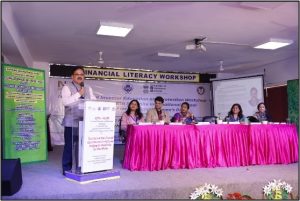 Delivering the keynote address, Ms Anita Shah Akella, CEO, IEPFA and Joint Secretary, Ministry of Corporate Affairs, Government of India, highlighted the rapid growth of digital payments in India and increased exposure to cyber fraud and misinformation. She emphasised that early financial education for Gen-Alpha is essential to build safe financial behaviour and informed digital participation. On the occasion of International Women’s Day, she stressed that empowering young girls with financial knowledge enhances their confidence, enabling their equal participation in the economy.
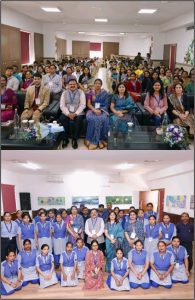 Moderating the panel discussion, Dr C. S. Mohapatra, IEPF Chair Professor, NCAER, pointed out that traditional financial literacy must evolve to match India’s digital transformation. He noted that young learners today interact with algorithm-driven financial platforms and online payment ecosystems at an early age, making behavioural awareness and understanding of digital risks as important as financial knowledge. Highlighting the gender dimension, he stressed that girls and young women often face gaps in financial confidence, digital access, and opportunities for decision-making, making early and inclusive financial education essential to bridge these disparities. Dr Sonal Tikku, Assistant Professor at Amity University and Former Regional Nodal Officer at Axis Bank, spoke about promoting financial inclusion and responsible financial behaviour. She highlighted the need for practising strong cyber hygiene, such as avoiding suspicious links, protecting personal information, and using secure passwords. Early education about safe Internet behaviour helps in building responsible digital habits. She discussed the common mistakes made by first-time users, underscoring the importance of financial planning and disciplined savings habits. She suggested that financial independence among women begins with awareness and informed financial decision-making. Ms Himani Lath, Former Manager, NSDL; Financial Literacy Expert and SMART Trainer, SEBI, focused on the imperative of empowering participants with essential financial knowledge and practical skills for safe and informed participation in the financial ecosystem. CS Shivam Sharma, Former Chairman, Institute of Company Secretaries of India, Ghaziabad, highlighted the importance of financial ethics, regulatory awareness, and corporate governance in protecting investors. He stated that informed and aware citizens contribute to stronger and more trustworthy financial systems.
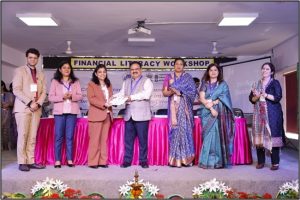 The workshop was extended to housekeeping assistants, where the basic principles of savings, investments, and a need-based approach to managing personal finance were explained in a lucid manner. Participants were also guided on developing productive financial habits and informed about the dos and don’ts of preventing scams and frauds. An interactive Q&A session allowed them to engage with experts on topics such as digital scams, safe online transactions, and financial planning. This was followed by distribution of certificates to participants in the event and in the quiz held as part of the workshop.
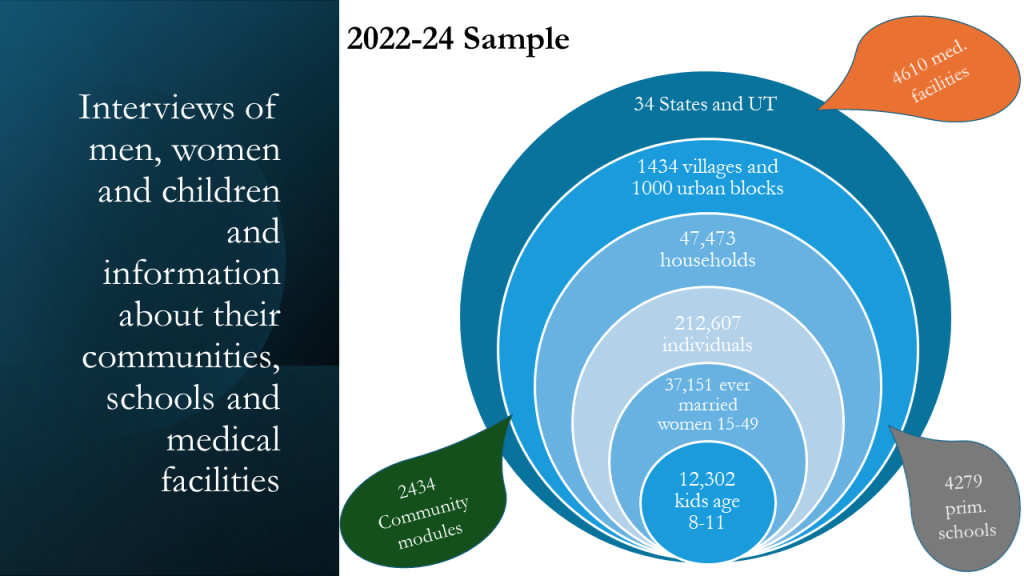
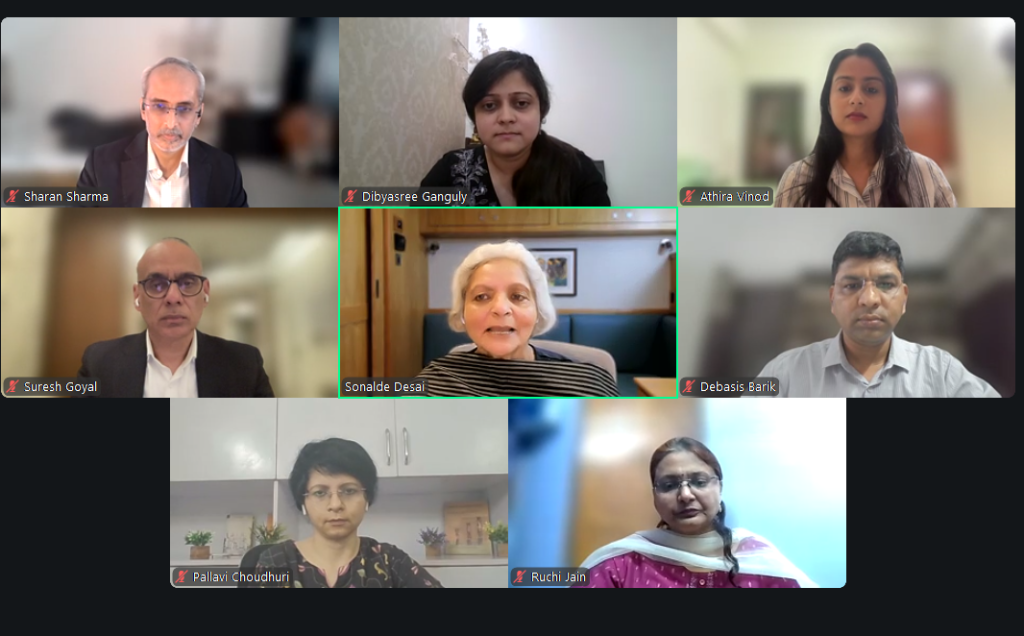 To mark the occasion of Women’s History Month, NCAER hosted a webinar titled, “Gender Transformation: Insights from the India Human Development Survey (IHDS)”. During the webinar, researchers from the IHDS team discussed insights on gender transformations across the country, based on IHDS data emerging from surveying the lives of men and women in over 40,000 households, over the two decades between 2004 and 2024.
 Moderated by Professor Sonalde Desai, the webinar, which had over 150 attendees, was also joined by NCAER’s Director General, Mr. Suresh Goyal. The presentations by IHDS researchers Dr Pallavi Choudhuri, Dr Debasis Barik, Dr Ruchi Jain, Dr Dibyasree Ganguly, and Dr Athira Vinod from NCAER and Dr Sharan Sharma from the University of Maryland, and the subsequent discussion focused on several topics of interest and key themes, including survey methodology, changing educational patterns, evolving family expectations, women’s mobility, and the continuing challenges of measuring work and empowerment.
  The panel also highlighted practical challenges in interviewing women and emphasised the importance of recruiting and training women interviewers while addressing related barriers and strengthening field protocols to improve data quality.