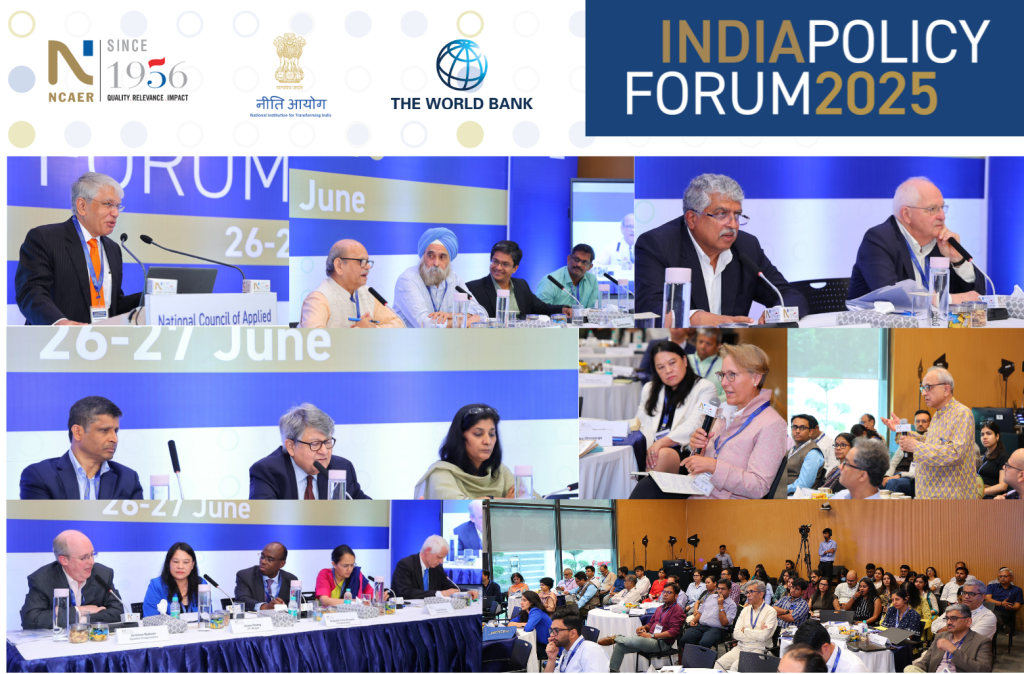
The 22nd edition of the India Policy Forum Conference was held at NCAER premises in New Delhi during the period from 26 to 27 of June, 2025. It was hosted in collaboration with NITI Aayog and The World Bank.
NCAER has been holding the IPF Conference every year since 2004. During the last two decades, the IPF has evolved as a marquee annual event for NCAER and a vital podium for carrying forward its rich legacy and historical traditions of promoting empirical evidence-based research. The Conference is also the leading economic policy event in the summer season of Delhi and is attended by a galaxy of eminent policymakers, scholars, practitioners, academics, and members of the research fraternity, including some of the best economists in the world working on India.
The IPF aims to promote empirical economic research on India through commissioned papers that are presented and discussed at the conference. Each paper is subsequently edited and finally published in a conference volume.
The 2025 Conference featured presentation of five papers, along with two policy lectures and three panel discussions on key topics. The research papers covered a diverse range of sectors and subjects, including the employment landscape and pathways to jobs in India; the key drivers of corporate investment in India;; economic growth and development in the state of Karnataka; gender gaps in entrepreneurship in India; and, the role of innovation in driving growth in the Indian economy.
The first paper presented at IPF 2025 was on The Landscape of Employment in India: Pathways to Jobs, authored by Visiting Professor at NCAER, Farzana Afridi and her co-authors. The paper focuses on the manufacturing and services sectors, particularly the more labour-intensive sub-sectors therein, as key drivers of job creation in India. It highlights constraints on both the demand and supply sides of the labour market that hinder progress towards attaining the employment goals for Viksit Bharat. The authors also project the number of jobs that can be created through output growth in labour intensive manufacturing and services sub-sectors between 2025 and 2030, using different growth scenarios. The results suggest that inter-sectoral linkages can have a multiplicative effect on employment in the aggregate economy. The paper concludes with policy prescriptions to boost aggregate demand and enhance workforce skilling.
In the second paper, titled, Corporate Investments in India: Lack of Investment Opportunity or Lack of Funds?, the authors Amiyatosh Purnanandam and Arushi Sharma investigate the key drivers of corporate investment in India. Specifically, the paper shows the relative importance of investment opportunities and financial constraints the firms face. The authors find that capital expenditure responds positively to the investment opportunities, and the sensitivity of investment has increased after the reforms in the banking sector in the mid-2010s. They assess the importance of cash flow constraints and how it varies across industries. Using the recapitalization of the Indian banking sector and the collapse of Non-Banking Finance Companies (NBFCs) as shocks to access to finance, the paper uncovers the extent of constraints they face and factors that alleviate these constraints. These findings have policy implications aimed at spurring investments and economic growth in India.
Another paper by M. Govinda Rao, Economic Growth and Development of Karnataka, highlights the remarkable transformation of Karnataka from a less than average per capita income State in 1990-91, to the second highest among the large States in 2022-23. However, the impressive growth performance of the state has not translated itself into appreciable human development, mainly due to the significant regional variations in development. As a result, Karnataka is a state of contrasts – with dynamism and spectacular development in some regions co-existing with penury and backwardness in others. This imbalance is also seen in the spectacular growth of the services sector while the shares of both agriculture and industry have shown a steady decline. Bengaluru, the IT and Information Technology Enabled Services (ITES) capital of the state, has been the leading centre for the growth of the services sector due to, inter alia, an impressive knowledge economy; innovation and high-tech capital; skilled manpower; elite public institutions; salubrious climate; multicultural and cosmopolitan population; and, responsive bureaucracy. In contrast, the Kannada-speaking districts which were under the Hyderabad Nizam and the Bombay Presidency continue to experience backwardness despite various initiatives to develop them. The government’s response to development has been mainly reactive to the developmental concerns. Ensuring sustained and balanced growth in the state would require significant policy reorientation.
In the fourth paper presented at the IPF, Gender Gaps in Entrepreneurship in India: Entry Barriers and Growth Constraints, the authors Gaurav Chiplunkar and Pinelopi Goldberg examine gender gaps in entrepreneurship in India. Using nationally representative data, they show that female labour force participation explains much of the gender gap in self-employment, but not in entrepreneurship, where women remain under-represented and report facing disproportionate barriers in access to finance, infrastructure, and in navigating regulatory environments. The paper thus flags large, persistent barriers to firm growth for women, even in richer states, highlighting the need for multi-dimensional, state-specific policy solutions.
The fifth paper, Some Facts about Indian Innovation, by Namrata Kala, Josh Lerner, and Junxi Liu, suggests that innovation is a key driver of growth and development, and understanding its evolution in developing countries can provide important insights into the development process. The paper describes several key stylised facts of Indian innovation in the twenty-first century, finding considerable variation in patenting by geography; Indian versus foreign inventors; ownership of inventing organisation (public versus private); and, type of organisation (academic institutions versus firms). In the context of the rapid growth of patenting and venture capital in India and the intense interest in innovation in developing countries, the authors anticipate that the paper would stimulate research in this area by economists and other innovation scholars.
Apart from these five papers, the India Policy Forum Conference of 2025 also featured two lectures, chaired by NCAER Chairman Nandan Nilekani, including the IPF Lecture on “India’s Role in the New World Disorder”, delivered by Martin Wolf, Chief Economics Commentator, Financial Times, and another one on “Unleashing India’s Growth: Talent, Delegation, and the Scaling of Firms”, delivered by Ufuk Akcigit, Professor, University of Chicago.
There were also three panel discussions on key national and international issues, such as “Trump’s Trade Wars and the Future of the International Trade System”; “Global Economic Outlook”; and, “Geopolitical Turmoil and its Potential Impact on the Indian Economy”, with leading economists, academics, and policy-makers as the participants. The Conference concluded with a panel discussion on “India’s Multiple Transitions – Financing a Big Investment Push”, moderated by the Vice-Chairman, NITI Aayog, Mr Suman Bery. The panel included Arvind Virmani, Member, NITI Aayog; Nagesh Kumar, Director and Chief Executive, ISID; and, Pravakar Sahoo, Programme Director, NITI Aayog.
For any queries, please contact ipf@ncaer.org


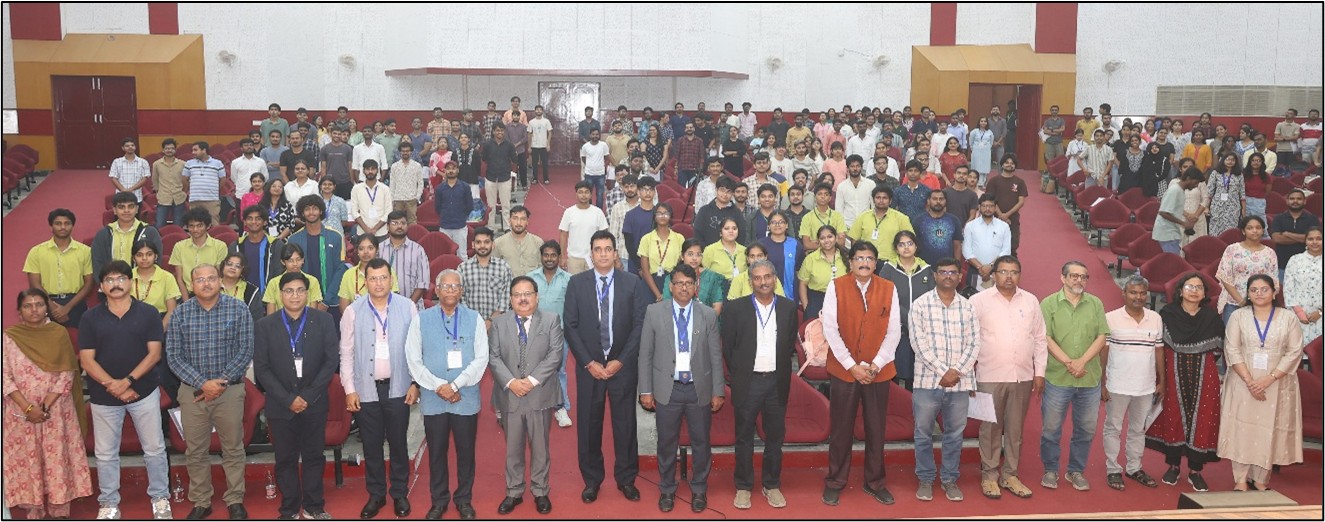
 The Workshop’s tone was set by the Welcome Address by Dean of School of Economics, University of Hyderabad, Prof. Debashis Acharya. Prof. B. J. Rao, Vice Chancellor, University of Hyderabad, delivered the inaugural insights highlighting the crucial role of youth in shaping India’s economic future. Ms. Anita Shah Akella, CEO, IEPFA & Joint Secretary, Ministry of Corporate Affairs, in her Keynote Address, inspired the students to promote investor education and highlighted investor protection policies and IEPFA’s efforts to strengthen financial trust and transparency.
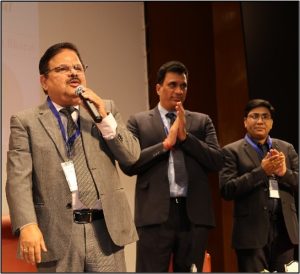 Dr. C. S. Mohapatra, IEPF Chair Professor at NCAER, moderated the panel and emphasized the need for sustained financial education that focuses on behavioural improvements and long-term inclusion. He highlighted the need for trust-building between institutions and investors, with efficient grievance redressal, so they feel confident participating in formal financial markets. His remarks urged stronger collaboration among academia, regulators, and market institutions ensuring that no segment of youth or any vulnerable section of society is left behind in India’s financial empowerment journey. He cautioned students to safeguard themselves against rising financial frauds, scams, and misleading online finfluencers, especially in the high-velocity digital ecosystem.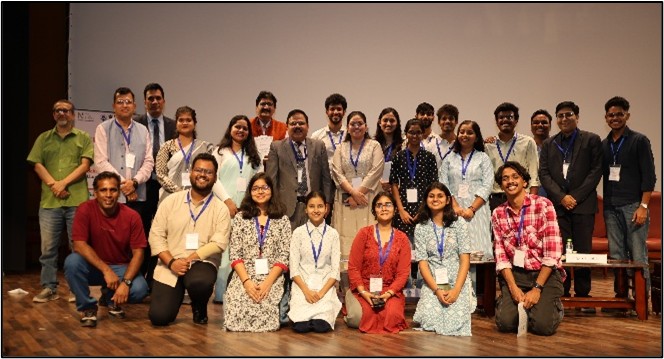
 In continuation of its efforts to promote investor education and awareness, National Council of Applied Economic Research (NCAER) in collaboration with the Investor Education and Protection Fund Authority (IEPFA), Ministry of Corporate Affairs, and FORE School of Management, Gurugram, organized a hybrid workshop on “Digital Financial Literacy: The Panacea for Sustaining Financial Sector Resilience in the Journey to Viksit Bharat”.
 t the outset, Prof. Sanghamitra Buddhapriya, Dean and Campus Head of the FORE School of Management, lauded NCAER for this first ever collaborative effort. She highlighted the growing importance of digital competence for future managers in today’s era of financial transformation. Delivering the inaugural address, Dr. B.B.L. Madhukar, Chairman, FORE, stressed that management institutions must equip students not only with technical skills but also with financial prudence and awareness, which are fundamental to building resilient markets.
 Dr. C.S. Mohapatra, IEPF Chair Professor, NCAER, who moderated the discussion, emphasized that digital financial literacy must go beyond access—it should foster trust, resilience, and responsible participation in markets. Drawing from his vast policy experience, Dr. Mohapatra highlighted how financial sector stability and resilience, cybersecurity, and investor awareness together build the foundations of Viksit Bharat. He stressed that digital financial literacy is central to building trust and resilience in widening and deepening the financial markets.
 Ms. Himani Lath, SEBI SMART Trainer and former NSDL Manager, discussed the risks and opportunities of digital demat and trading platforms. She urged students to be vigilant about their rights as investors and to maintain digital financial discipline. Sharing case studies, she demonstrated how timely awareness can prevent major investor losses
 Mr. Harsha Bhowmik, Director, Digital Economy & Fintech, Ministry of Finance, highlighted India’s leadership in fintech innovations such as UPI, CBDC, and AI-driven credit systems. He explained how policy must strike a balance between innovation and regulation, ensuring consumer protection while driving inclusive, sustainable growth in the digital economy.
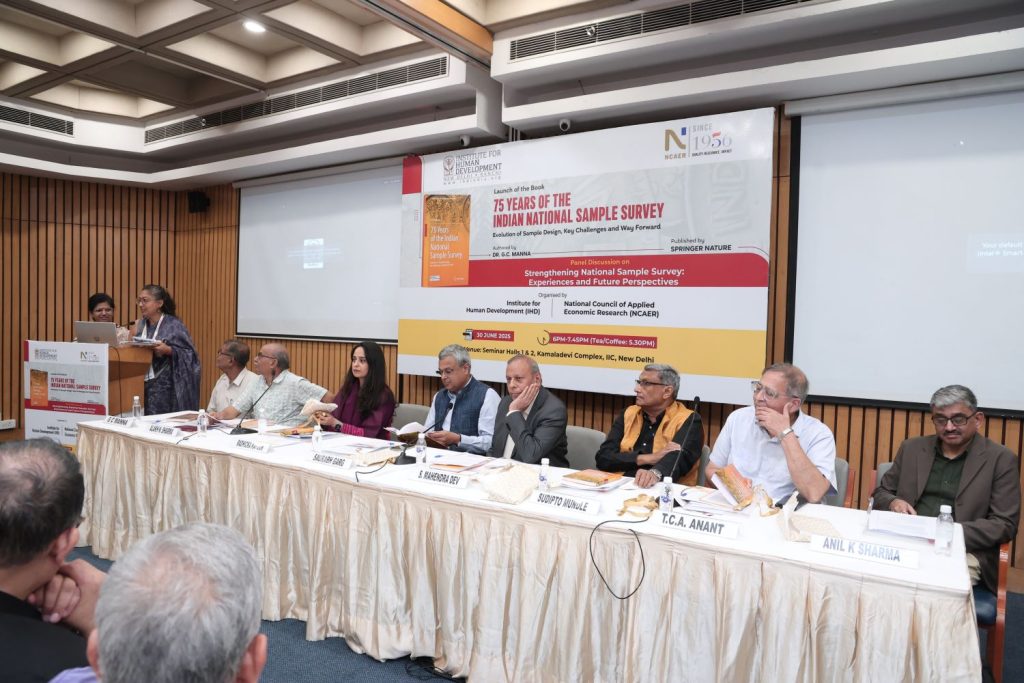
 NCAER and the Institute for Human Development (IHD) jointly organised a book launch event on June 30, 2025, at the India International Centre, New Delhi, to release a book “75 Years of the Indian National Sample Survey: Evolution of Sample Design, Key Challenges and Way Forward“, authored by Dr G.C. Manna, Senior Adviser at NCAER and visiting Professor at IHD. Dr Manna is the former Director-General of the Central Statistics Office (CSO) and the National Sample Survey Office (NSSO).


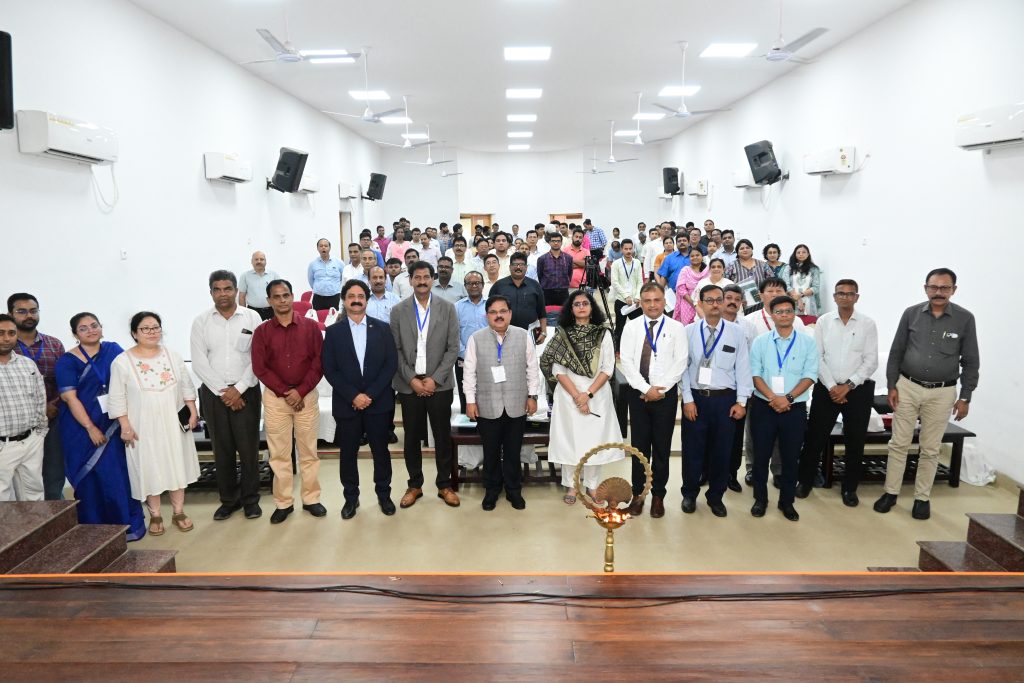
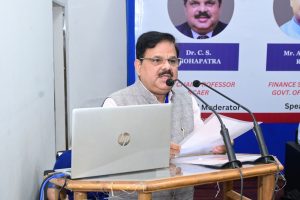 The workshop featured a dynamic panel discussion, moderated by Dr. C. S. Mohapatra, IEPF Chair Professor at NCAER. He steered the conversation by explaining the complexities of financial markets and products and the need for remaining watchful and knowledgeable on the patterns of scams and frauds that are on the rise along with digitalization. While Government and regulators have built investor protection frameworks, investors themselves need to understand the nuances of digital transformation in financial market and remain vigilant in their journey towards maximizing financial well-being.
 The panel addressed emerging challenges and opportunities in investor protection, the role of financial literacy in the digital age, and actionable recommendations to build a resilient financial ecosystem.