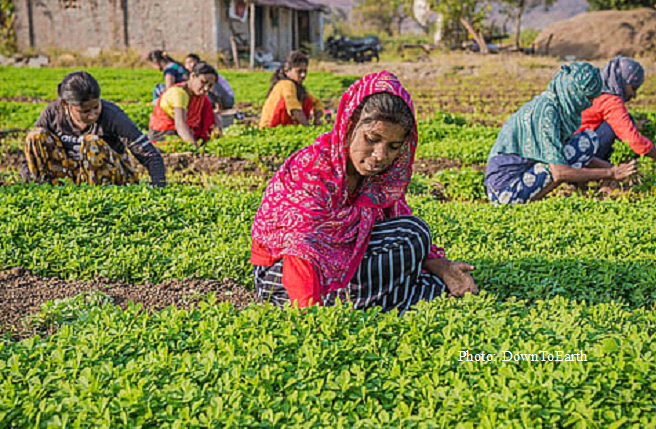
Who Cooked Your Dinner? A New Recipe for Gender Sensitive Growth: India’s New Labour Codes Hold Key

3 October, 2025
Centre for Gender and Macroeconomy

Published in: The Daily Guardian

Who Cooked Your Dinner? A New Recipe for Gender Sensitive Growth: India’s New Labour Codes Hold Key

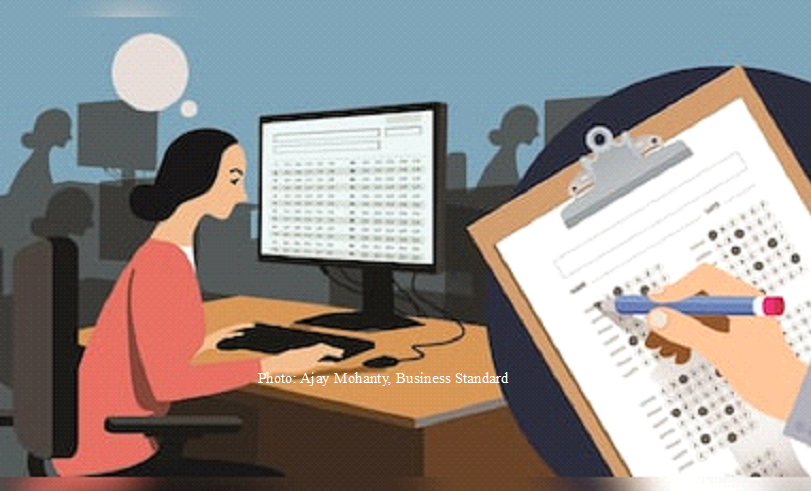
Who Cooked Adam Smith’s Dinner? The provocative question, once aimed at the Father of Modern Economics, echoes with particular resonance in India. The book is a critique of Smith’s ‘Invisible Hand’ postulation and challenges the very foundation of economic measurement, pointing to the vast, uncounted economy of unpaid labour, performed predominantly by women, that fuels the official, market-based one. The Indian women are no different, cooking, cleaning, and caring so that others could participate in the paid economy, but find their contributions relegated to a mere footnote in the nation’s growth story.

There was some food for thought during a recent training programme on ‘Gender and Labour Laws’, organised by VV Giri National Labour Institute, Ministry of Labour and Employment, which sought to address the larger questions on the intersection of paid work and unpaid care work and relevance of social reproduction in labour laws.

Let’s first make sense of some data. According to the Periodic Labour Force Survey (PLFS), women’s labour force participation rose to 41.7% in 2023–24, a notable increase from earlier years. Yet this remains far below men’s participation and skewed towards low paying self-employment and unpaid family work. Meanwhile, India’s Time Use evidence shows that women aged 15–59 years spent about 305 minutes a day on unpaid domestic services in 2024, only slightly down from 315 minutes in 2019. It reflects massive economic inefficiency, a leakage of productive potential that the economy misses out on. In a recent paper with Ratna Sahay at NCAER, we show that a more equitable sharing of household responsibilities between men and women, together with greater flexibility in working hours through formal part-time contracts, could raise female labour force participation in India by 6 percentage points percentage points.

India’s new Labour Codes represent a foundational step toward acknowledging this hidden work and, more importantly, creating a framework to convert women’s untapped potential into formal economic power. This isn’t mere tinkering; it is a necessary rewriting of the rules to bridge the gap between the kitchen and the marketplace. The four codes consolidate 29 legacy laws. Several provisions can ease specific constraints that hold women back.

Fair and Predictable Pay: The Code on Wages, 2019 establishes a national floor wage and extends minimum wage coverage to all employees, while prohibiting gender- based discrimination in recruitment and wages. The Code aims to raise the returns on women’s time. For too long, the shadow price of their unpaid work at home made low-paid market work uneconomical. A credible minimum wage changes that calculus, making formal employment a more viable choice.

Hours and Mobility: The Occupational Safety, Health and Working Conditions (OSHWC) Code, 2020 explicitly permits women to work before 6 a.m. and after 7 p.m. with their written consent, subject to safeguards on safety, holidays, and working hours. This matters because modern services like logistics, healthcare and IT-enabled work run round the clock. The policy task is to ensure the conditions on the ground so that night work expands women’s opportunities.

Care Infrastructure and Maternity Protection: The Code on Social Security, 2020 integrates maternity protection, including 26 weeks of paid maternity leave, nursing breaks, and mandatory crèche facilities for larger establishments. It empowers the government to design schemes for self employed and unorganised workers, including gig and platform workers. For many women, especially in urban peripheries, the binding constraint is childcare, not just the job itself. A functioning crèche at or near the workplace converts unpaid care time into productive work time while nursing breaks and non-discrimination norms smoothen the return to work. Recognising gig workers opens a pathway to social insurance for those using platforms to re-enter the labour market after caregiving breaks.

Industrial Relations: The Industrial Relations Code, 2020 raises the threshold from 100 to 300 at which prior government permission is needed for layoffs, retrenchment, or closure. Proponents argue this flexibility will nudge firms to expand headcount while critics fear weaker job security. For women, the distributional question is paramount: do more, larger formal firms translate into more formal jobs for women, or does adjustment continue to happen through casualisation and contract work? The answer will depend on how states complement the Code with proactive placement, skilling, and anti-discrimination enforcement.

So, what should we watch out for? Heterogeneity across states. Labour is a concurrent subject, and states are already moving at different speeds and with varied rulebooks. Where states pair OSHWC’s nightwork permissions with enforceable safety protocols, women’s participation in sunrise sectors (e-commerce fulfilment, hospital administration, hospitality) should rise. Without the following, the letters of the law will not change lived constraints.

Care as Infrastructure: Treat crèches the way we treat roads- as enabling capital that multiplies the returns to women’s education and skilling. The 26-week maternity leave is necessary but not sufficient. Most Indian women work outside the salaried formal sector. Extending childcare through common facility crèches in industrial areas, social-sector PPPs, and linking them to Self-Help Group (SHG) networks can convert statutory intent into usage.

From Entry to Progression: A higher labour force participation rate is a step forward, but what matters even more is the quality of those jobs. Instead of just counting heads, we should be asking: are women moving up the ladder? The real journey is from unpaid helper in a family business, to running one’s own account, and eventually to a stable, salaried position with social security.

Gig Work and Social Protection: Rising female labour force participation is progress, but job quality matters more. The real path is from unpaid family work to self-employment, and finally to stable, secure jobs. Gig platforms offer flexibility for women balancing care and work, but without benefits they risk deepening insecurity. The Social Security Code and e-Shram portal mark a start by recognising gig workers, but the task ahead is to turn this into portable benefits like health, maternity, and disability cover for the worker irrespective of the changing platforms.

Change takes time. Laws may open doors, but real progress will come when families, firms, and governments move together. The ‘dinner question’ reminds us how much growth relies on invisible labour. If new labour codes ease this burden, the benefits will extend beyond women to an economy that draws on its full talent, not just half.

Author is Associate Fellow, NCAER, New Delhi. Views are personal.

Latest Publications

Op-Eds
12 March 2026

When philanthropy is less leap of faith, more numbers game

Sonalde Desai
Op-Eds
10 March 2026

Correcting Market and Regulatory Failures in Agri-Waste Value Chains

Laxmi Joshi
Op-Eds
07 March 2026

How domestic chores constrain women’s work

Dibyasree Ganguly

    Get updates from NCAER