South Asia Economic Update (April 2026)

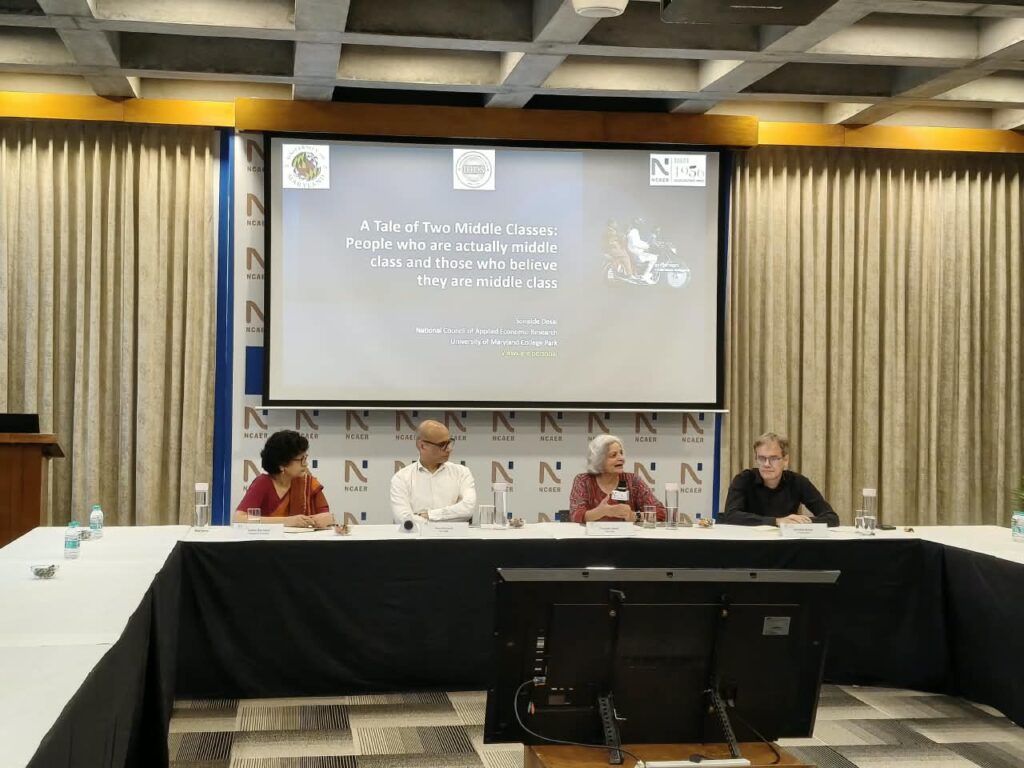
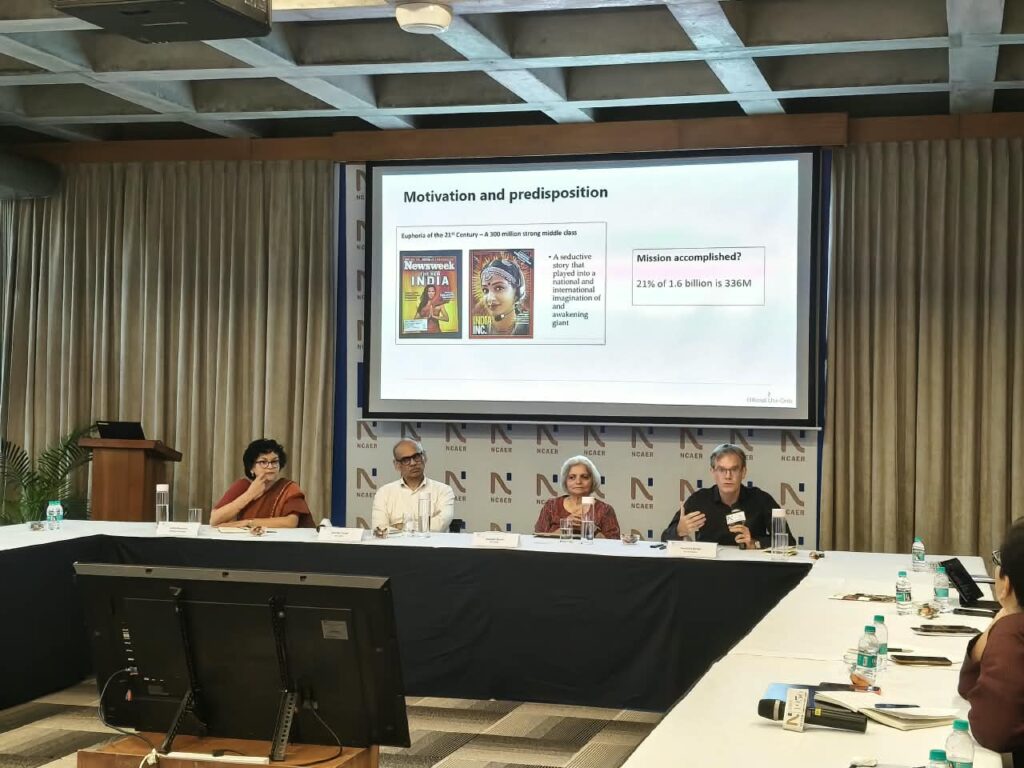
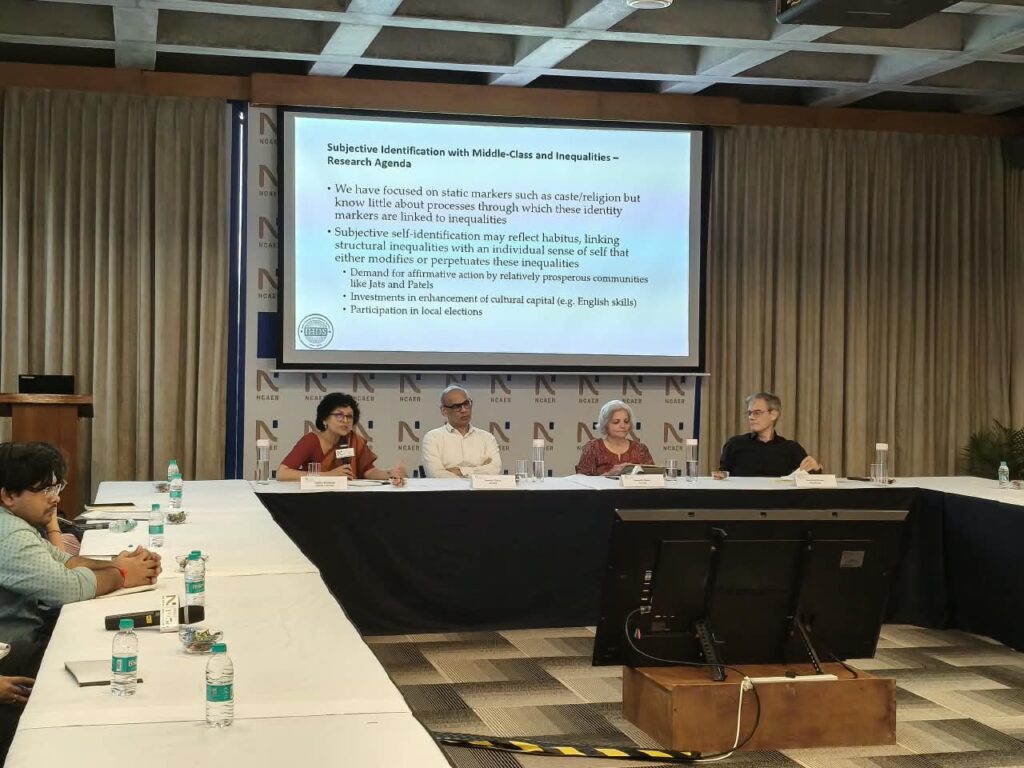
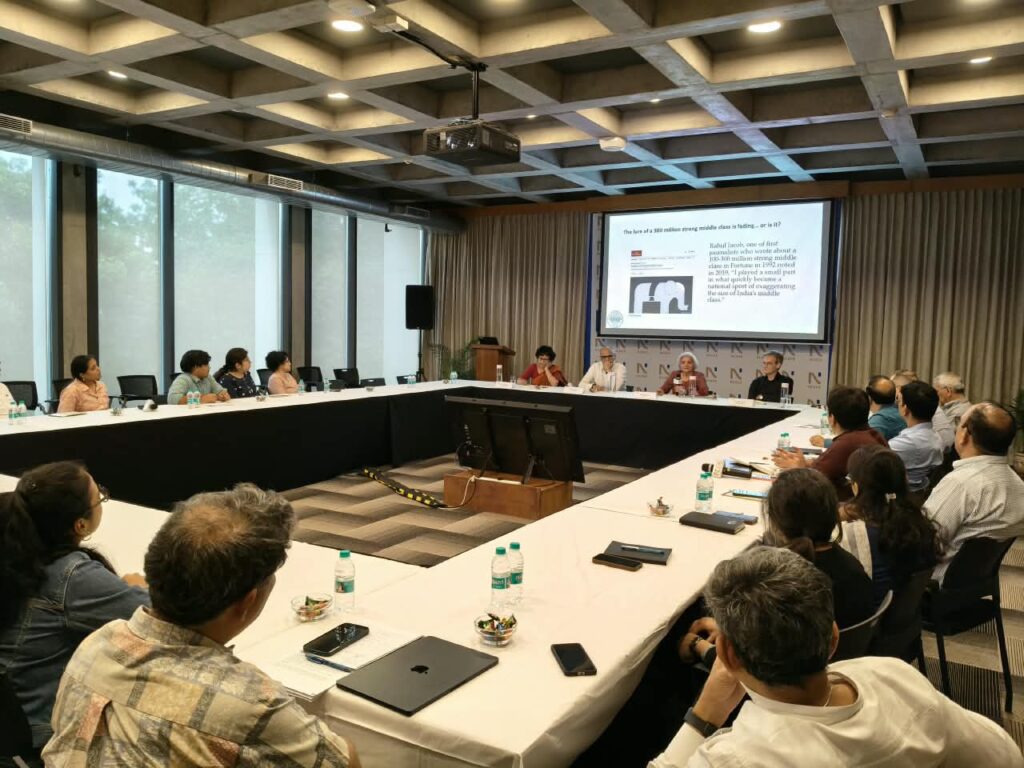
NCAER, in collaboration with the World Bank, hosted a discussion on the World Bank’s latest South Asia Economic Update and its implications for India. The event was attended by policy makers, researchers, academics, and representatives of the media.

The discussion featured a panel of experts, including Mr Suman Bery, Vice Chairman of NITI Aayog; Dr Franziska Ohnsorge, World Bank Chief Economist for South Asia; and Mr Aurelien Kruse, World Bank Lead Economist for India. Dr Sudipto Mundle, Chairman of the Board of Centre for Development Studies and Dr Nagesh Kumar, Director and Chief Executive, Institute for Studies in Industrial Development, served as discussants. Dr Anil K Sharma, Secretary and Operations Director, NCAER, delivered the welcome remarks.

The April 2026 edition of the World Bank report presents the latest economic outlook for the region, along with an in-depth analysis of the role of industrial policy in development. The report examines key features of South Asia’s industrial policies, their impact on trade, and how the region can maximise gains from such policies. The report also explores recent trade reforms and the reshaping of global value chains driven by AI.

The presentations on the report indicated that South Asia remains the world’s fastest-growing region, with India acting as the principal engine of growth, even as it faces slower expansion due to energy market dislocations. Amid headwinds from global energy market dislocations on the back of the Iran war, South Asia’s growth remains on the upside, according to the World Bank’s latest projections for the region.

The World Bank report identifies key challenges, including heightened geopolitical risks affecting energy prices, persistent inflationary pressures, weaker external demand, and constrained fiscal space. At the same time, the region continues to rely heavily on domestic demand.

Over the medium term, trade reforms across South Asian countries could unlock additional growth by reducing barriers, particularly in emerging export sectors. However, accelerating job creation is becoming increasingly difficult, as employment prospects weaken in activities exposed to AI.

In his opening remarks, Shri Suman Bery said, “The steady rise in India’s economic status as a large economy, at market prices, is due to the fact that the country has not faced any significant financial crises along the way. In this context, the World Bank’s report on South Asia is an important empirical document for the region.” Mr Bery also advised India’s States and Union Territories to consolidate the gains of the nation’s economic growth rather than fragment its labour markets, and to ensure that the gains from trade would help augment productivity and efficiency.

Dr Franziska Ohnsorge said, “The South Asian region is the fastest growing in the world, primarily because of the rapid growth in India. The medium-term economic outlook in the South Asian region is also very encouraging, notwithstanding the overall slowdown because of the energy crisis caused by the impact of the ongoing war in the Middle East. In the longer term too, India is slated to grow rapidly due to the advent of trade reforms and their distributional impact.” She pointed out that “one of the biggest challenges for South Asia is the need to create more and better jobs, especially because over the next 10-15 years, about 280 million young people in this region will enter the workforce.”

Dr Ohnsorge also predicted India’s growth forecast to be 6.6 per cent of GDP. However, the ongoing conflict in the Middle East would make normalisation harder for energy markets, and also affect the resilience of remittances from the Gulf Cooperation Council (GCC) countries, including Saudi Arabia, United Arab Emirates (UAE), Qatar, Kuwait, Oman, and Bahrain, which could impact overall long-term growth in the South Asian region, she suggested.

Mr Aurelien Kruse flagged private consumption as the main driver of growth of the Indian economy. He noted that India’s economy has remained strong despite the uncertainty emanating from recent trade policies of the USA. He also said that both exports and investment growth in India have remained resilient to market shocks. Further, he argued that low inflation and prudent fiscal and monetary policies are the buffers needed for combating trade shocks in the long run; effective agglomeration can help in improving trade and growth; and that high-end jobs necessitate special skilling initiatives for the workforce.

In his remarks, Dr Sudipto Mundle said, “A conspicuous development witnessed in the Indian economy has been its growth paradox—this is reflected in the fact that even though India has consistently been one of the fastest growing major economies of the world, growing at a rate of about 6 per cent, but simultaneously unemployment in the country has also been high. This growth paradox creates a conundrum for policymakers—should policy focus on GDP growth or on employment growth?”

Dr Nagesh Kumar maintained that the region “is exhibiting very robust growth, despite the challenges springing from the Middle East conflict. However, this growth should be supported by a dynamic industrial policy that keeps an eye on the global context and manufacturing trends.” He also highlighted the importance of promoting services for economic growth, especially since the services sector constitutes about 60 per cent of the GDP. In addition, he emphasised the role of forward and backward linkages in creating more indirect job opportunities.

The event concluded with Dr Anil Sharma thanking the chair, the two speakers, the two discussants, and all the participants for joining the discussion.

National Workshop on Assessing Indirect and Intangible Benefits of Irrigation Projects

NCAER organised a National Workshop on March 17, 2026, at its campus in New Delhi, to deliberate on the assessment of indirect and intangible benefits of irrigation projects across local, command, and adjoining areas. The workshop brought together representatives from key government institutions, including functionaries of 20 State Governments, along with policymakers, technical experts, and researchers to discuss emerging approaches for capturing the broader socio-economic impacts of irrigation infrastructure.

The discussions at the workshop highlighted the need to move beyond conventional benefit–cost analysis and incorporate wider developmental outcomes such as improved market access, livelihood diversification, and enhanced household welfare. The analytical framework presented combines composite indices with econometric modelling to capture multidimensional impacts, underscoring the role of irrigation in strengthening rural economic linkages and improving quality of life.

The key deliberations focused on methodological aspects, including the treatment of market linkages, tourism-related impacts, time savings in water collection, and groundwater recharge. The participants noted that irrigation facilitates crop diversification, aids in price realisation, and reduces transaction costs, thereby strengthening the market integration of farmers. The inclusion of time savings as a welfare indicator was also widely recognized.

The workshop concluded with a consensus on further refining the analytical framework to enhance robustness and policy relevance in the sphere of irrigation. It is also expected to contribute to the development of a more comprehensive and evidence-based approach for incorporating indirect and intangible benefits into irrigation planning and evaluation.

In Conversation with Ms Simran Sharma, Champion Para-Athlete

NCAER organised a talk with Simran Sharma, a shining star in Indian para-sports, as part of its Women’s Day celebrations, at its campus on 16 March 2026.

Born with visual impairment, Simran has exhibited determination and resilience, rising to become one of India’s most decorated para-athletes. She has won multiple awards in international competitions, including two silver medals at the 2022 Hangzhou Asian Para Games, a bronze medal in the Women’s 200m T12 event at the 2024 Paris Paralympics, and gold medals in the 2024 and 2025 World Championships, along with various national titles in sprint events.

Inaugurating the event, Mr Suresh Goyal, the Director General of NCAER, said that this conversation was an effort to underscore the contribution of an incredibly courageous and talented Indian woman, whose success story would inspire countless women in the country. He pointed out that this occasion also symbolised NCAER’s tradition of consistently commemorating female achievements and gender equality, also reflected in the fact that more than 50 per cent of its workforce comprises women.

Moderating the conversation, Ms Divya Singh, Head of Finance and Administration at NCAER, said that the event is a grand opportunity for NCAER to continue its Women’s Day celebrations, and that while this celebration happens every day in diverse ways at the institution, it was just being expressed differently this time.

During the conversation, Simran emphasised how running became a lifelong inspiration for her, bringing her triumphs and recognition in return for her diligence and dedication to the sport. She highlighted the financial and social challenges she faced since childhood, especially since her father, suffering from bone cancer, was bedridden, and her mother was eking out a living for the family by doing odd jobs. These roadblocks made Simran nearly give up her dream of becoming an athlete, which would entail monumental physical and financial investment in a sporting career.

However, her dream has gradually fructified, riding on the constant encouragement from her coach Naik Gajendra Singh, whom she married in 2017. Gajendra has offered Simran persistent and unceasing support to emerge strong from every adversity, ensuring her success in the face of all odds. Simran revealed that he has even stood up on her behalf against social prejudice and patriarchal customs, such as the practice of ‘ghunghat’ (veil) imposed on married women of his family—customs that would hinder her march forward as an athlete.

In his dual role as husband and coach, Gajendra Singh, an Indian Army personnel, has blended personal care with professional expertise, guiding Simran through a brutally tough physical and mental training regimen to script her remarkable para-athletics career.  However, even more than the training imparted by him, Simran’s success has been defined by his constant emotional handholding and unshaken belief in her potential.

Speaking on the occasion, Gajendra said, “My role has been primarily to hone Simran’s talent while shielding her from negativity and motivating her to focus on her goals.” He also asserted the importance of working together as a team in achieving these goals, and argued that it is this kind of teamwork that also enables institutions like NCAER to attain their long-term objectives and achieve success in diverse fields for a developing nation like India. He flagged his ambition to set up academies for training children in various sports across the country, contending that India needs to identify and strengthen talent among its young population at a very early age, and provide them both the requisite opportunities and facilities so as to be able to shine on the international stage.

Simran and Gajendra are often described as a power couple in the world of sports, working cohesively to bring laurels to India at the highest level. As Simran said, “Wearing a jersey with ‘India’ inscribed at the back is a source of phenomenal pride. My ultimate goal is to win an Olympic gold medal for the country, soaking in the glory and honour that would come from hearing the Indian national anthem play as I stand on the podium of winners.” 

Lecture on “Thriving with Human-Centred AI”

NCAER hosted a lecture, “Thriving with Human-Centred AI” by Ravi Bapna, Curtis L. Carlson Chair Professor in Business Analytics and Information Systems at the Carlson School of Management, University of Minnesota, where he also serves as the Academic Director of the Analytics for Good Institute and the Carlson Analytics Lab (CAL)

The lecture explored how organisations and individuals can harness human-centred Artificial Intelligence (AI) to drive innovation, enhance productivity, and create sustainable value. In his welcome remarks, Mr Suresh Goyal, Director General, NCAER, said that with his extensive expertise in analytics, AI, and Machine Learning (ML), digital transformation, and economics of information systems, Professor Bapna is likely to play a vital role in coordinating research on AI and DPI at NCAER.

The lecture covered various key themes, perspectives, and frameworks associated with the use of AI, including AI dystopia; use of AI in dealing with challenges related to data overload and analysis; foundations for data engineering; the role of AI in powering descriptive, predictive, causal, and prescriptive outcomes; and, the performance of AI in generating and curating information vis-à-vis human resources.

Professor Bapna explained that generative AI is only one subset of a broader AI ecosystem, which also includes traditional machine learning approaches widely used for predictive tasks such as fraud detection and disease prediction. In practice, much of the work in AI projects involves data engineering, including collecting, cleaning, and integrating data, which can account for 60–70 per cent of the effort in building AI systems.

Professor Bapna also discussed the possibilities of use of deep learning AI, reinforcement learning, interaction of Large Language Models (LLMs) with proprietary organisational data and software tools through Application Programming Interfaces (APIs), and training AI to counteract biases inherent in human decision-making. Some of the research questions that the lecture highlighted were:

  • Can an agentic-AI based virtual data scientist help MBAs develop stronger analytics capabilities?
  • Is there heterogeneity in the usage of agentic-AI across key student characteristics?
  • What are the specific mechanisms that link agentic-AI usage with learning outcomes?

The lecture also addressed broader policy and societal issues, including the potential for bias, regulation, and unequal access to AI technologies.

Professor Bapna highlighted the importance of DPI and data ecosystems, particularly in a country like India, where large-scale digital platforms generate valuable data that can be leveraged for research and policy insights. He delineated the limitations of AI, such as its probabilistic tendency, and potential for producing hallucinations or generating inaccurate or insufficient information, which necessitates validation and responsible usage of AI. The breakthrough behind tools like ChatGPT is not just the model architecture, but the large-scale human effort needed to fine-tune these models and add guardrails.

Finally, Professor Bapna emphasised the significance of lifelong learning and responsible governance to optimise the benefits of AI for society. Like any technology, AI carries risks, but its impact ultimately depends on how humans design, govern, and deploy it. “Rather than replacing humans, the real promise of AI lies in augmenting human capabilities. We need to orchestrate and conduct human-AI symphonies to solve grand challenges and make the world a better place”, he noted.

In conclusion, Dr Anil Sharma, Secretary and Operations Director, NCAER, while thanking Professor Bapna for his incisive lecture, suggested the need for continually assessing the role of AI in enhancing human productivity and efficiency, and how AI can help produce solutions for a large number of social problems and glaring questions through better research and policies.

Building Human Capital Where It Matters: Homes, Neighborhoods, and Workplaces

NCAER hosted a seminar on 23 February 2026, featuring members of the People Practice Group at the World Bank, who presented findings from the Bank’s latest flagship report, “Building Human Capital Where It Matters: Homes, Neighborhoods, and Workplaces”.


The report was presented by Dr Mamta Murthi, Vice President, and Dr Joana Silva, Deputy Chief Economist, of the People Practice Group at the World Bank. Drawing on cross-country evidence from household surveys, administrative data, and labour market statistics over the past 15 years, the report examined trends in nutrition, learning outcomes, workforce skills, labour force participation, and employment patterns across low- and middle-income countries.

The report highlighted the emergence of a “silent human capital crisis” with the deficit being especially prominent for women and the youth. While core insights of the report included stepping stones for reversing the deficit, the overall analysis underscored how service access, job quality, and skill formation interact over the life cycle to shape long-term human capital accumulation.

The seminar was chaired by Mr Suresh Goyal, Director General, NCAER, who steered the discussion and highlighted the policy relevance of the report’s findings. Dr Pallavi Choudhuri, Senior Fellow and Deputy Director at NCAER’s National Data Innovation Centre (NDIC), served as the discussant, offering critical reflections on the report’s findings.

    Get updates from NCAER