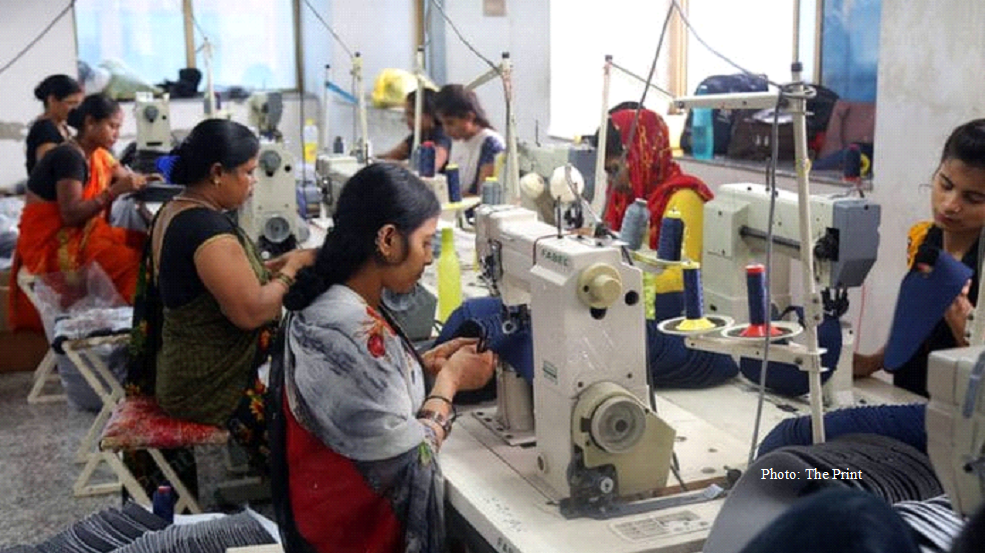

Women may enter the workforce in large numbers, but evidence from multiple sectors shows that participation does not automatically translate into leadership or economic power. Cooking, caregiving, grooming, sewing, teaching. These are still seen as “women’s work” across societies. After all, women do these tasks routinely within households and communities, often without pay or recognition.... Read More
Updating the ASI sampling frame and refining the ASUSE survey methodology can further enhance the accuracy and reliability of GDP and GSDP estimates. A much-awaited new GDP series with the base year as 2022-23 is now available in the public domain. On February 27, 2026, the Ministry of Statistics and Programme Implementation came out with... Read More
In a climate where outcome monitoring, scaling up, and sustainability are the main buzzwords, grassroots organisations that speak from the heart are likely to be deprived of resources and public attention The 21st century saw the emergence of a new philosophy for voluntary organisations. Good intentions were no longer enough, scale and outcome monitoring became... Read More
Agricultural waste has latent value but is often treated as a disposal problem. What are the core market and policy distortions in India that prevent by-product markets (e.g. bio-inputs, bioenergy, biomaterials) from emerging at scale, and how should policy reframe incentives to internalise environmental and social benefits? Agricultural residues, such as straw, husk, and dung,... Read More
Schemes to raise women’s workforce participation will come a cropper unless men actively take part in domestic work. Even as policy efforts are being oriented towards ‘Viksit Bharat 2047’through women-led development, a large chunk of women in India remains absent from paid employment, a reality that undermines both gender equality and economic growth. Over the... Read More
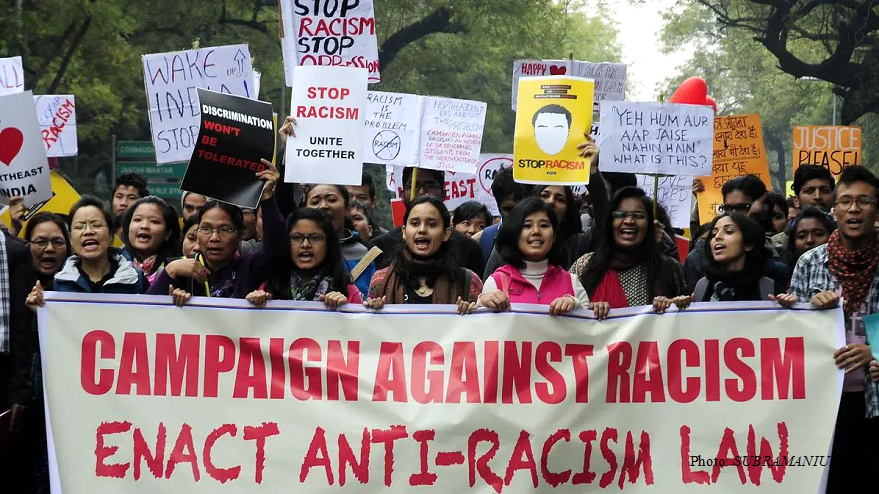
The Malviya Nagar incident prompts reflection not only on enforcement, but on whether India’s legislative framework adequately recognises racial harm. The recent assault on a young woman from Arunachal Pradesh in Delhi’s Malviya Nagar is not merely another criminal incident. It revives a policy question India formally acknowledged in 2014 but has yet to resolve... Read More
What borrowed capital builds matters as much as what sovereigns owe African debt debates have become precise on the liability side – volumes, maturities, currencies, spreads and restructuring mechanics. What gets treated as background is the other side of the balance sheet: what is financed by that borrowing and whether those uses of borrowed funds... Read More
The year 2025 has become a turning point in the evolution of scholarly publishing; artificial intelligence has begun to transition from experimental add-on to a central component of editorial workflows. In this year alone, journal editors, reviewers, and authors have been confronted with the demands of negotiating a rapidly transforming landscape, in which AI-driven systems... Read More
A digital economy needs a blend of both: algorithms assess client risk profiles and ensure suitable recommendations, human oversight adds value. The debate pitting robo-advisors against human advisors is often about competition and not so much about complementarity. Today, advice is free-floating. When it comes to financial advice, people prefer a second opinion as it... Read More
Indians are watching more frequently but in shorter, more distracted bursts. In the late 1980s, when Ramayan aired every Sunday morning on Doordarshan, India paused as one. Streets emptied, tea kettles boiled in unison, and neighbours gathered around a single television set in the mohalla or village chaupal. That screen did not isolate; it assembled.... Read More