
The Sixteenth Finance Commission has recommended a substantial Rs. 7.91 lakh crore in grants for duly constituted rural and urban local bodies over 2026-27 to 2030-31. In this context, Saurabh Bandyopadhyay contends that the Union Finance Commission ought to ensure continuity and predictability of local financing while using the same financial leverage to build stronger... Read More
The government has addressed market concentration concerns in the latest airport privatisation round, but bidder eligibility and the treatment of concession fees warrant greater scrutiny. On August 4, 2026, the Government of India approved (in-principle) the proposal of the Ministry of Civil Aviation to privatise 11 airports in 5 bundles through Public-Private Partnership (PPP) mode.... Read More
While enhancing online safety, opportunities to learn, connect and develop digital capabilities must be preserved The debate over children’s access to social media has entered a new phase worldwide. Governments are moving towards age restrictions, while technology companies are being pushed to strengthen age assurance, parental controls and safer platform design. Meta, in a US... Read More
India’s digital agricultural transformation should focus on building institutional and economic links between data and action Indian agriculture has always suffered from an information problem. Governments often did not know precisely what was being grown where, farmers had limited information about weather, soil and markets, and financial institutions struggled to assess agricultural risk. Agricultural policy,... Read More
The strategic question is not simply whether India possesses rare-earthresources or whether imports from China can be reduced. The real policychallenge is understanding what happens in between Most Indians know the parable of several blind men trying to describe anelephant. One touches its trunk and believes it is a snake. Another feels itsleg and insists... Read More
Gig workers in India face a financial literacy gap impacting their ability to manage income, insurance, and taxes, calling for targeted policy, education, and platform-based solutions to enhance their financial well-being. A delivery rider is paid through an app, buys his fuel and sends money home via UPI, and can tell his customer rating to the... Read More
Rising public capital expenditure has supported growth, but weak private participation suggests India’s infrastructure investment cycle is yet to turn decisively. Government data shows that India grew at a scorching pace of 7.8 per cent in the first quarter of FY 2026-27. This was the highest Q1 real GDP growth during the four years from... Read More
A motorist sees E20 simply as petrol with a higher ethanol content. But before it reaches the vehicle, the fuel passes through blending facilities, storage terminals, transportation systems, underground storage tanks, pipelines, pumps and dispensing equipment. Every stage matters in determining whether the fuel reaching the consumer retains the quality with which it was produced.... Read More
Should lead to better jobs, more productive firms. India’s economy has started the new financial year on a strong note. Real GDP grew 7.8 per cent in the April-June quarter, making India once again one of the fastest-growing major economies. Consumption remained reasonably strong, investment picked up and exports also performed better. These are encouraging... Read More
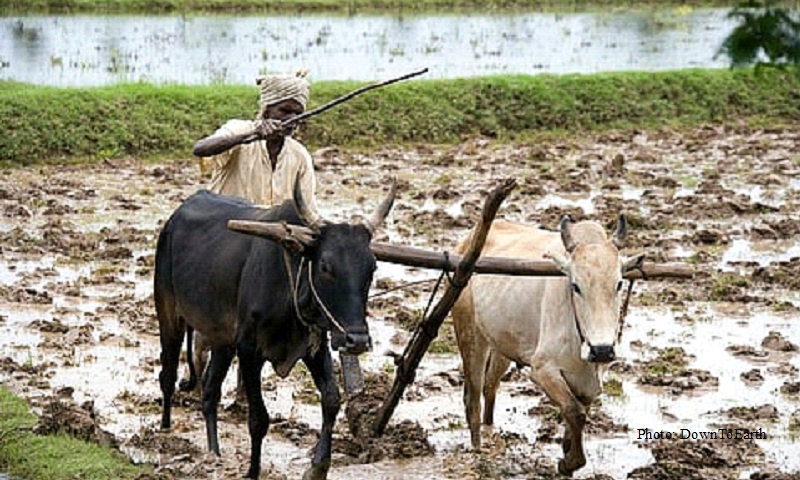
The ultimate measure of success will not be the sophistication of the algorithms. It will be whether the farmer is better off Summary India’s farm sector is embracing AI amid climate stress, tiny landholdings and tighter resources. The article argues that the key question is who captures the productivity gains: farmers, tech platforms or input... Read More