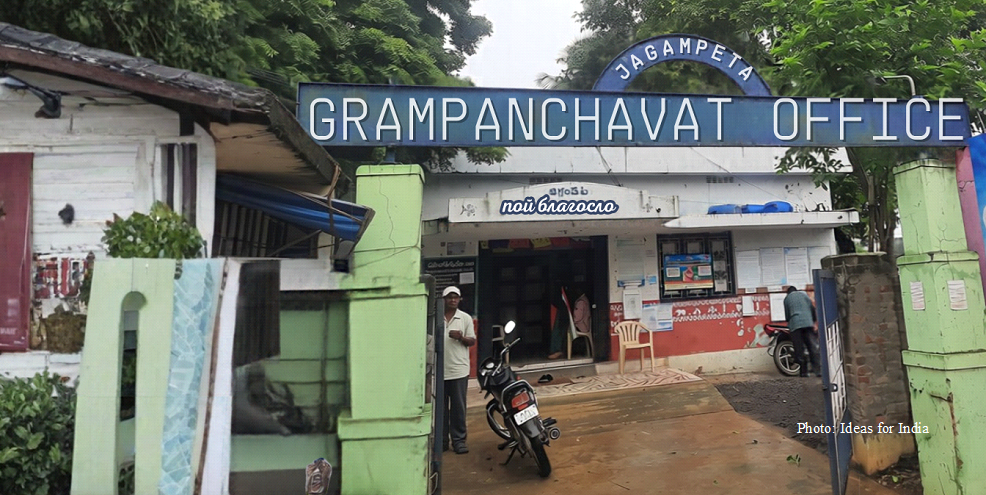
The Sixteenth Finance Commission has recommended a substantial Rs. 7.91 lakh crore in grants for duly constituted rural and urban local bodies over 2026-27 to 2030-31. In this context, Saurabh Bandyopadhyay contends that the Union Finance Commission ought to ensure continuity and predictability of local financing while using the same financial leverage to build stronger... Read More
The government has addressed market concentration concerns in the latest airport privatisation round, but bidder eligibility and the treatment of concession fees warrant greater scrutiny. On August 4, 2026, the Government of India approved (in-principle) the proposal of the Ministry of Civil Aviation to privatise 11 airports in 5 bundles through Public-Private Partnership (PPP) mode.... Read More
India’s rapid expansion in higher education has coincided with stagnant growth in skilled, white-collar jobs, leading to hyper-competition and underemployment among graduates. Using panel data from the India Human Development Survey (IHDS), this chapter tracks 12,084 young men between 2004–05 and 2011–12 to assess whether college degrees facilitate access to white-collar employment beyond background advantages.... Read More
NCAER News is a monthly digest where you can learn about NCAER's research outputs, its latest events, and offerings.
The IHDS Forum is a monthly update of socio-economic developments in India by the IHDS research community, based on the India Human Development Survey, jointly conducted by NCAER and the University of Maryland. While two earlier rounds of the survey were completed in 2004-05 and 2011-12, respectively. Fieldwork for the third round was undertaken in... Read More
While enhancing online safety, opportunities to learn, connect and develop digital capabilities must be preserved The debate over children’s access to social media has entered a new phase worldwide. Governments are moving towards age restrictions, while technology companies are being pushed to strengthen age assurance, parental controls and safer platform design. Meta, in a US... Read More
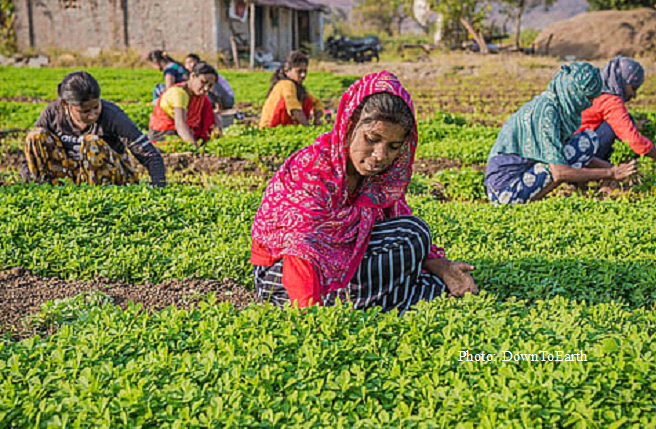
India’s digital agricultural transformation should focus on building institutional and economic links between data and action Indian agriculture has always suffered from an information problem. Governments often did not know precisely what was being grown where, farmers had limited information about weather, soil and markets, and financial institutions struggled to assess agricultural risk. Agricultural policy,... Read More
The strategic question is not simply whether India possesses rare-earthresources or whether imports from China can be reduced. The real policychallenge is understanding what happens in between Most Indians know the parable of several blind men trying to describe anelephant. One touches its trunk and believes it is a snake. Another feels itsleg and insists... Read More
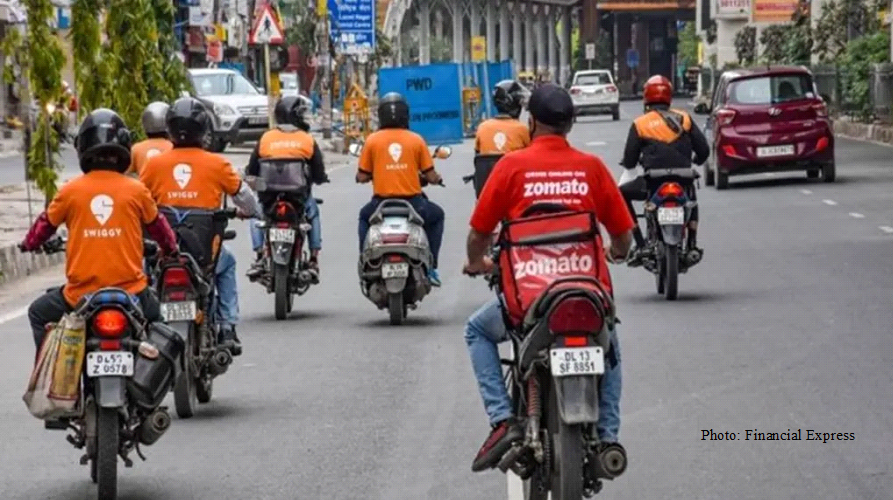
Gig workers in India face a financial literacy gap impacting their ability to manage income, insurance, and taxes, calling for targeted policy, education, and platform-based solutions to enhance their financial well-being. A delivery rider is paid through an app, buys his fuel and sends money home via UPI, and can tell his customer rating to the... Read More