India aims to reduce agriculture's 'self-exploitation' through non-farm jobs. This requires addressing problems with job laws, promoting direct benefit transfer, improving infrastructure and human capital, and reforming social security and labor codes. In 1918, B R Ambedkar wrote, 'If we succeed in sponging off our labour in non- agricultural channels of production... they will cease... Read More
Despite recent expansion in its population covered by public-funded insurance, a large section of India’s population remains at major financial risk from health shocks. This segment of population, sometimes referred to as the “missing middle,” typically consists of population groups that are, or have been, engaged in informal sector work, and are not poor enough... Read More
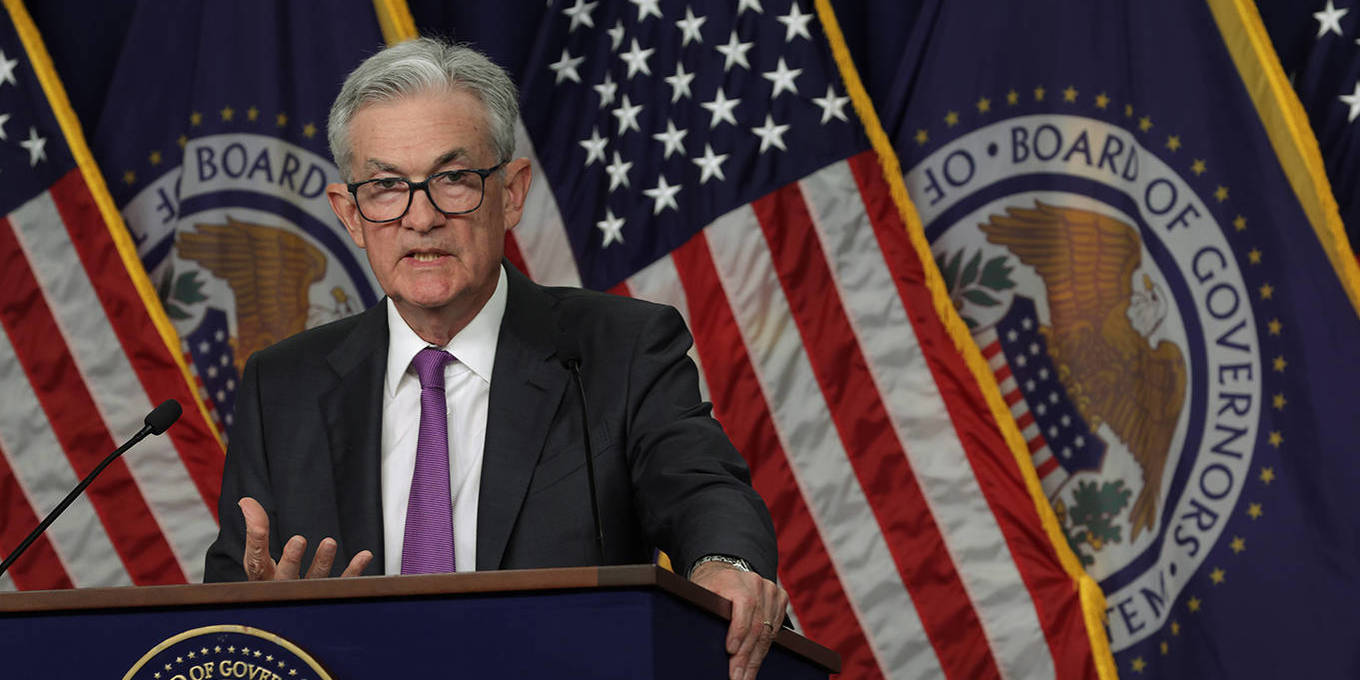
The Federal Reserve’s actions alone don’t explain the rise and fall of inflation but they were far from irrelevant. For precisely three years now, the economics profession has been collectively fixated on inflation. February 2021, 36 months ago, was the last time consumer-price-index inflation in the United States (all items, 12-month percentage change) was at... Read More
While opening of bank accounts has increased over the years, the wide gender gap in availing credit needs a policy response. The following facts have emerged from the spread of the Pradhan Mantri Jan Dhan Yojana, introduced in August 2014. It has led to greater financial inclusion in the case of males and females, with... Read More
India is thriving in the allied agriculture sector, with fishery, dairy, and livestock being vital livelihood support for millions. The fishery, recognized as a 'Sunrise Sector', has seen a double-digit average annual growth of over 10% in 2021-22, supporting around 28 million people, including marginalized and vulnerable communities. India is the third largest fish-producing country... Read More
Critics of the Federal Reserve argue that the acceleration of US inflation in early 2021, and the rapid disinflation of recent months, had nothing to do with monetary policy, because the sources of above-target price growth were all on the supply side. This view is both right and too simple. BERKELEY – For precisely three... Read More
Globalization is not over, but it is being reconfigured by events. Internationally, there are economic and political tensions between the United States and China. Both countries have responded with import tariffs, export controls, and foreign investment restrictions that have led to a decline in the relative importance of bilateral trade and the collapse of bilateral... Read More
The interim Budget 2024-25 has emphasised on efforts to achieve net-zero emission by 2070. The proposed expenditure for the New and Renewable Energy Ministry has increased significantly — from ₹17,729.46 crore in Budget 2023-24 to ₹26,376 crore in Budget 2024-25. The major increase is for the Solar Power (Grid) scheme, from ₹4,970 crore in 2023-24... Read More
This paper examines whether IMF lending is associated with increases in outflows to offshore financial centers (OFCs), known for bank secrecy and asset protection, relative to other international destinations. Using quarterly data from the BIS on bilateral bank deposits, we are unable to detect any positive and statistically significant effect of IMF loan disbursements on... Read More
Gujarat has consistently ranked among the fastest growing States in India. According to the World Bank's income group classifications, the state is on the verge of achieving high middle-income status. Three key features characterize Gujarat’s remarkable growth process. First, growth in the State has been diversified across sectors. Instead of being confined to a manufacturing... Read More