


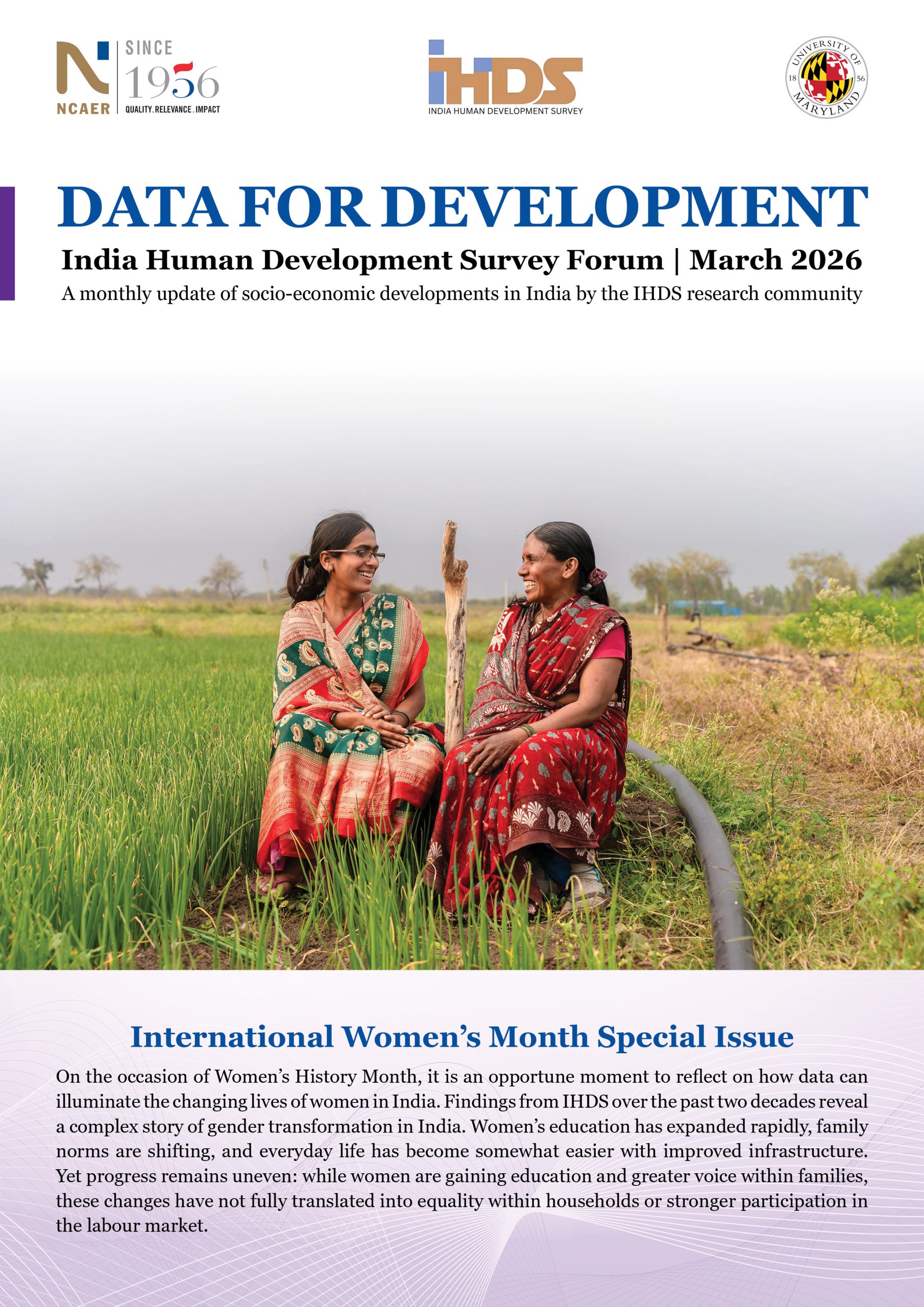
The IHDS Forum is a monthly update of socio-economic developments in India by the IHDS research community, based on the India Human Development Survey, jointly conducted by NCAER and the University of Maryland. While two earlier rounds of the survey were completed in 2004-05 and 2011-12, respectively. Fieldwork for the third round was undertaken in... Read More
Download PDF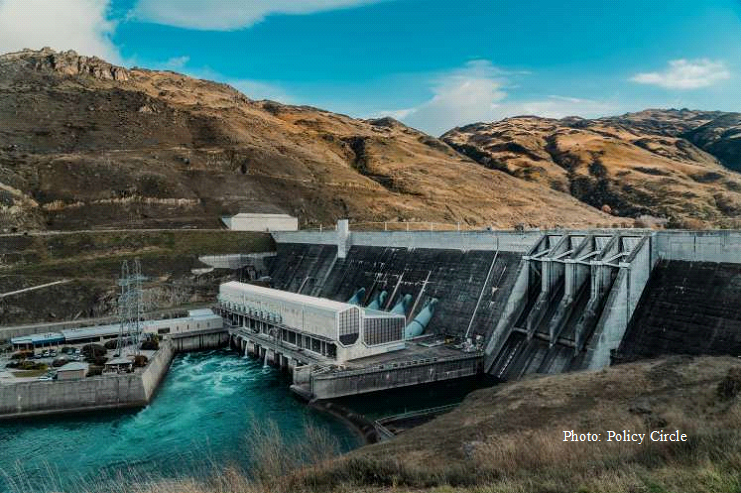
The Union Cabinet’s approval of the Small Hydro Power Development Scheme for FY 2026-27 to FY 2030-31 is a sensible intervention. With an outlay of ₹2,584.6 crore, including ₹2,532 crore for project implementation, the scheme aims to add 1,500 MW of capacity through projects of 1-25 MW. That focus matters. Small hydro power remains one of India’s... Read More

Urbanisation, migration, and changing aspirations often leave older adults to navigate their later years with greater independence but also, at times, greater isolation. India stands at a quiet but significant turning point in how it understands ageing. For generations, the joint family system served as the backbone of elderly care, offering not just physical support... Read More
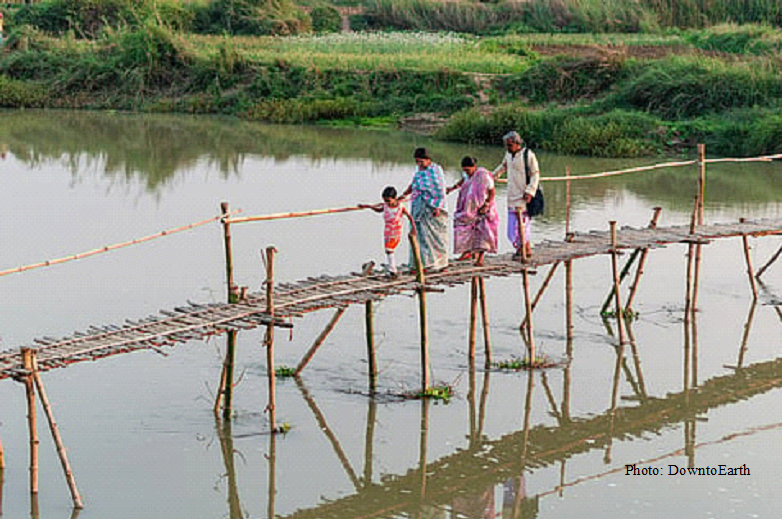
Its role in rural development goes beyond crop output benefits to enhancing infrastructure, service delivery, local economic activity Summary Watershed development is emerging as a crucial strategy for India's rural climate resilience. It enhances soil moisture and groundwater recharge, and also supports overal rural transformation. Increased public investment and community participation in watershed projects can... Read More
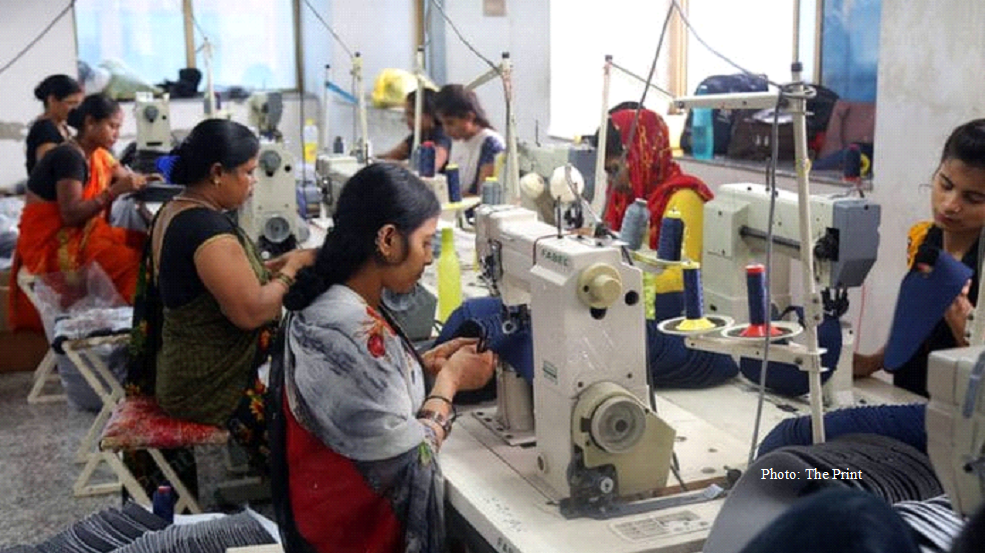
Women may enter the workforce in large numbers, but evidence from multiple sectors shows that participation does not automatically translate into leadership or economic power. Cooking, caregiving, grooming, sewing, teaching. These are still seen as “women’s work” across societies. After all, women do these tasks routinely within households and communities, often without pay or recognition.... Read More

The renewable energy sector is witnessing rapid growth and expanding employment opportunities. However, questions remain about the development of the workforce to keep pace with this expansion, particularly in terms of skill availability and gender diversity. In a recent episode of the Renewable Watch Podcast, Mohammed Ali Siddiqi, Research Analyst, and Sakshi Bansal, Research Analyst, Renewable... Read More
Updating the ASI sampling frame and refining the ASUSE survey methodology can further enhance the accuracy and reliability of GDP and GSDP estimates. A much-awaited new GDP series with the base year as 2022-23 is now available in the public domain. On February 27, 2026, the Ministry of Statistics and Programme Implementation came out with... Read More
In a climate where outcome monitoring, scaling up, and sustainability are the main buzzwords, grassroots organisations that speak from the heart are likely to be deprived of resources and public attention The 21st century saw the emergence of a new philosophy for voluntary organisations. Good intentions were no longer enough, scale and outcome monitoring became... Read More

Agricultural waste has latent value but is often treated as a disposal problem. What are the core market and policy distortions in India that prevent by-product markets (e.g. bio-inputs, bioenergy, biomaterials) from emerging at scale, and how should policy reframe incentives to internalise environmental and social benefits? Agricultural residues, such as straw, husk, and dung,... Read More

Schemes to raise women’s workforce participation will come a cropper unless men actively take part in domestic work. Even as policy efforts are being oriented towards ‘Viksit Bharat 2047’through women-led development, a large chunk of women in India remains absent from paid employment, a reality that undermines both gender equality and economic growth. Over the... Read More

Background: The COVID-19 pandemic wreaked havoc across countries, causing an unprecedented healthcare crisis and supply chain disruptions. Our paper focuses on how households coped and the role of expanded Indian government food subsidies in mitigating food insecurity. Objective: We use panel data from two rounds of household surveys (2019 and 2021) to examine changes in... Read More
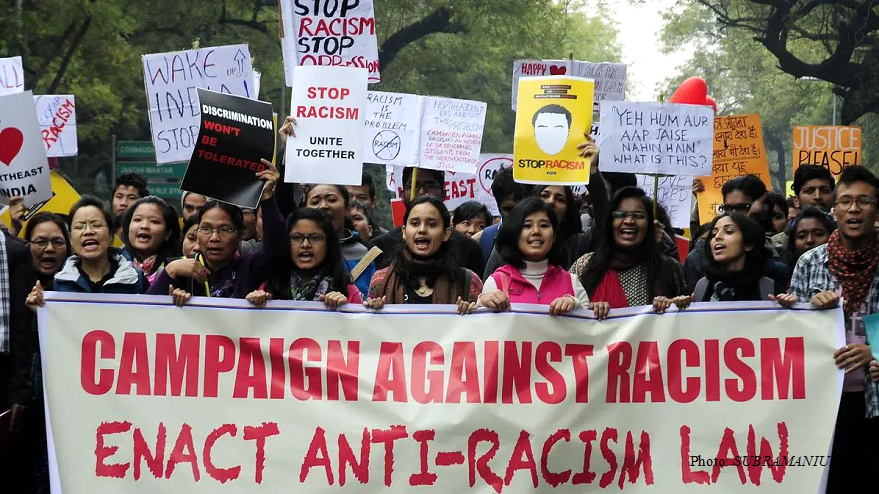
The Malviya Nagar incident prompts reflection not only on enforcement, but on whether India’s legislative framework adequately recognises racial harm. The recent assault on a young woman from Arunachal Pradesh in Delhi’s Malviya Nagar is not merely another criminal incident. It revives a policy question India formally acknowledged in 2014 but has yet to resolve... Read More