An uneven monsoon calls for an early food-supply response

Crop-specific yield assessment should be intensified in rain-fed districts. Tur, soybean and maize deserve particular attention.

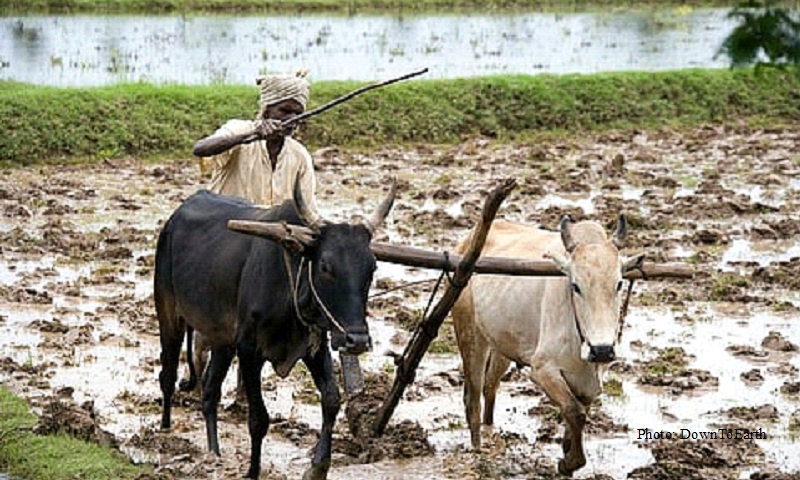
India’s 2026 monsoon is becoming an increasing concern for the economy—not simply because rainfall is deficient, but because the deficit is highly uneven across regions and is concentrated in areas important for rain-fed agriculture.

Recent assessments indicate substantial shortfalls across several regions, with East and North India recording deficits of around 26 per cent below the long-period average, the South Peninsula around 23 per cent and the Northeast around 11 per cent. More importantly, large rain-fed areas of Madhya Pradesh, Maharashtra, Karnataka, Rajasthan and Gujarat are facing significant rainfall stress. The implications for kharif production therefore deserve closer attention than the national rainfall number alone suggests.

The immediate concern is not necessarily a broad-based collapse in agricultural output. It is the possibility of crop-specific and region-specific yield losses, particularly in rain-fed crops such as tur, soybean and maize. These crops need close monitoring as the season progresses, with greater emphasis on actual yield prospects rather than simply acreage sown.

Price shocks

This distinction matters for food inflation. A moderate national rainfall deficit need not generate a major price shock if production in vulnerable crops remains adequate or if other regions compensate. But a concentrated production loss in pulses or oilseeds can quickly translate into higher prices because domestic supply is already relatively tight and imports may be required to bridge the gap.

India’s recent inflation numbers provide little room for complacency. Retail CPI inflation rose from 4.38 per cent in June to 4.45 per cent in July 2026, while food inflation was considerably higher at 5.52 per cent. Rural CPI inflation was also higher than urban inflation. A further weather-induced supply shock could therefore affect not only food prices but also the real purchasing power of rural households.

This creates a potentially uncomfortable chain in which a rainfall shock can lead to crop losses, lower farm incomes, higher food prices and, ultimately, weaker real consumption. The problem is particularly acute for farmers, who can be caught in a double squeeze—losing income as producers while simultaneously facing higher prices as consumers.

The strengthening El Niño adds to the uncertainty. The UK Met Office’s latest assessment of August 21 is unusually stark, describing the developing event as potentially the largest El Niño since the nineteenth century, with Niño 3.4 sea-surface temperatures forecast to exceed 3°C above normal. It also expects 2027 to replace 2024 as the warmest year on record globally.

This should not be interpreted as a deterministic forecast of India’s monsoon. The relationship between El Niño and the Indian monsoon is complex. But it does strengthen the case for preparing for continued rainfall variability during the remainder of the season.

Govt response

The government’s response should therefore move from monitoring rainfall to monitoring potential food-supply disruptions.

First, crop-specific yield assessment should be intensified in vulnerable rain-fed districts. Tur, soybean and maize deserve particular attention. Remote sensing, crop-cutting experiments and field-level agricultural intelligence can help identify emerging yield losses before they become visible in market prices.

Second, procurement, buffer stocks and import decisions should be aligned with these assessments. If a meaningful shortfall in pulses or other essential commodities begins to emerge, imports should be facilitated early rather than after domestic prices have already risen sharply.

Third, global supply chains need to be treated as part of India’s food-security infrastructure. Geopolitical tensions, shipping disruptions and bottlenecks can make an otherwise manageable domestic production shortfall more difficult to absorb. Port capacity, shipping availability, warehousing and inland logistics should therefore be monitored alongside crop conditions.

This is particularly important because food security today depends not only on how much India produces, but also on how quickly commodities can move from surplus locations or overseas markets to deficit regions.

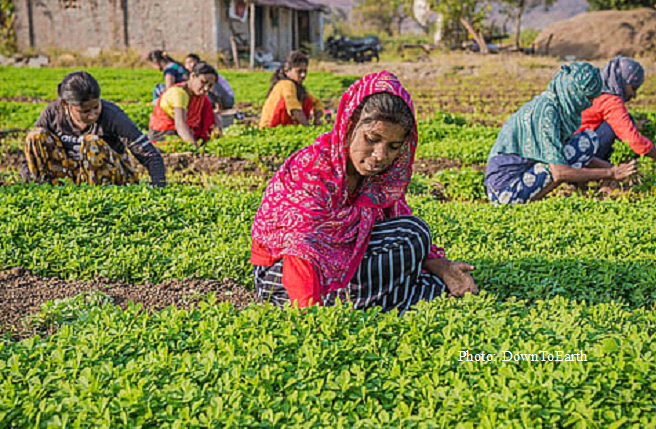
The fourth priority should be protecting vulnerable farmers and rural purchasing power. Where rainfall stress threatens standing crops, contingency planning, moisture conservation and irrigation support can help limit losses. Where incomes are nevertheless affected, employment and social-protection measures can prevent a temporary agricultural shock from becoming a wider rural-demand shock.

The broader lesson is that the economic impact of a weak monsoon depends less on the headline rainfall deficit than on how effectively the economy absorbs it. India cannot control the monsoon or El Niño. It can, however, improve crop intelligence, act early on imports and stocks, strengthen logistics and protect vulnerable households.

The objective should be straightforward: identify a potential supply shortfall before it becomes a price shock. As rainfall becomes more erratic, a resilient food economy will depend not only on producing more, but on knowing earlier where production is likely to fall short—and ensuring that the supply chain can respond before the consumer feels the shock.

The writer is with NCAER, New Delhi. Views expressed are personal.

Latest Publications

Op-Eds
20 August 2026

When El Niño hits the farm, inflation follows: Why irrigation matters for rural resilience

Saurabh Bandyopadhyay
Op-Eds
17 August 2026

Will CBAM undercut gains from the India-EU trade pact?

Suvajit Banerjee & Tommaso Morotti
Op-Eds
12 August 2026

Smoky hearths

Suvajit Banerjee & Madhura Chowdhuri

    Get updates from NCAER