



Margin: The Journal of Applied Economic Research is a peer-reviewed bi-annual journal published jointly by NCAER & SAGE International. Volume 19, Issue 2, November 2025 includes the following papers- Corporate Foreign Exchange Risk in India: Firm-level Evidence and Some Policy Implications - Rohit Goel, Swapnanil Sengupta and Udaibir Saran Das Risk of Developing NCDs in Later... Read More

The IHDS Forum is a monthly update of socio-economic developments in India by the IHDS research community, based on the India Human Development Survey, jointly conducted by NCAER and the University of Maryland. While two earlier rounds of the survey were completed in 2004-05 and 2011-12, respectively. Fieldwork for the third round was undertaken in... Read More
Download PDF
The objective of this report was to assess the impact of food delivery platforms on restaurants. This is the second of the three part research series on the Food Delivery Platform economy of India. The National Council of Applied Economic Research (NCAER) conducted an in-person survey of 640 restaurants across 28 cities with representation from... Read More
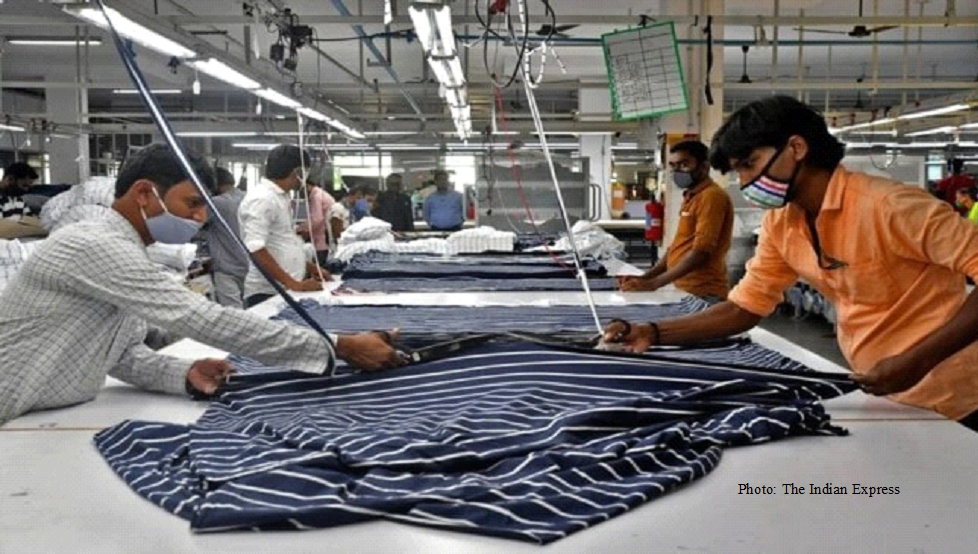
Competitiveness and quality must advance together. Regulation that raises costs without raising safety standards undermines the very manufacturing strategy India is trying to build. India’s decision to withdraw quality control orders (QCOs) on a wide basket of industrial raw materials marks one of the most meaningful regulatory resets in recent years. In a manufacturing economy... Read More
This is report is the third and concluding part of the research series on the food delivery platform economy. The food delivery platform is an intermediary between three sets of agents – consumers who demand food, restaurants which supply food and workers who deliver food from the restaurants to the consumers. At any point of... Read More

While India has made progress in installed capacity for renewable energy sources, power generation from renewables remains low. In this post, Chaudhuri and Rath content that renewable energy budgets of several states continue to be limited, with only a few states demonstrating a strong commitment to sustainable energy transition. They recommend balancing capital and revenue... Read More

Transport systems are vital for connecting people, goods, and services, forming the backbone of global socio-economic progress. Among various modes, aviation has revolutionized connectivity by offering unmatched speed, safety, and reliability. The Ministry of Civil Aviation (MoCA) has identified India as one of the fastest-growing aviation markets worldwide, with its passenger traffic showing a significant... Read More
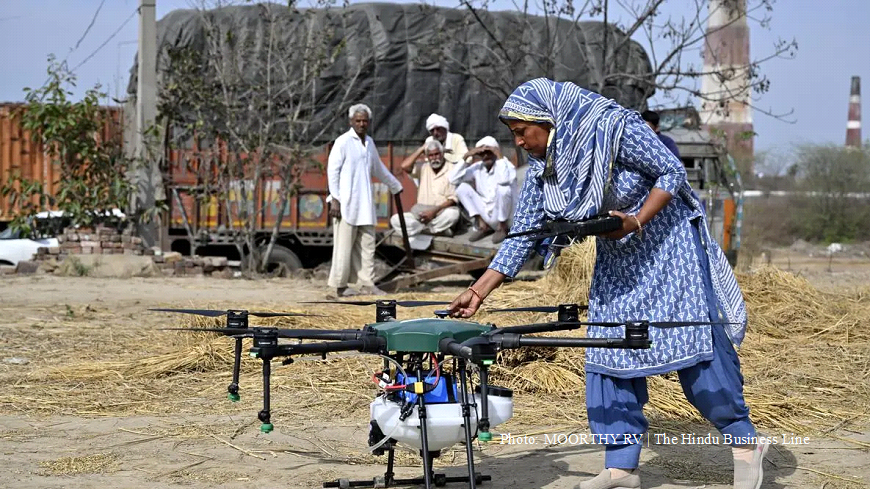
Women form close to 42% of farm workers. Skilling schemes specifically designed for women is imperative to not only raise their productivity but also to empower them. India’s agriculture stands at a critical crossroads. On the one hand, rapid technological transformation — from drones and digital platforms to precision farming — is reshaping how crops... Read More
India’s economic trajectory has seen an impressive run over the last few decades, but concerns are rising over the country’s ability to productively engage a large and growing working age population. Recent increases in employment are primarily due to the rise in self-employment, while transition to a skilled labour force has been slow, highlighting the... Read More

The 30 ‘critical minerals’ pose different risk levels. India’s critical minerals strategy stands at a crossroads. In June 2023, the Government of India released a list of 30 critical minerals through a systematic three-stage assessment process evaluating economic importance, strategic value, and import dependencies. Yet two years later, policy implementation treats all 30 minerals with... Read More
Rather than viewing employment generation solely through the lens of large industry or government programmes, policy must confront the reality that employment generation is tied to improving the productivity of its smallest enterprises The recently announced new labour codes are likely to transform the employment landscape of India. The discourse on employment, however, primarily centres... Read More

Private consumption, constituting nearly 60% of India’s GDP, remains the cornerstone of economic momentum, powered by rising disposable incomes, digital adoption, and an aspirational middle class. Manufacturing contributes about 17% to GDP with aspirations to reach 25% by 2030.