


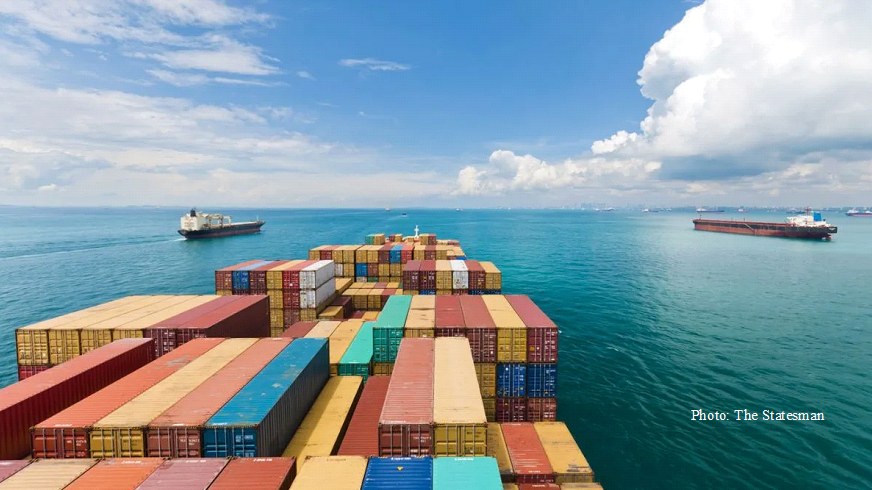
India’s shrimp industry – one of the country’s most globally competitive export sectors – stands at a defining crossroads today. ndia’s shrimp industry – one of the country’s most globally competitive export sectors – stands at a defining crossroads today. For years, the United States served as its top and most lucrative export destination, especially... Read More

India’s ambitions of fast and inclusive growth sit uneasily with one stubborn fact: most working-age women are not in paid work. This is puzzling at first glance. Women’s education levels have improved steadily, health outcomes have seen major gains, and aspirations have risen across generations. Yet participation in the labour market remains strikingly low. This... Read More
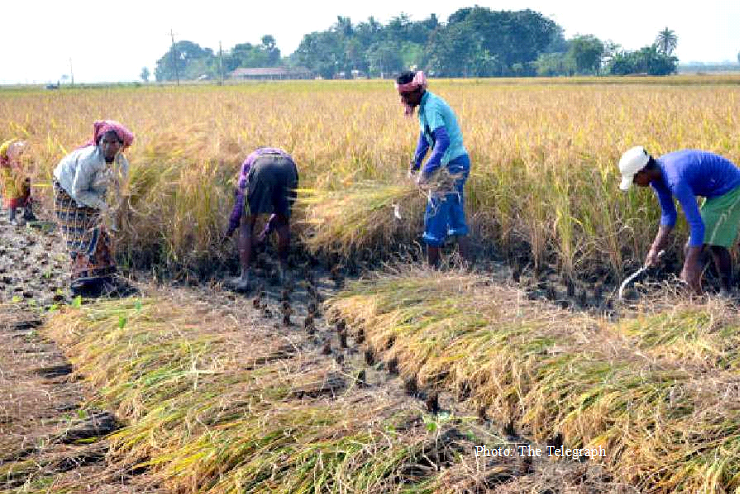
Recent studies confirm that India remains a major virtual water exporter, with rice, cotton, and sugarcane — some of the world’s most water-intensive crops — driving this invisible drain Picture a glass of water. Now imagine it contains not just water but the story of how it travelled through soil, nourished crops, and eventually left... Read More

While global innovation leaders invest 2-4.5% of their GDP in R&D, the figure stands at 0.64% for India. In this post, Mondal and Pohit contend that the country ought to recognise R&D as an economic engine, raising public investment and the contribution of the private sector. Further, instead of only playing catch-up, there is a... Read More

In May 2025, Hyderabad Metro Rail implemented its first major fare revision in over seven years. While the initial increase—based on recommendations of the Fare Fixation Committee—was announced mid-month, public concerns led to a subsequent 10 per cent discount being applied within days. The episode highlights a recurring challenge in India’s urban transport systems: how... Read More
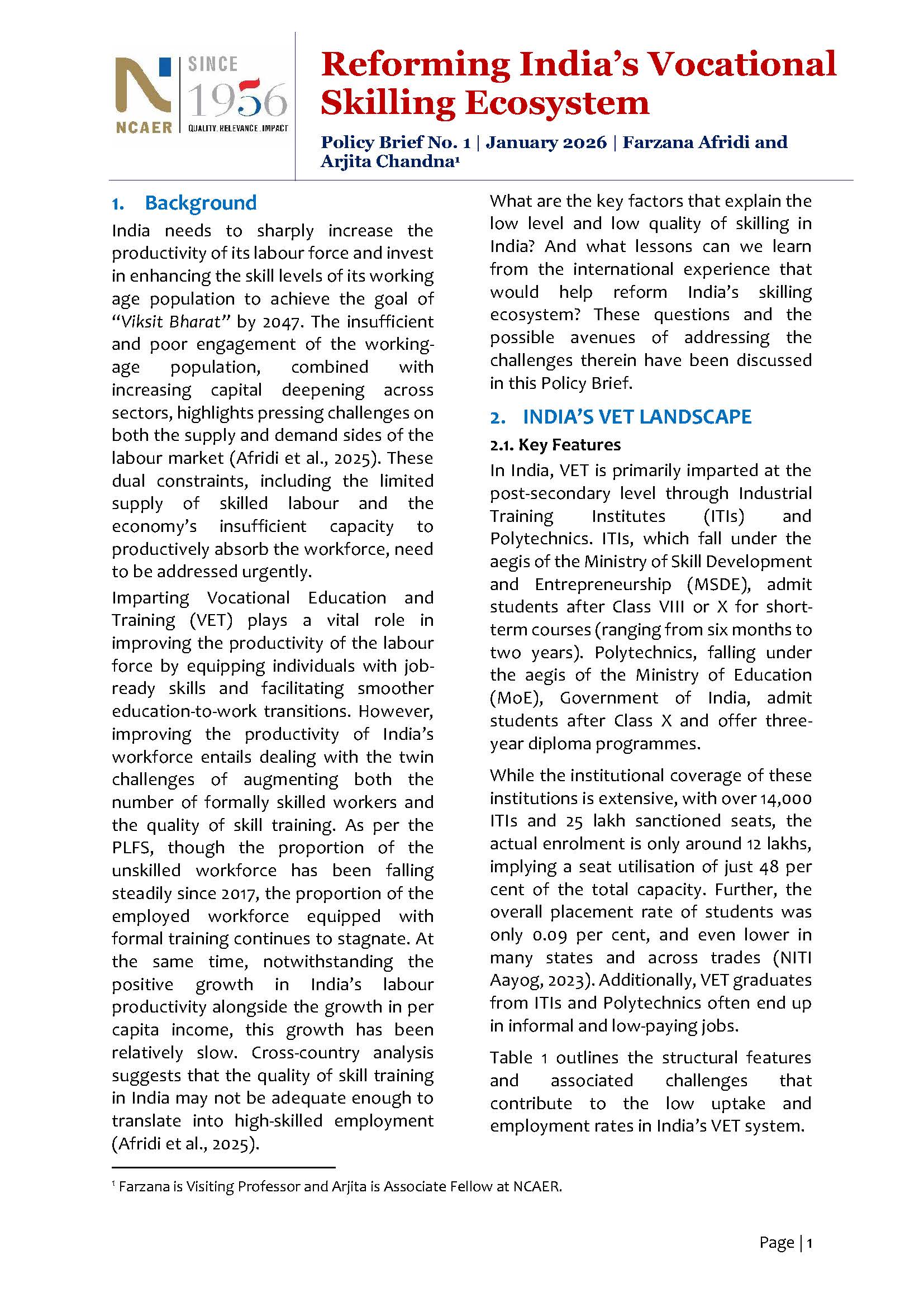
India needs to sharply increase the productivity of its labour force and invest in enhancing the skill levels of its working age population to achieve the goal of “Viksit Bharat” by 2047. The insufficient and poor engagement of the working-age population, combined with increasing capital deepening across sectors, highlights pressing challenges on both the supply... Read More

Institutional autonomy, not the cycle, will shape outcomes. Global financial institutions continue to frame the 2026 outlook for emerging markets through a familiar cyclical lens. The consensus assumes US monetary easing, a softer dollar and a modest global slowdown will favour local-currency assets, credible disinflation paths and balance-sheet repair. This narrative is historically grounded and... Read More

The impulse that led to the passing of MGNREGA celebrated the spirit of inclusive development. However, the engineering that rendered the spirit behind MGNREGA into functioning machinery requires repairs and unclogging. Unless we recognise both achievements and challenges facing MGNREGA, it will be difficult to repair it, and this omission will continue to haunt both.... Read More
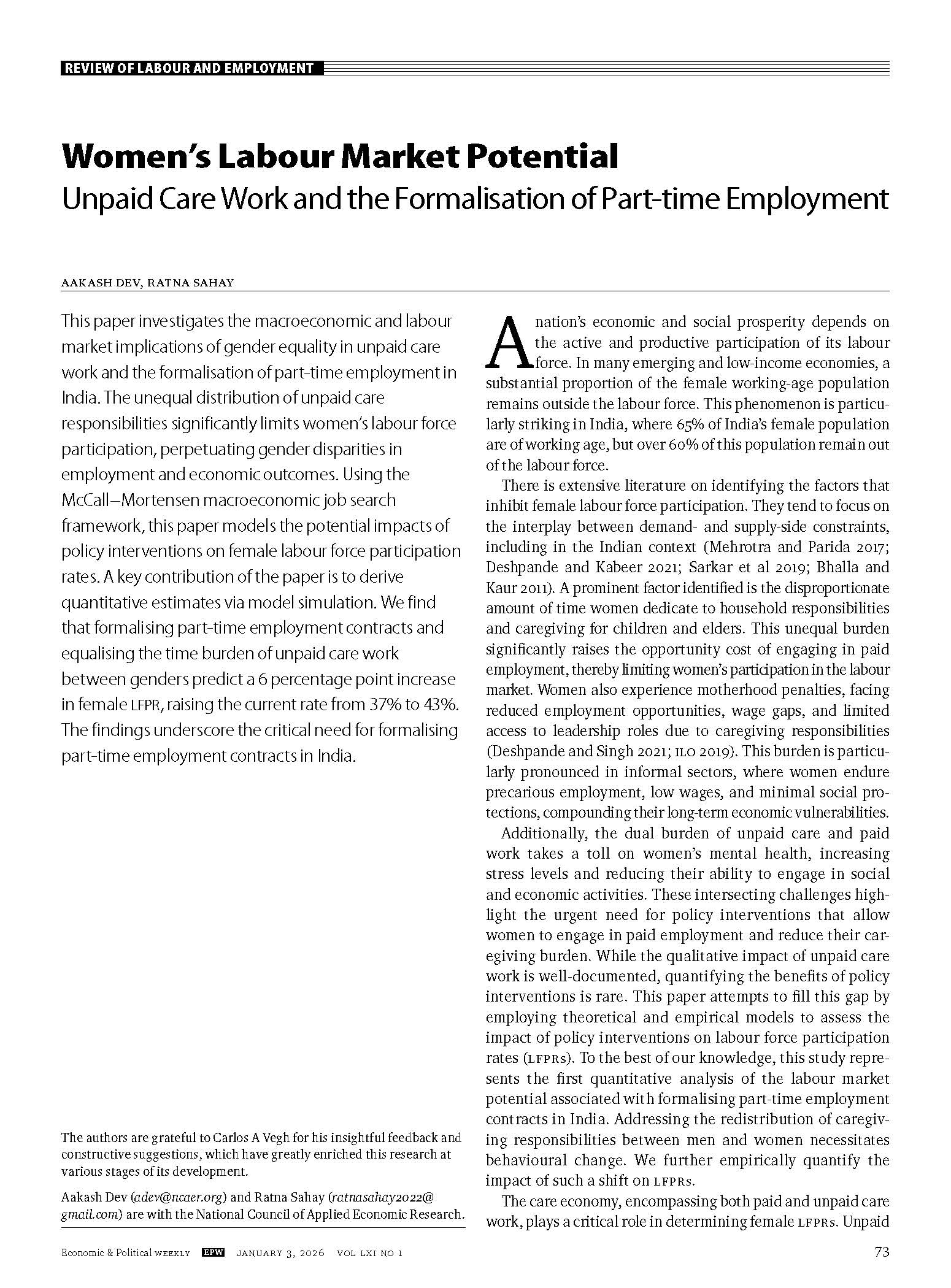
This paper investigates the macroeconomic and labour market implications of gender equality in unpaid care work and the formalisation of part-time employment in India. The unequal distribution of unpaid care responsibilities significantly limits women’s labour force participation, perpetuating gender disparities in employment and economic outcomes. Using the McCall–Mortensen macroeconomic job search framework, this paper models... Read More

NCAER News is a monthly digest where you can learn about NCAER's research outputs, its latest events, and offerings.

Non-communicable diseases (NCDs) are now the leading cause of premature mortality in low- and middle-income countries (LMICs), accounting for more than 80% of early NCD deaths worldwide. As LMICs undergo rapid demographic, nutritional, and epidemiological transitions, obesity has emerged as a central driver of cardiometabolic risk—particularly among women. Although NCDs have long been characterised as... Read More

India’s economic growth has not eased job insecurity, as employment expansion has remained modest and job quality weak, especially outside agriculture. Manufacturing and services saw limited employment growth between 2012 and 2023, while agriculture’s shrinking share pushed more workers into non-farm sectors that are becoming less labour-intensive even as their economic output rises. Economic growth... Read More