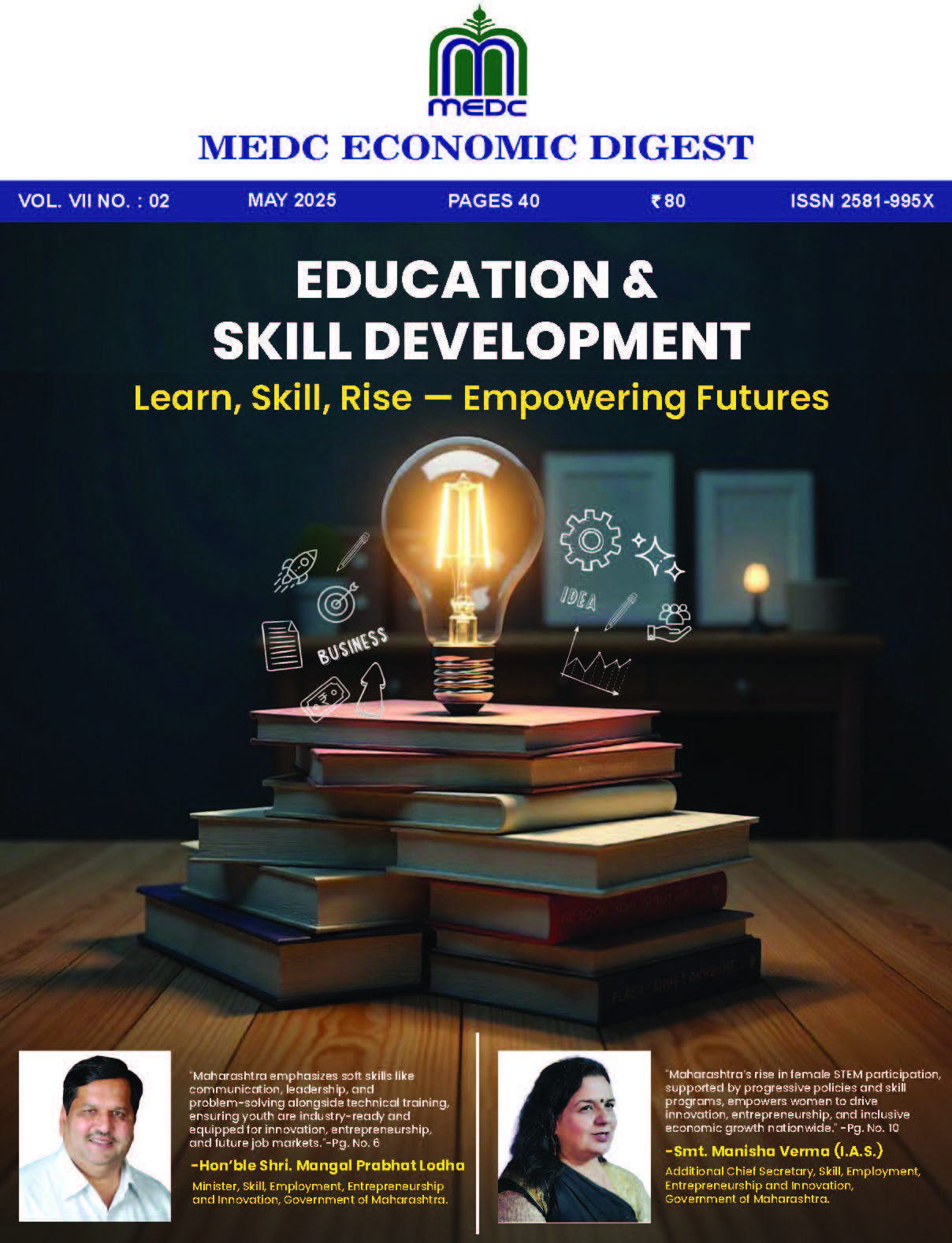

India has made remarkable strides in expanding access to education for girls over the past few decades. Enrolment rates for girls in primary and secondary schools have risen significantly, and gender gaps in literacy have narrowed. Girls have surpassed boys even in gross enrolment in higher education. However, this educational success has not translated into... Read More
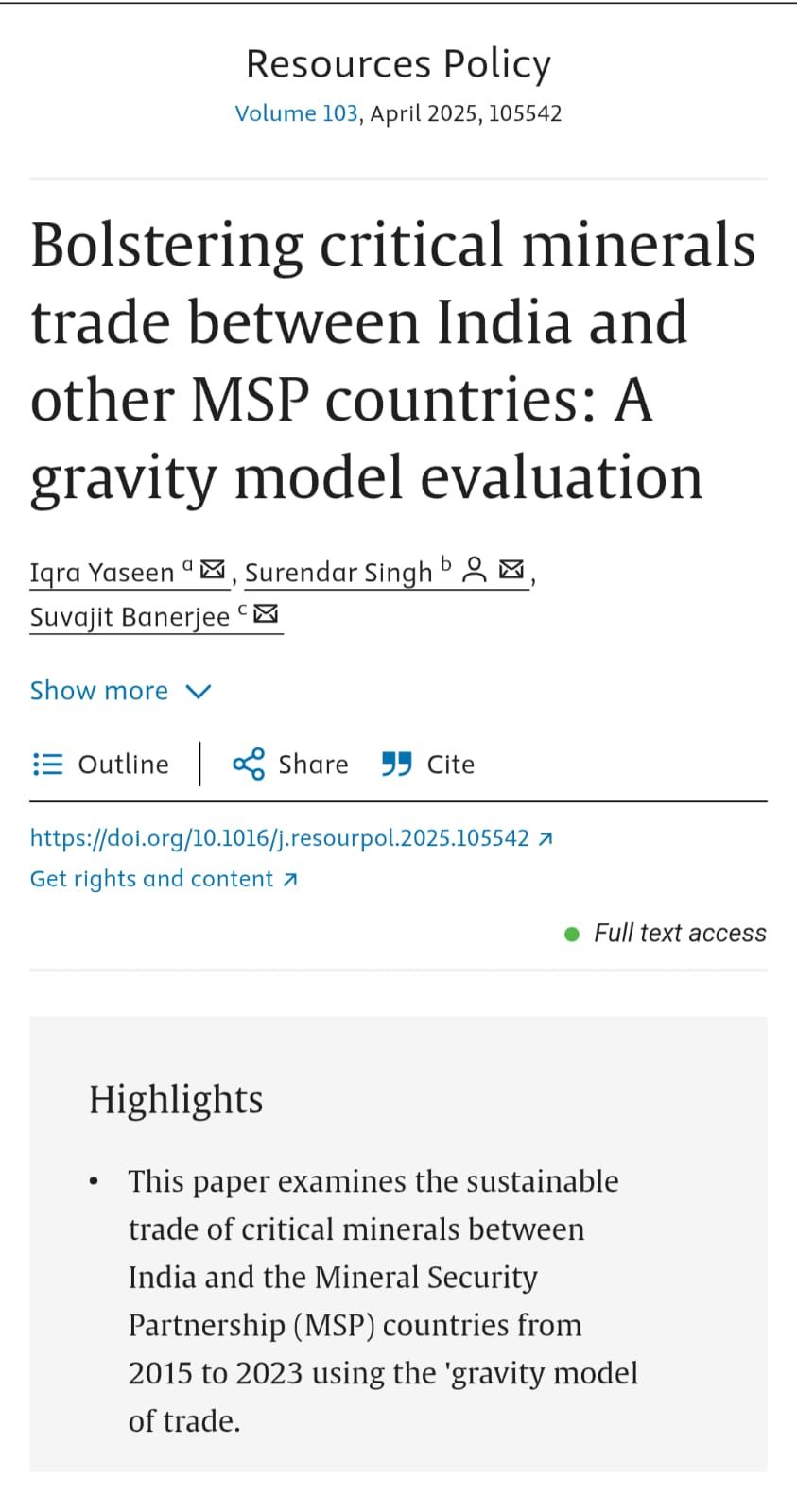
This study aims to evaluate the opportunities for a sustainable environment, an equitable economy, and a just society through the international trade of critical minerals. By employing a gravity model, it intricately analyzes the trade dynamics between India and 13 other members of the Mineral Securities Partnership (MSP). The study indicates a landscape rich with... Read More
India’s rapid urbanization, driven by rural-to-urban migration, has led to significant socio-economic challenges, with almost half of urban dwellers living in slums. Climate change, resource scarcity, and environmental degradation exacerbate these issues, putting pressure on cities’ infrastructure and health systems
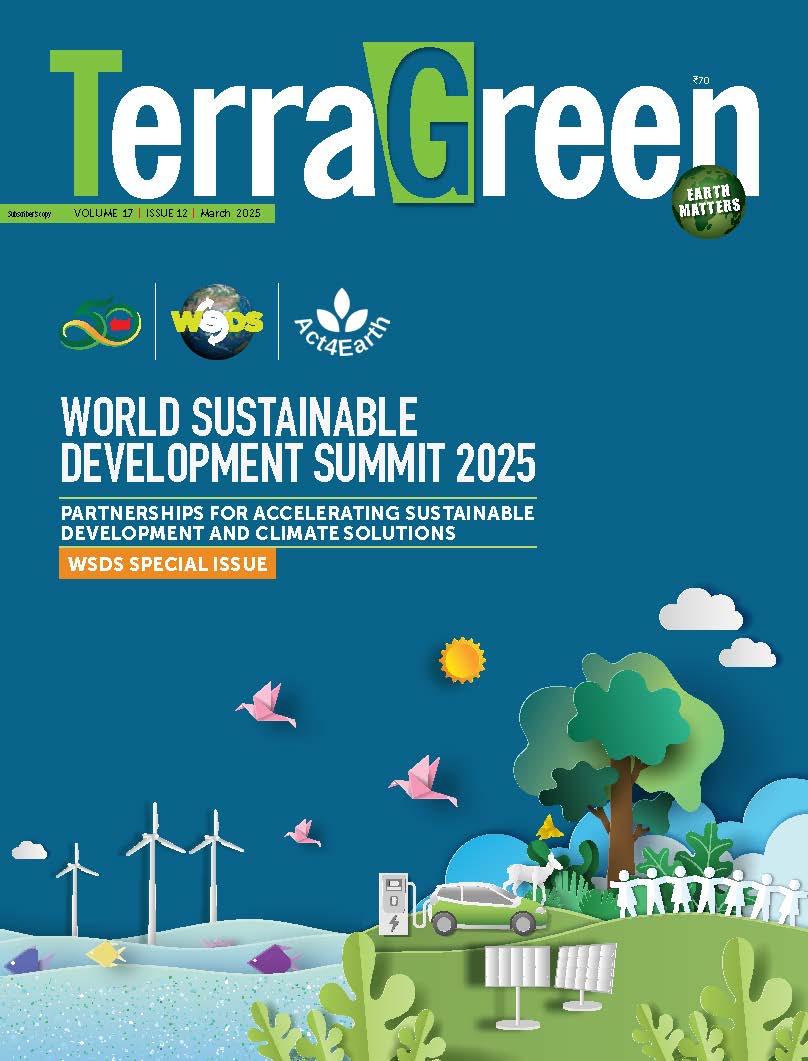
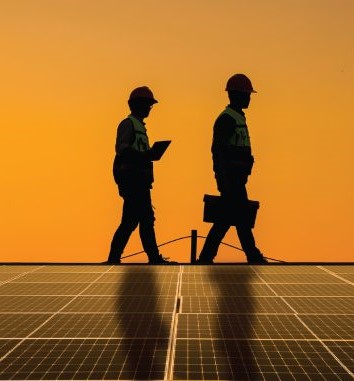
India has embarked on an ambitious plan to transition its energy sector towards sustainability and resilience. The Nationally Determined Contributions (NDCs) emphasise reducing the emissions intensity of the GDP by 45 per cent by 2030, increasing the share of non-fossil-fuel-based electricity capacity to 50 per cent, and achieving net zero emissions by 2070. This transformative... Read More
This paper explores ‘gatekeeping’, the phenomenon where access to a sample person in the household is controlled by another person. Gatekeeping of female persons is especially an issue in societies governed by gendered social norms. It can increase survey error by reducing response rates and potentially increasing non-response bias, and can increase measurement error when... Read More
The India-Middle East-Europe Economic Corridor (IMEC) can play a pivotal role in various economic and geostrategic spheres by facilitating trade integration between Asia and Europe. The study portrays the mechanism through which the IMEC participating economies can achieve their respective policy goals. The study is focused on a dual research objective. Firstly, it attempts to... Read More
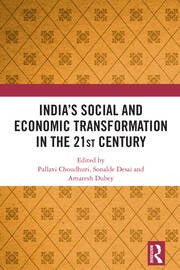
This book provides a comprehensive analysis of India’s social and economic transformation in the decades leading up to the COVID-19 pandemic and explores both resilience and vulnerabilities in Indian society. It provides an in-depth look into diverse aspects of how Indians live, earn a living and care for their children by examining vital indicators such... Read More
Capital flows to emerging markets are generally volatile, resulting in periodic "sudden stop” episodes – when capital inflows dry up abruptly, with significant negative effects on the economy and on financial variables. This paper reviews India’s experience with capital flows. The relative volatility of different kinds of capital flows in India is similar to that... Read More
The pandemic has afflicted India at a time when its economy had already been decelerating. Defying a long-term accelerating path, real GDP growth moderated from 7.0 percent in 2017-18 to 6.1 percent in 2018-19 and 4.2 percent in 2019-20. The pre-COVID-19 growth deceleration was perceived to be due to long-standing structural rigidities in key input... Read More
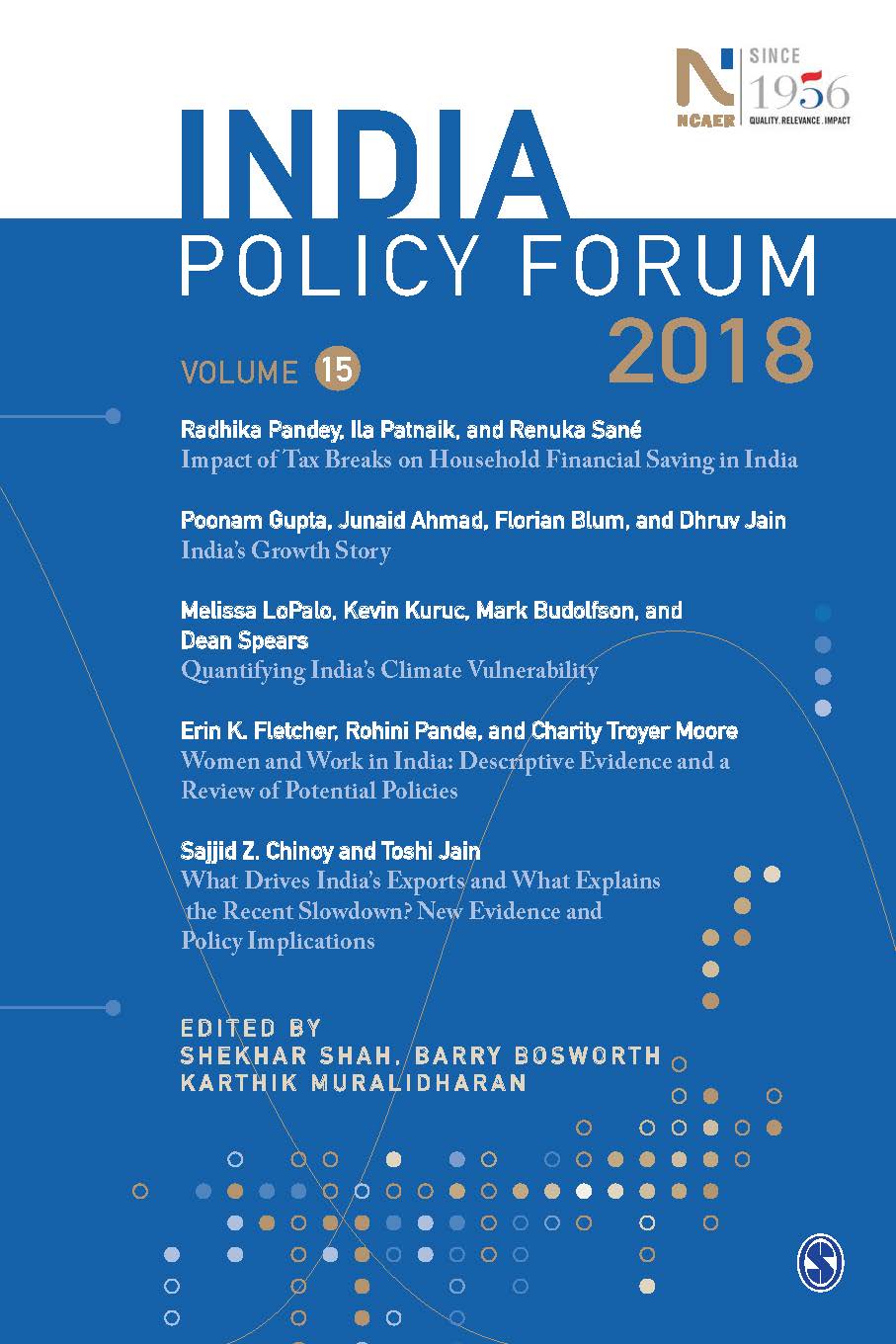
India has attained much economic success in the last three decades. Yet economic deceleration in the recent years has generated worried commentaries about India’s growth outlook. In this paper, we offer a long-term macro perspective on India’s growth experience. Analyzing past five decades of data, we note that growth has slowly but steadily accelerated over... Read More