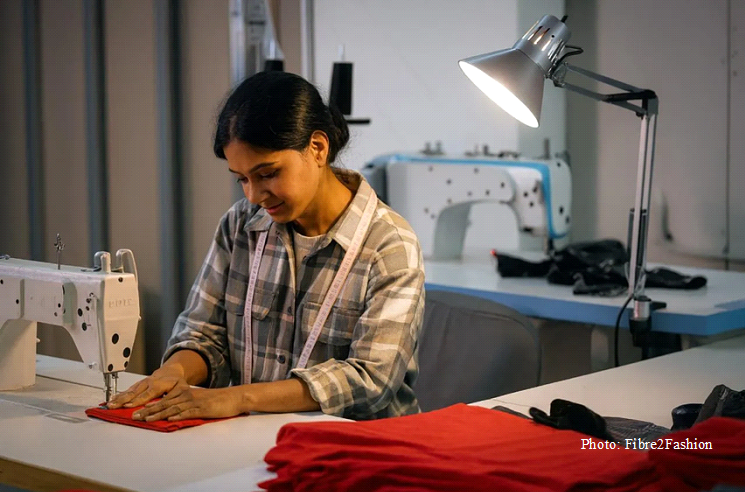
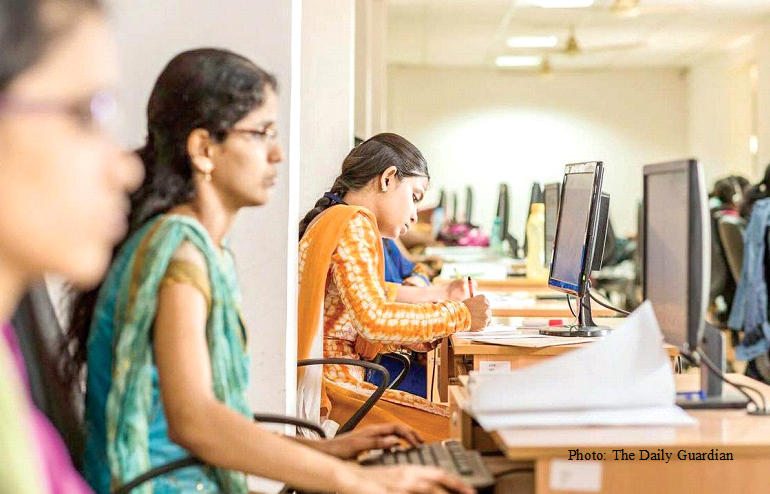
Key Takeaways Women constitute a large share of India’s textile workforce yet remain confined to low-skilled and traditional roles due to limited education and informal training. With the sector’s shift towards digital and sustainable production, demand for advanced skills is rising. Focused re-skilling, entrepreneurship, and digital literacy can help women access emerging opportunities and leadership... Read More
Summary Sustainable development finance is trapped in a structural bind: the needs are rising, but the instruments are skewed toward debt. Developing economies must mobilize an estimated $4.2 trillion annually to meet the Sustainable Development Goals (SDGs) and climate targets, according to the UN Conference on Trade and Development (UNCTAD). Simultaneously, over two-thirds of public... Read More
By embedding behavioural awareness, robust safety, and digital trust into the investor ecosystem, India can nurture generations of empowered citizens. A 23-year-old management student in Delhi recently lost her savings to a social media group that promised “sure-shot stock tips” with guaranteed daily returns. A few weeks earlier, a young IT professional followed the advice of a... Read More
As India deepens financial inclusion through digital tools, World Investor Week 2025 urges regulators and citizens to address behavioural biases, fraud risks, and digital trust gaps. Access to investing has expanded dramatically through digital platforms and mobile tools, aided by the JAM Trinity and Aadhaar-enabled services. Yet, the behavioural vulnerabilities of investors remain as prominent... Read More
Who Cooked Adam Smith’s Dinner? The provocative question, once aimed at the Father of Modern Economics, echoes with particular resonance in India. The book is a critique of Smith’s ‘Invisible Hand’ postulation and challenges the very foundation of economic measurement, pointing to the vast, uncounted economy of unpaid labour, performed predominantly by women, that fuels... Read More
For India, agricultural protection is similar to US anxiety on immigration. Once, I took a group of American students to learn more about the rural parts of India. We spent a couple of weeks in a village, where the students were constantly trailed by giggling children, several of them shouting out questions. So, we decided... Read More
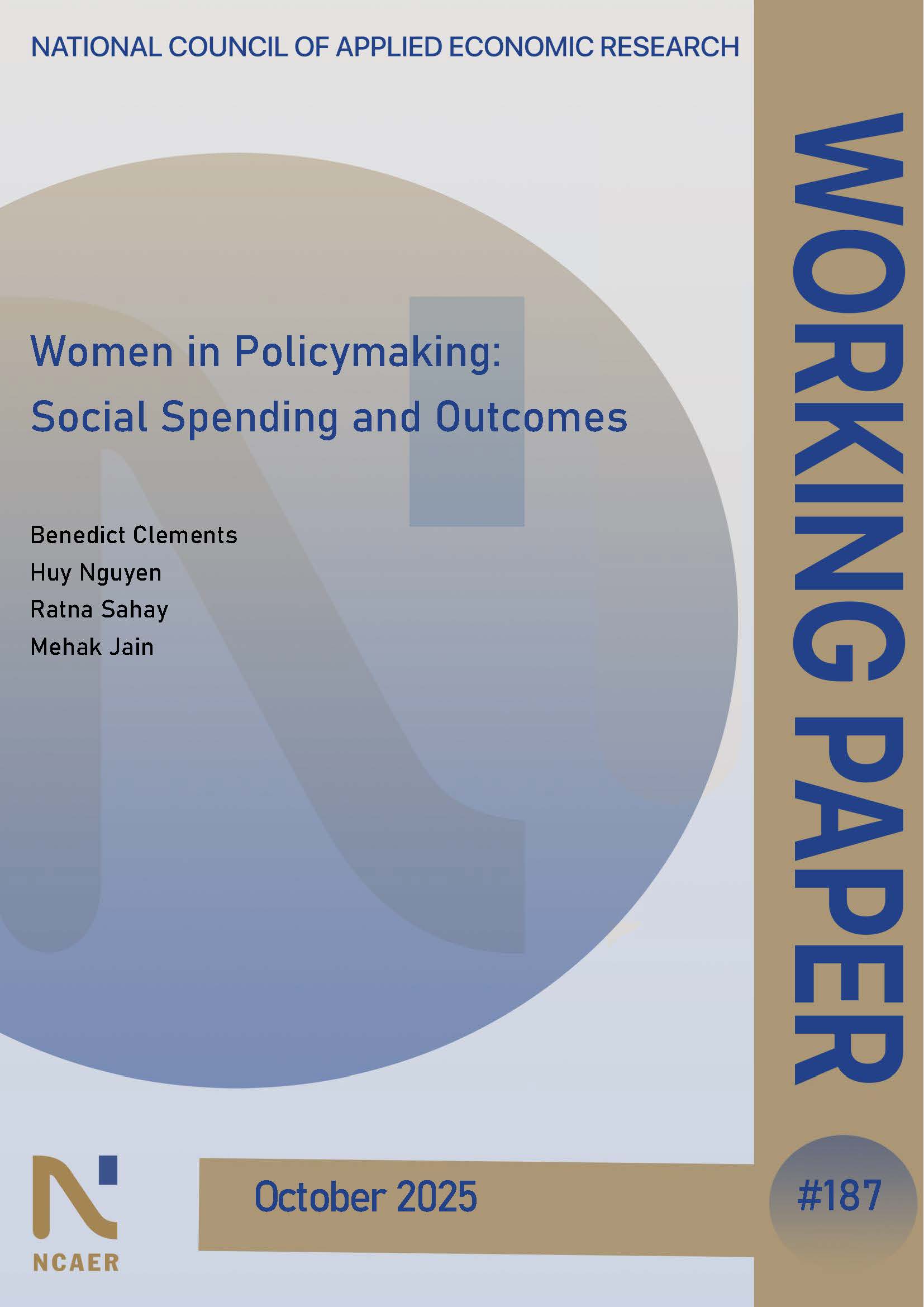
This paper assesses the impact of women's participation in national governments (as parliamentarians and ministers) on social spending and outcomes in emerging market and developing economies (EMDEs). We find that the representation of women in politics has increased over time, with substantial variation across regions and countries. Latin America and the Caribbean lead among EMDE... Read More
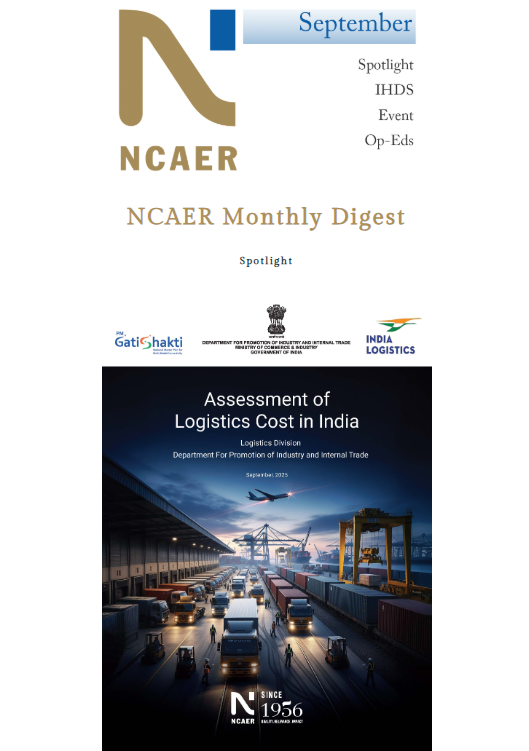
NCAER News is a monthly digest where you can learn about NCAER's research outputs, its latest events, and offerings.
The hidden costs countries now accept for strategic resilience. A new principle is reshaping global finance: the sovereignty premium – the economic cost countries willingly pay for financial autonomy. This premium functions as geopolitical insurance, a calculated payment to build structural resilience against exclusion while securing self-determination. For an increasing number of states, economic efficiency now... Read More
A structured care-giving industry can not only meet a vital social need but also generate large-scale employment, spur health-tech innovation, and create new public-private models of welfare. India is often described as a young country, but the truth is that it is also ageing faster. As per a report by NITI Aayog, the elderly in... Read More