



The Indian data market remains in its infancy due to regulatory ambiguity, despite the global trend of enterprises monetising various types of data. The potency of data becoming a critical asset is now a reality. Familiar phrases such as “data is the new gold” or “data is the new oil” underscore its value. In the... Read More

Affordable hospital care requires health-care financing reforms that go beyond price regulations. Benchmark for pricing In an unregulated market-driven scenario, health-care providers focus on profit through higher prices and overprovision of care (supplier-induced demand). One potential solution, “yardstick competition”, involves regulatory authorities setting benchmark prices based on market observations. However, this approach faces challenges in... Read More
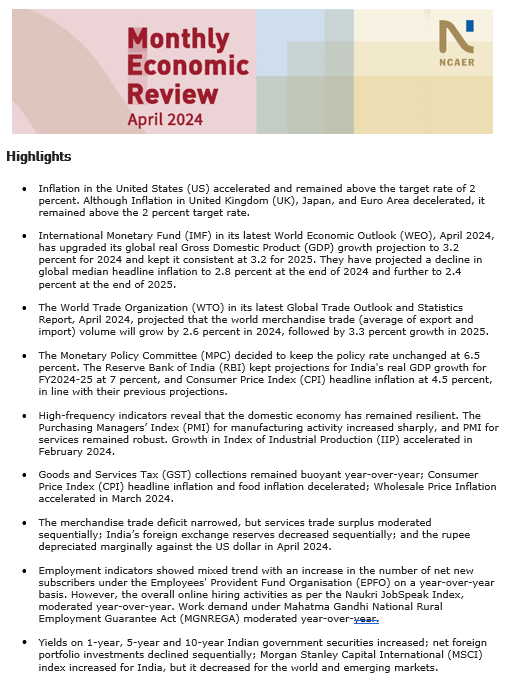
In the Review, we summarise the economic and policy developments in India; monitor global developments of relevance to India; and showcase the pulse of the economy through an analysis of high-frequency indicators and the heat map. MER April 2024 Report MER April 2024 Press Release and Citations Click here for previous issues
Download PDF
Opinion: Udaibir Das and Wayne Byres. The crucial role of implementing Basel standardsThe Basel Committee implementation programme has been integral to international financial architecture. Having celebrated its 50th anniversary on 24-25 April, the Basel Committee on Banking Supervision has journeyed from a humble forum for G7 bank supervisors to a titan among global financial standard-setting bodies.... Read More
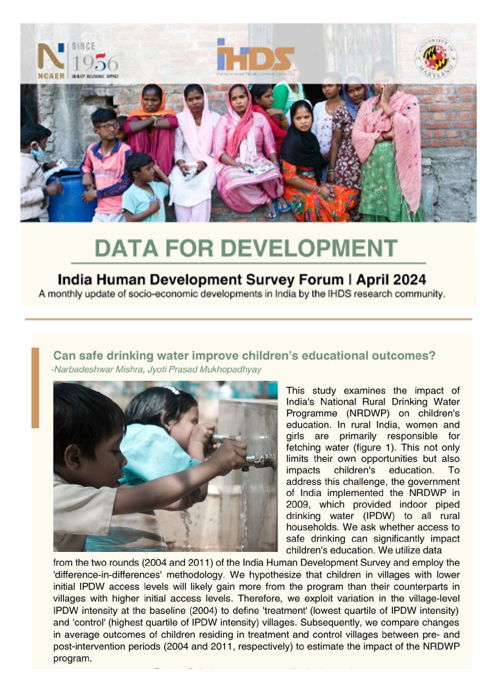
The IHDS Forum is a monthly update of socio-economic developments in India by the IHDS research community, based on the India Human Development Survey, jointly conducted by NCAER and the University of Maryland. While two earlier rounds of the survey were completed in 2004-05 and 2011-12, respectively, the third round has also been launched and... Read More
Download PDF
The paper analyses the causal relationship between rural non-farm employment (RNFE) and the wellbeing of the people in India’s North-Eastern Region (NER). When India experienced a decline in poverty, specifically during the post-liberalisation period, the reduction of poverty was lower in NER, with a wide variation at the State level in the region than in... Read More

While global unemployment dips, South Asia grapples with declining labour force participation and widening job gap that put a generation at risk. The world has encountered a series of extraordinary events in the last five years that transformed everyday life and economic activity. The COVID-19 pandemic was such an event that brought global affairs to... Read More
The National Council of Applied Economic Research (NCAER), one of India’s premier economic policy research think tanks, carried out the 128th Round of its Business Expectations Survey (BES) in March 2024, with support from the National Stock Exchange of India Limited (NSE). NCAER has been carrying out the BES every quarter since 1992, covering 500 firms... Read More
Download PDF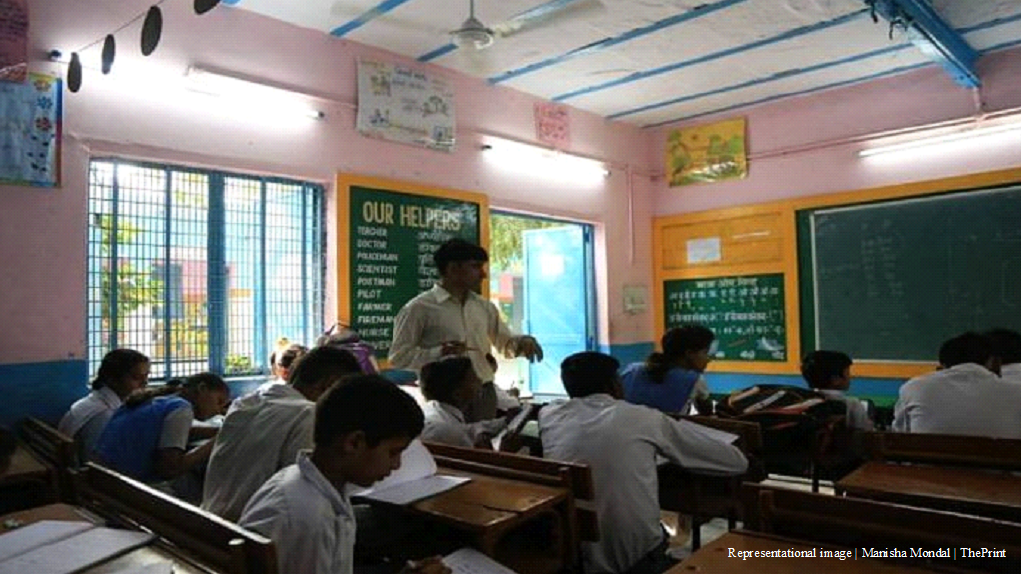
In communities where education is given greater importance & viewed as a gateway to success, households are more likely to allocate a larger portion of income toward educational expenses. Education is the cornerstone upon which nations build their future. It is the bedrock of social and economic growth at the macro level, leading to individual... Read More
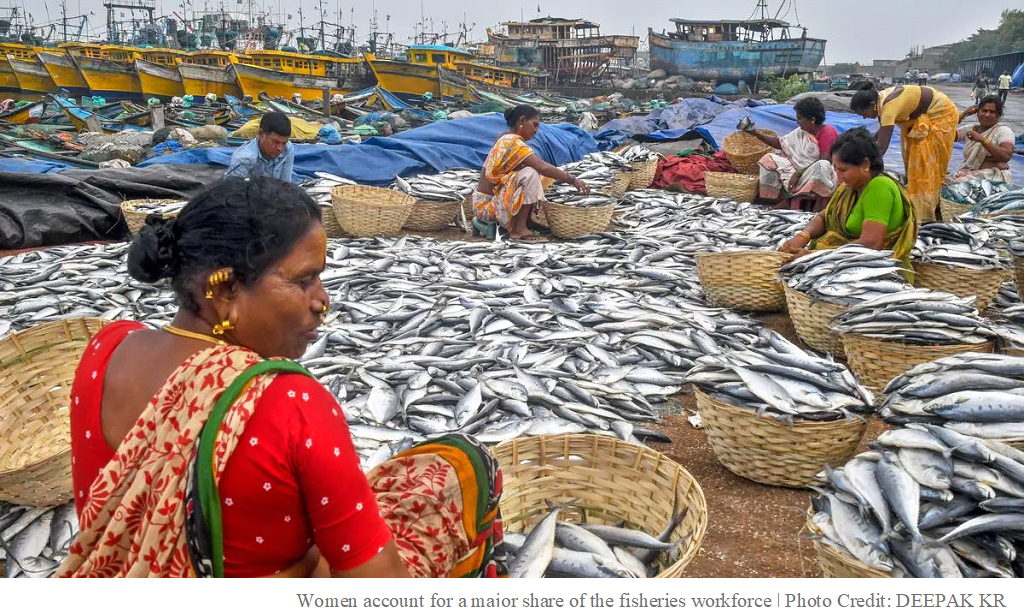
Despite making significant contributions and accounting for a large share of the workforce, women’s concerns and interests are frequently disregarded. India is second only to China in fish production. In 2022-23, India produced around 18 million tonnes, accounting for 8 per cent of global production. About 32 per cent of this came from marine sources,... Read More

Odisha, India’s eleventh largest state by population and fourteenth largest by size of economy, has come a long way during the last two decades. At nearly $ 100 billion, if Odisha were a country, its economy would be larger than Tanzania, Sri Lanka or Ghana. The growth momentum has been evident across sectors including agriculture,... Read More
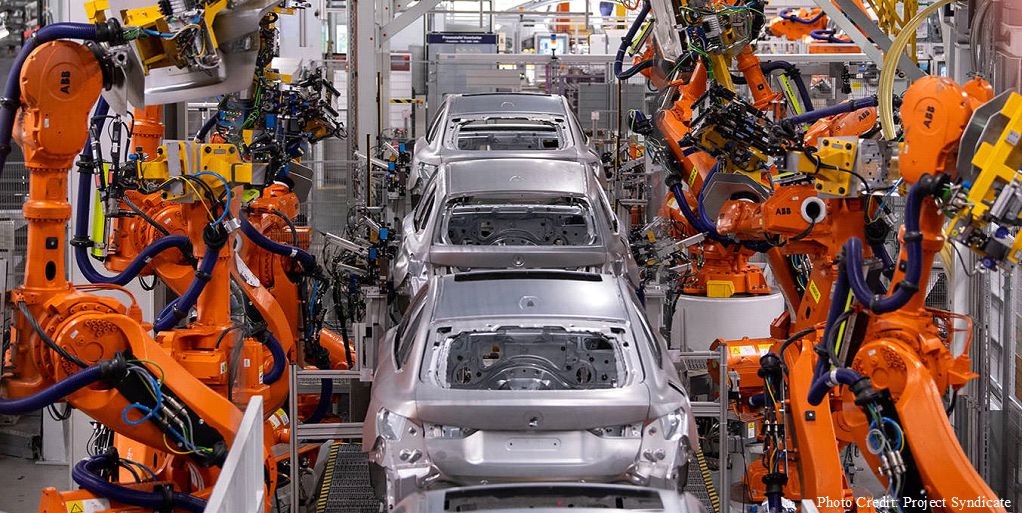
HONG KONG – The gap between productivity growth in the United States and Europe paints a stark and, for Europeans, depressing picture. In the two decades since 2004, US productivity growth, as measured by the value of output per hour worked, has been more than double that of the eurozone. Whereas eurozone productivity has flat-lined... Read More