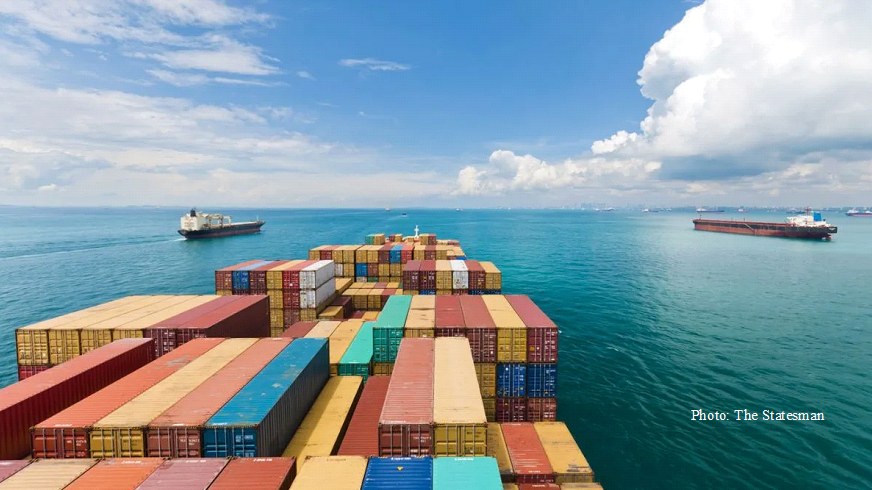
The deal creates economic and strategic opportunities, yet its sustainability will depend on how adjustment costs are managed and how quickly firms are enabled to become competitive. After nearly two decades of intermittent negotiations, India and the European Union have finally moved towards a comprehensive trade agreement that is being billed as both economically significant... Read More
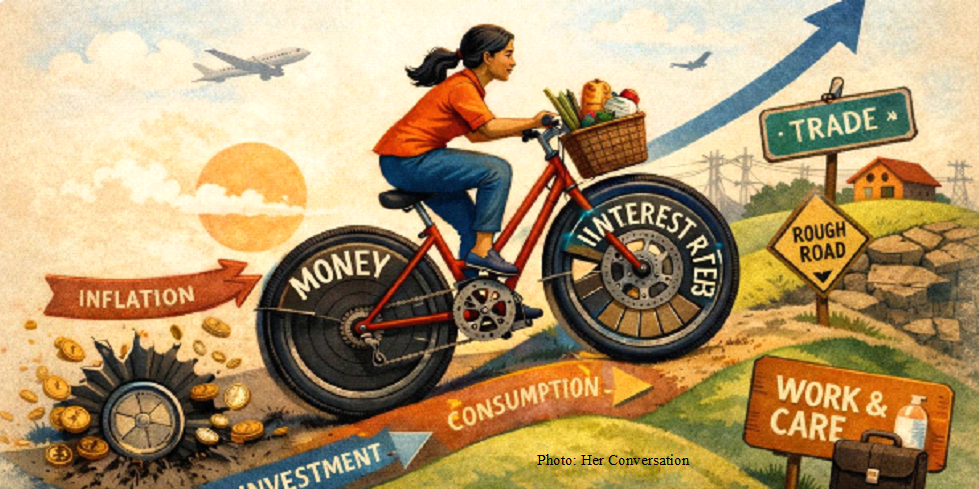
Economics often feels abstract, something that exists in charts and equations rather than in everyday life. But once the jargon is stripped away, it looks surprisingly familiar. It behaves a bit like a bicycle. It needs motion to stay upright, balance to move smoothly, and constant adjustment as the terrain changes. Push one part too... Read More
Historically, India has had a much larger share of workers who are self-employed and a smaller proportion of wage and salaried workers. In this post, Farzana Afridi outlines recent trends in self-employment and the key issues associated with such work. She proposes policy solutions to address constraints around skilling, access to formal credit, and legal... Read More
The grants have strengthened local finances, but deep-rooted institutional constraints remain a challenge For more than a decade, Finance Commission (FC) grants have served as the backbone of fiscal decentralisation in India. They were intended to give Panchayats predictable, formula-based resources so that local governments could plan works, maintain essential services and respond to citizens’... Read More
“The key issue is not the lack of ideas or technology, but the lack of people with the right skills for specific job roles.” In the latest episode of the Renewable Watch Podcast, we sit down with Bornali Bhandari, Professor, and Isha Dayal, Consultant, National Council of Applied Economic Research for a wide-ranging conversation on... Read More
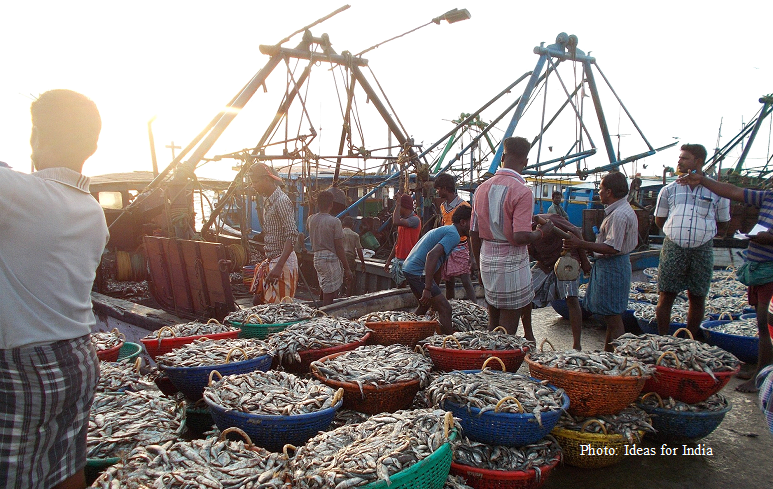
While India’s fish consumption has been dominated by freshwater species, high-value marine fish and shrimp are expanding their footprint. In this post, Bandyopadhyay and Joshi discuss how this transition is reflective of broader changes in income, urbanisation, technology-driven market access, and consumers’ nutrition awareness. They highlight the role of policy in ensuring affordability, strengthening environmental... Read More
India’s shrimp industry – one of the country’s most globally competitive export sectors – stands at a defining crossroads today. ndia’s shrimp industry – one of the country’s most globally competitive export sectors – stands at a defining crossroads today. For years, the United States served as its top and most lucrative export destination, especially... Read More
India’s ambitions of fast and inclusive growth sit uneasily with one stubborn fact: most working-age women are not in paid work. This is puzzling at first glance. Women’s education levels have improved steadily, health outcomes have seen major gains, and aspirations have risen across generations. Yet participation in the labour market remains strikingly low. This... Read More
Recent studies confirm that India remains a major virtual water exporter, with rice, cotton, and sugarcane — some of the world’s most water-intensive crops — driving this invisible drain Picture a glass of water. Now imagine it contains not just water but the story of how it travelled through soil, nourished crops, and eventually left... Read More
While global innovation leaders invest 2-4.5% of their GDP in R&D, the figure stands at 0.64% for India. In this post, Mondal and Pohit contend that the country ought to recognise R&D as an economic engine, raising public investment and the contribution of the private sector. Further, instead of only playing catch-up, there is a... Read More