


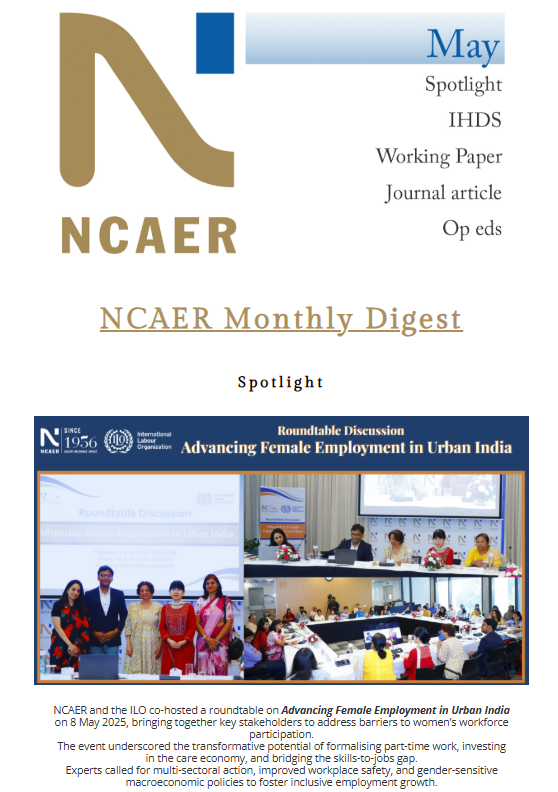
NCAER News is a monthly digest where you can learn about NCAER's research outputs, its latest events, and offerings.

As the monsoon season nears, cities across India prepare for the same story to play out once again. Flooded streets, stalled traffic, stranded commuters and inundated homes are no longer rare disasters; they are routine. In Delhi, Mumbai, Bengaluru and Chennai, the question isn’t if streets will flood but when and how badly. Each year... Read More
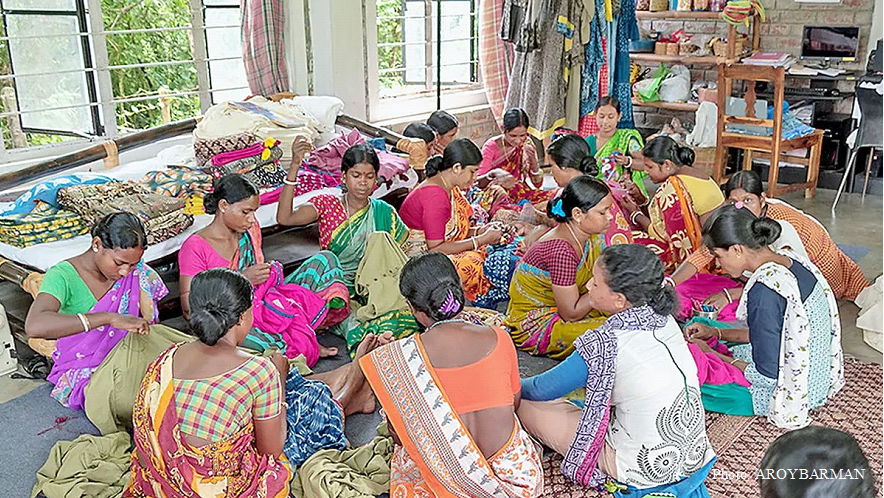
Industry-aligned skilling programmes, convenient modes of commute to the workplace and remote work opportunities will present them with a pathway into the labour force. In a population, there are individuals who belong to the labour force — either employed or seeking work — and those outside the labour force — neither employed nor seeking work.... Read More
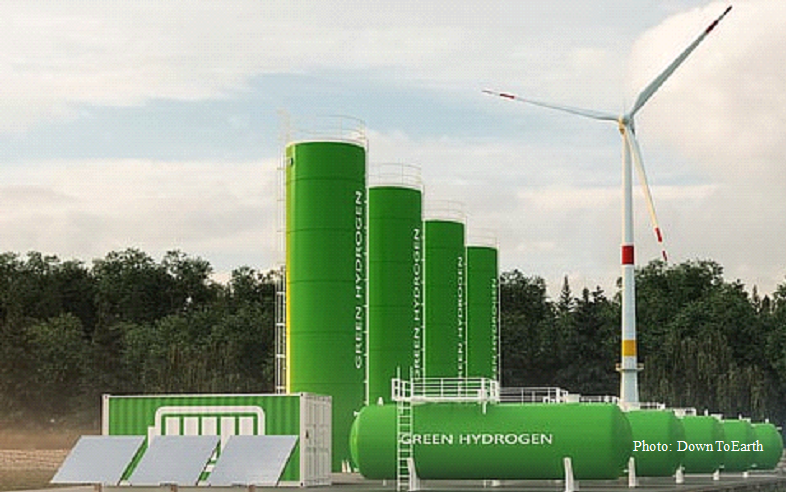
The National Green Hydrogen Mission is a strong first step, but India must adopt a whole-of-economy approach to scale its efforts. As the world races to address the climate crisis, green hydrogen emerges as both a promising solution and a potential disruptor in the clean energy landscape. Unlike conventional hydrogen derived from fossil fuels, green... Read More
India faces a significant wastewater challenge, with over 70% of urban wastewater untreated. The market is projected to grow from $13.1 billion in 2023 to $23.8 billion by 2033, driven by urbanization and industrial demand. In a country where over 70% of urban wastewater is untreated and flows into rivers, lakes, and coastal zones, India’s wastewater... Read More
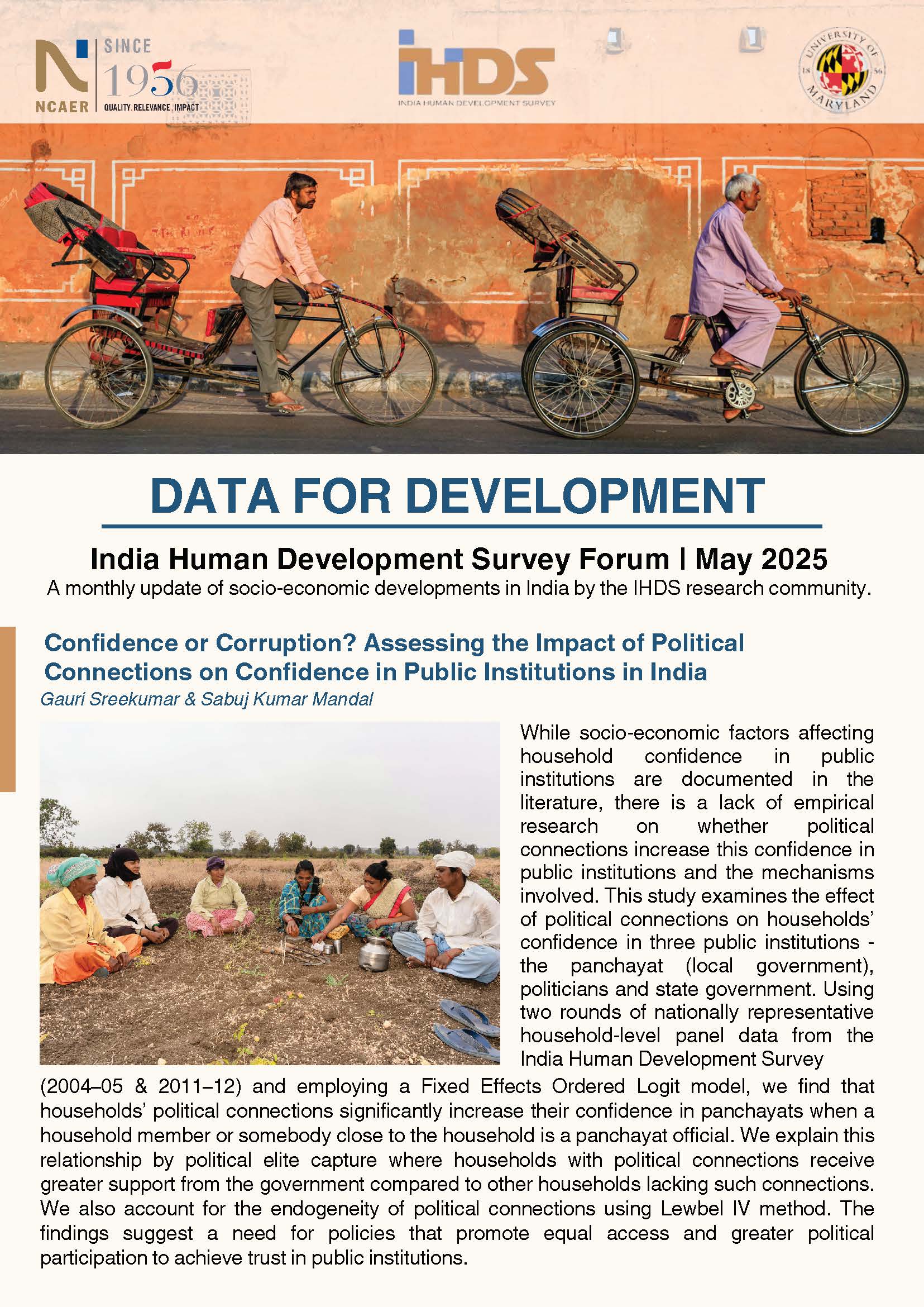
The IHDS Forum is a monthly update of socio-economic developments in India by the IHDS research community, based on the India Human Development Survey, jointly conducted by NCAER and the University of Maryland. While two earlier rounds of the survey were completed in 2004-05 and 2011-12, respectively. Fieldwork for the third round was undertaken in... Read More
Download PDF
Unlike other countries, economy-wide modelling in India generally has treated the Indian nation as one entity even though one recognises that the states/regions differ significantly in respect of their resource base and factor endowments. Of course, a few models at the state level exist. However, these models do not capture the transmission channels from the... Read More

Dynamic policymaking can ensure that India grabs this golden opportunity presented by the shifting global scenario to foster a boom in its education sector. India’s education system is severely capacity constrained. Young people comprise almost a third of the country’s population, but only a quarter of them enrol in higher education. We need to increase... Read More

Reform, global reach and financial stability statecraft. Amid developing tensions, the International Monetary Fund’s 2025 Financial Sector Stability Assessment for China arrives at a pivotal juncture. More than a domestic stocktake, it reflects the structural transformation of China’s financial system, marked by increased complexity, persistent contradictions and a steadily expanding global footprint – much of which is... Read More
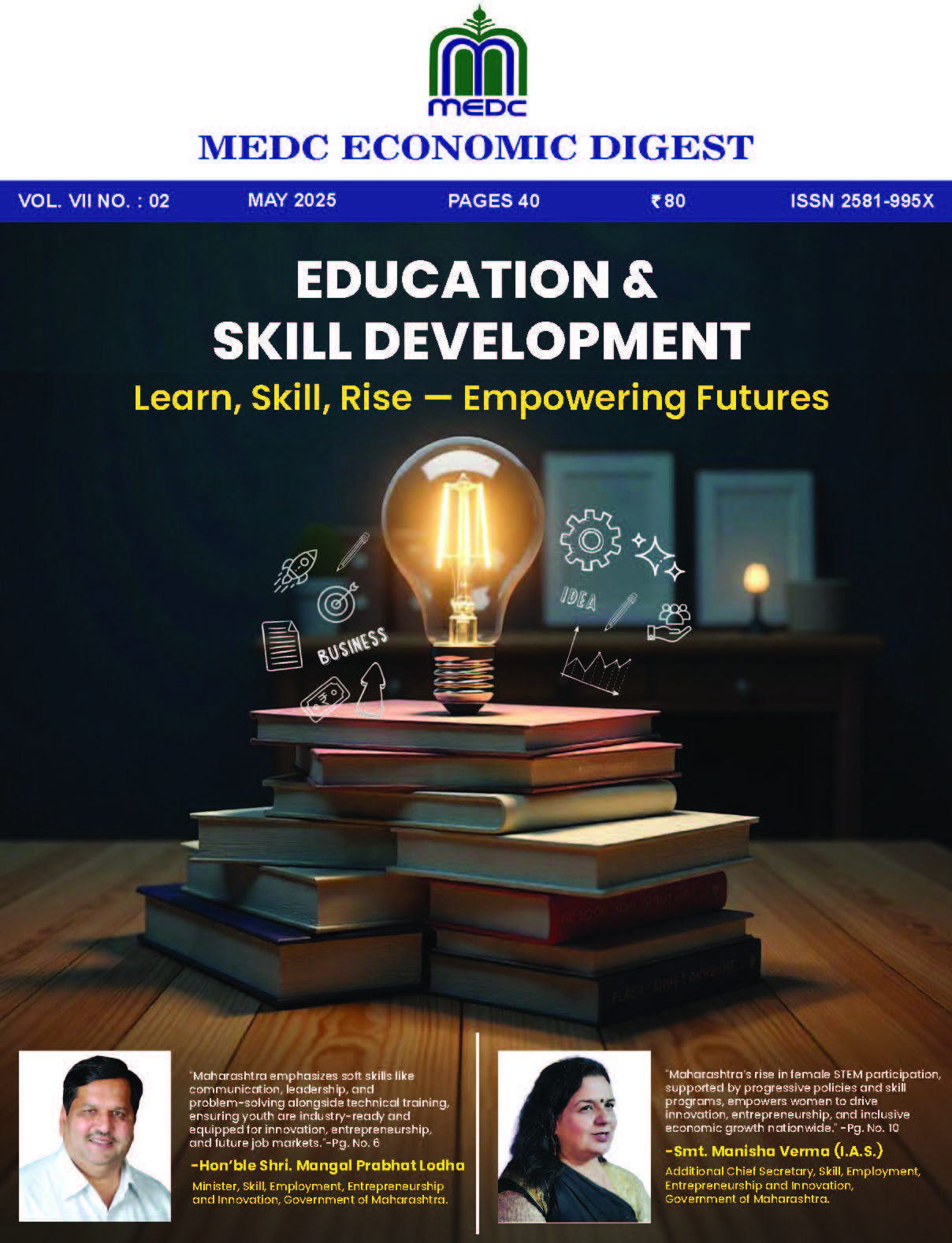
India has made remarkable strides in expanding access to education for girls over the past few decades. Enrolment rates for girls in primary and secondary schools have risen significantly, and gender gaps in literacy have narrowed. Girls have surpassed boys even in gross enrolment in higher education. However, this educational success has not translated into... Read More

As India seeks to enhance its innovation ecosystem, it is worthwhile to pay attention to opportunities and lessons from the self-inflicted wounds on American science What do lasers, the internet, Google’s search algorithm, the gene-editing tool CRISPR-9, Wireless MIMO (multiple-input multiple-output) technology, and Covid vaccines have in common? Key innovations underlying each originated in an... Read More

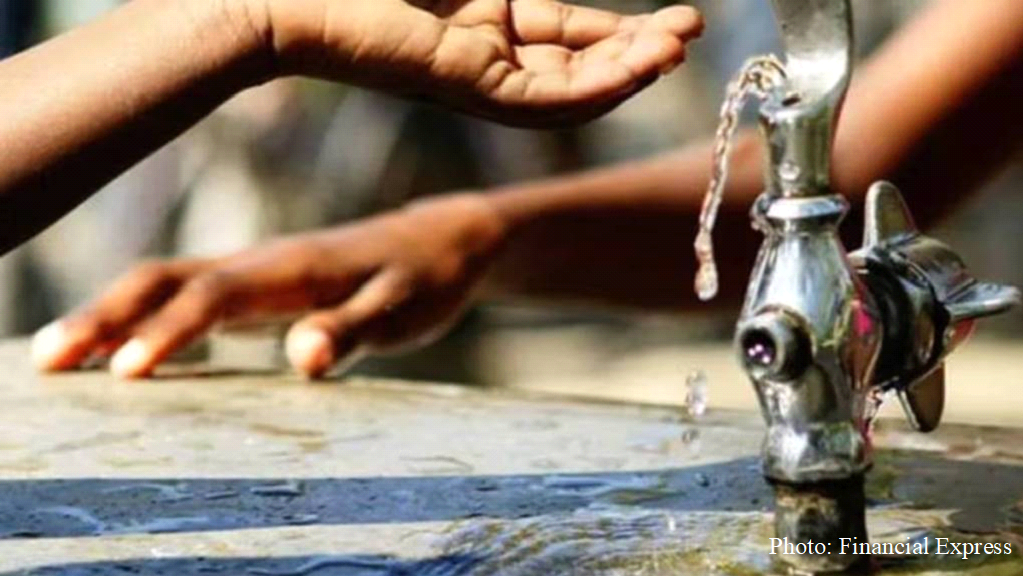
India’s water crisis is not only about scarcity. It is mismanagement, over extraction of groundwater and pollution that are the real culprits In a country where nearly 600 million people face high to extreme water stress and where per capita water availability has dropped sharply from 5,177 m³ in 1951 to about 1,400 m³ today,... Read More