



The recent rape and murder of a young doctor in Kolkata has once again ignited national outrage, as protests and demands for justice sweep across India. The brutality of this crime has understandably shaken the country’s conscience, thrusting the issue of sexual violence into the spotlight. However, while it’s necessary to condemn and react to... Read More

India as a major regional power needs to brace up to the reality of climate refugees. As temperatures soar and monsoons intensify, South Asia stands at the centre of a brewing climate disaster. Recent floods in West Bengal, where rivers breached embankments and displaced thousands, have submerged vast lands. In 2023, rainfall surged over 40... Read More

Instead of focussing excessively on rankings with well-recognised shortcomings, recognising achievements and refining goals consistent with national priorities will be a more fruitful approach. Developing global indices and rankings has turned into a minor industry. The Global Competitiveness Index, Global Happiness Index, Global Hunger Index, Ease of Doing Business Index, Corruption Perception Index, Global Go-To... Read More

We evaluate the earnings and conversion disadvantages that persons with disabilities face in India, which has amongst the highest number of persons with disabilities globally. Our study is unique in that we use two major nationally representative household surveys consisting of over 85 thousand households, alongside a qualitative study to explore the nature and the... Read More
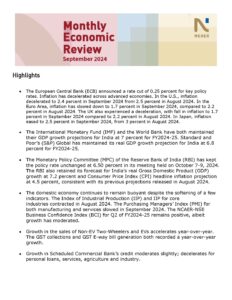
In the Review, we summarise the economic and policy developments in India; monitor global developments of relevance to India; and showcase the pulse of the economy through an analysis of high-frequency indicators and the heat map. MER September Report Click here for previous issues.
Download PDF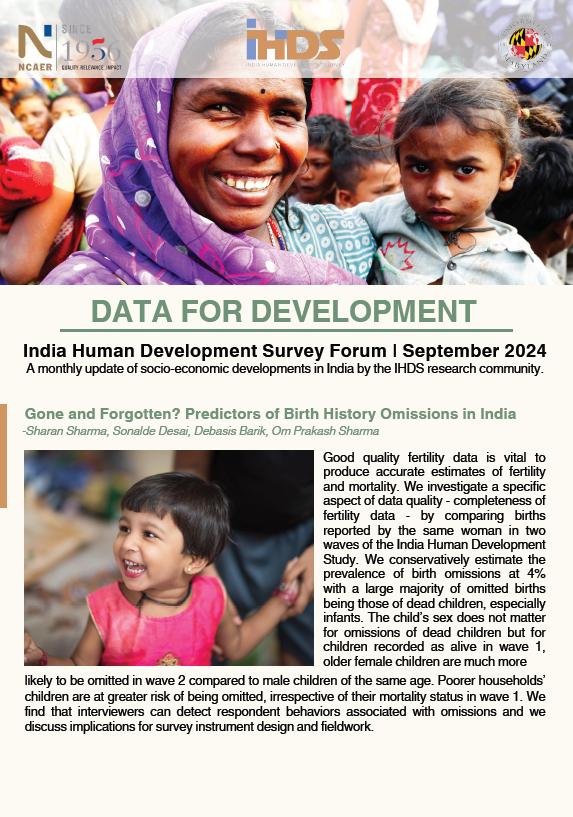
The IHDS Forum is a monthly update of socio-economic developments in India by the IHDS research community, based on the India Human Development Survey, jointly conducted by NCAER and the University of Maryland. While two earlier rounds of the survey were completed in 2004-05 and 2011-12, respectively. Fieldwork for the third round was undertaken in... Read More
Download PDF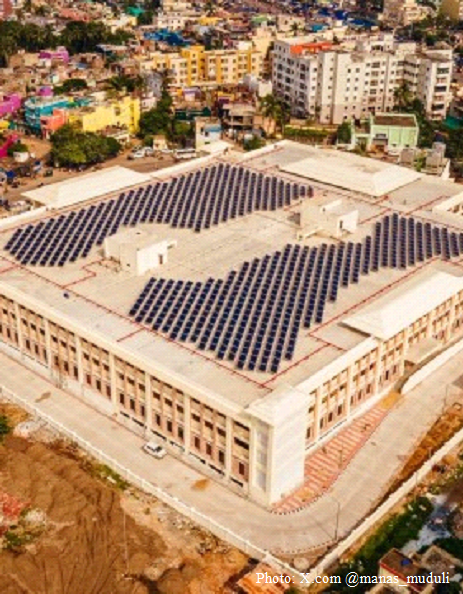
Odisha must conduct deep-down power system analysis Among the Indian states, energy intensity of Odisha economy has always been on the higher side due to her higher resource (mineral) base. The proximity of minerals has led to development of extraction based industries in the state. The abundance of coal resources has fuelled development of coal... Read More

Persistent regional disparities in household illiteracy is hampering India's quest for inclusive development. Household illiteracy in India: The fight against illiteracy has long been a priority for policymakers in India. Education, often hailed as the cornerstone of progress and empowerment, remains central to India’s vision of inclusive growth and development. However, despite significant strides, the battle... Read More
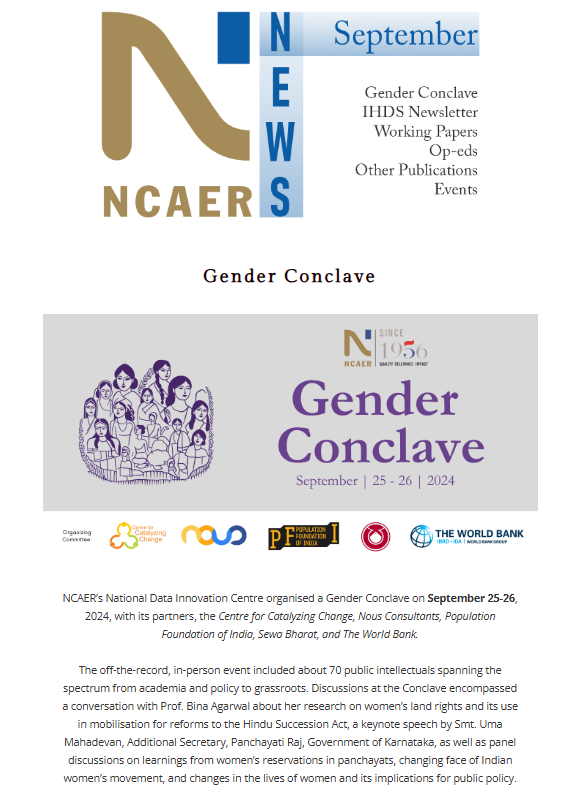
NCAER News is a monthly newsletter where you can learn about NCAER's research outputs, its latest events, and offerings.

The Companies Act (2013) implemented in 2015 marked a turning point for the presence of women directors in corporate India. This Act required all listed firms to have at least one woman on their board. In a recent paper, Mahima Vasishth, Navya Srivastava, and I looked at the trends of female leadership in corporate India.... Read More

Households, both rural and urban, spent about 13.53 per cent of their annual education expenditure on coaching and tutoring in 2022-23. This is 1.67 percentage points higher than 2011-12. Dependency on coaching to improve academic performance is now common at all levels of education. There was a time when students who sought private tuitions were... Read More
As India sets its sights on Viksit Bharat—a vision of becoming a developed and prosperous nation—one crucial factor could determine the success of this ambitious goal: the full and active participation of women in the workforce. Despite the nation’s significant growth since the economic liberalization reforms of 1991, the decline in female labour force participation... Read More