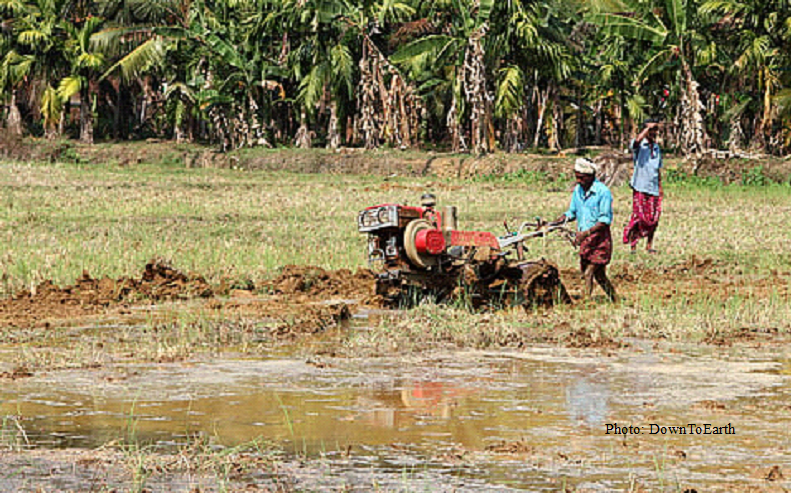

Addressing water stress requires moving beyond emergency responses and investing in resilient, equitable, and climate-ready water systems The Centre’s recent decision to activate contingency plans across 315 districts following a 43 per cent rainfall deficit serves as a stark reminder of India’s continuing dependence on the monsoon. Particularly worrying is the identification of 111 districts... Read More
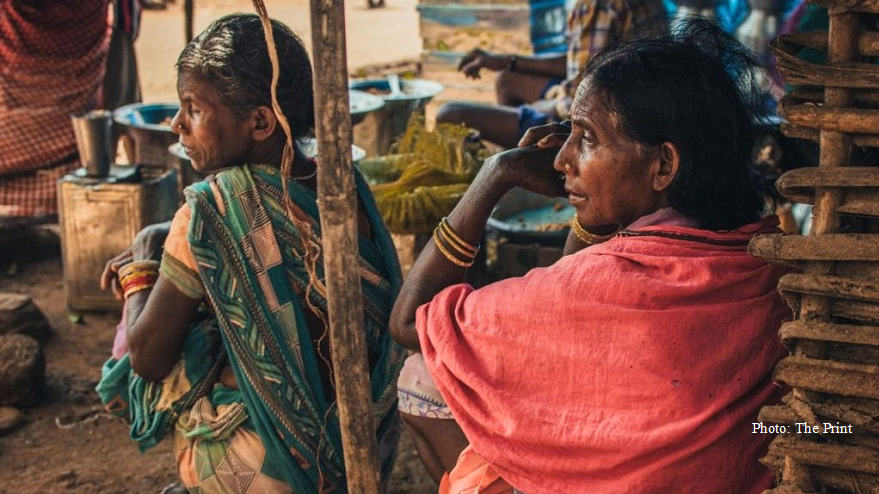
India’s female labour force participation rate remains among the lowest in the world. The reason is the macroeconomic environment, and unpaid work within the household. India has a labour force participation problem that is hard to look away from. Nearly half of all working-age adults – around 49% – are outside the labour force entirely.... Read More
India’s female labour force participation rate remains among the lowest in the world. Based on a structural economic model calibrated to Indian data, this article finds that the reason lies at the intersection of two forces that have largely been studied in isolation – macroeconomic environment, and distribution of unpaid work within the household. Understanding... Read More
Every climate conference promises finance. Every time, the money arrives in the wrong form, in the wrong channel and in the wrong magnitude. Now the world is trying again. Last month, the G7 finance ministers reaffirmed their unwavering commitment to climate finance. But the real question isn’t whether climate finance can be raised. It’s whether... Read More
The Code's effects on employment and productivity depend less on its provisions than on how mandates interact with firm size, labour market structure, and worker perceptions of contributions. Social security – the provision of a safety net against retirement, health expenses, and income shocks – is a foundational principle of formal employment. In India, this... Read More
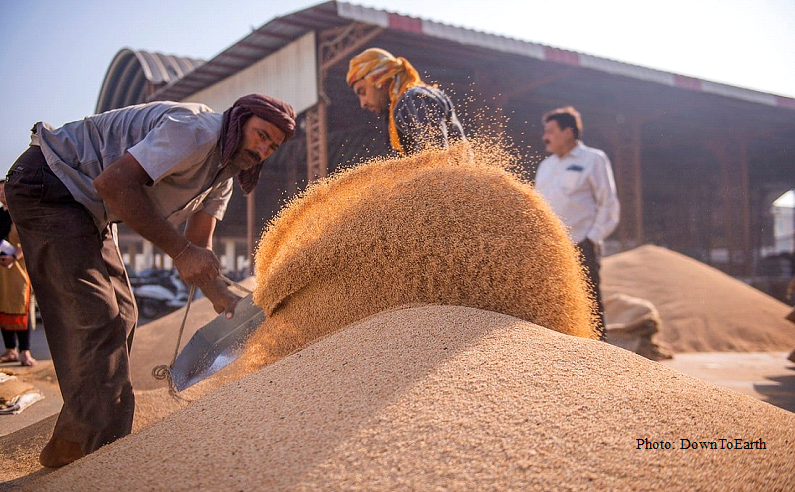
Improving standards compliance, institutional coordination, and farmer-market linkages is critical for enhancing India’s competitiveness in global agri-food trade India stands at a pivotal moment in global agri-food trade. It is among the world’s largest producers of rice, milk, spices, fruits, fisheries, and several horticulture products, yet its share in global agricultural exports remains modest at around... Read More
India’s recent gains in women’s employment and leadership reveal both expanding opportunities and the structural barriers that continue to shape economic agency. The trends highlight a doubling of women in managerial roles alongside a rise in the rural female labour force participation rate (LFPR) to 45.9 percent. To what extent does this shift signal genuine... Read More
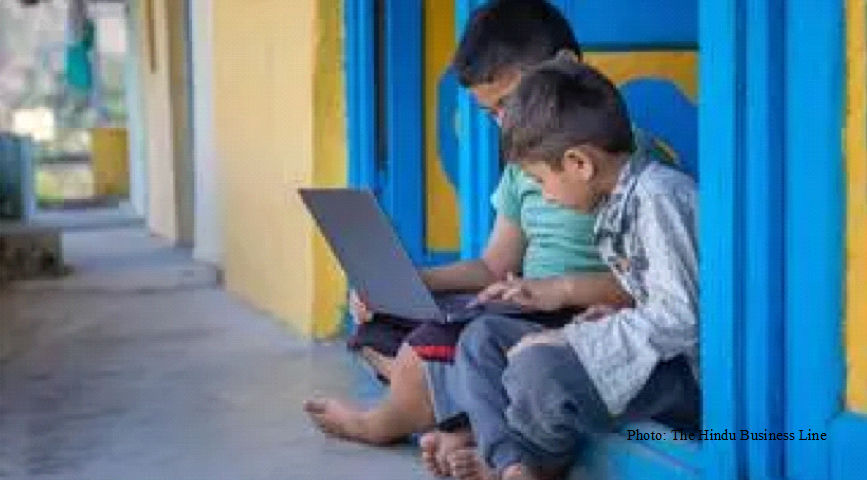
Schools shift to online teaching during heat waves or pollution. Poor children suffer, as they cannot access instruction. India’s education policy today rightly emphasises better learning outcomes, equitable and inclusive education, and the human capital required to achieve the country’s developmental goals. But for millions of children, the basic condition that makes all of this... Read More
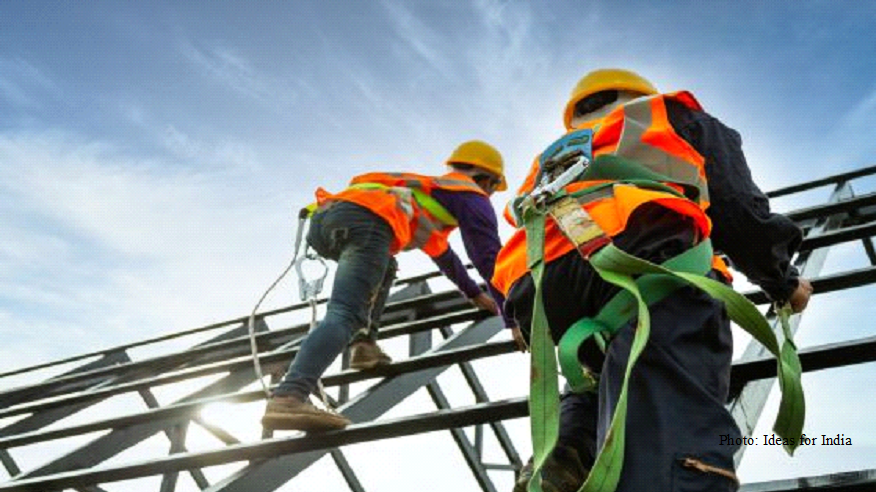
In the fourth part of our series on India’s new labour reforms, Afridi and Talukder focus on the Occupational Safety, Health and Working Conditions Code, 2020 – in terms of its rationale, the key legislative changes that it entails, state-level implementation, and what the existing theoretical and empirical literature says about potential impacts. They contend that... Read More
Empires were once forged in iron and fuelled by coal; today, they may fracture over elements most people cannot spell. Empires were once forged in iron and fuelled by coal; today, they may fracture over elements most people cannot spell. In the circuitry of the modern economy, power no longer flows only through oil wells... Read More